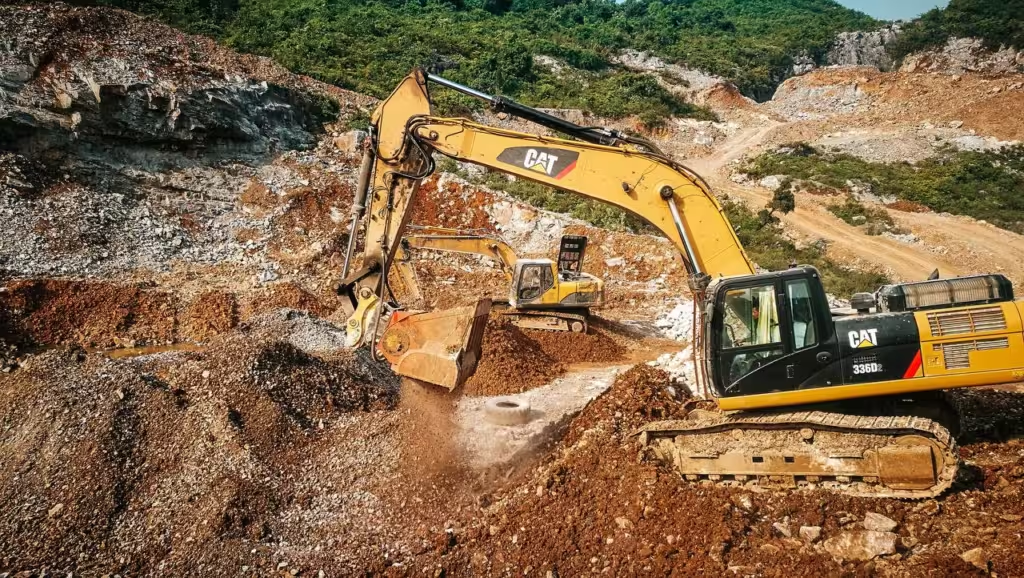
Wet clay stops most screening equipment cold. A project in China proved that with the right bucket design, even the stickiest construction waste can be turned into profit.
Turning Sticky Soil in Construction Waste Into Profit: How ALLU Solved the Problem
Shanghai, China
Material
Wet clay mixed with construction debris (rebar, bricks, concrete blocks, stones)
Industry
Construction, Soil Remediation
Application
Soil recovery and aggregate separation
Function
Screening, size separation, and decontamination
Model
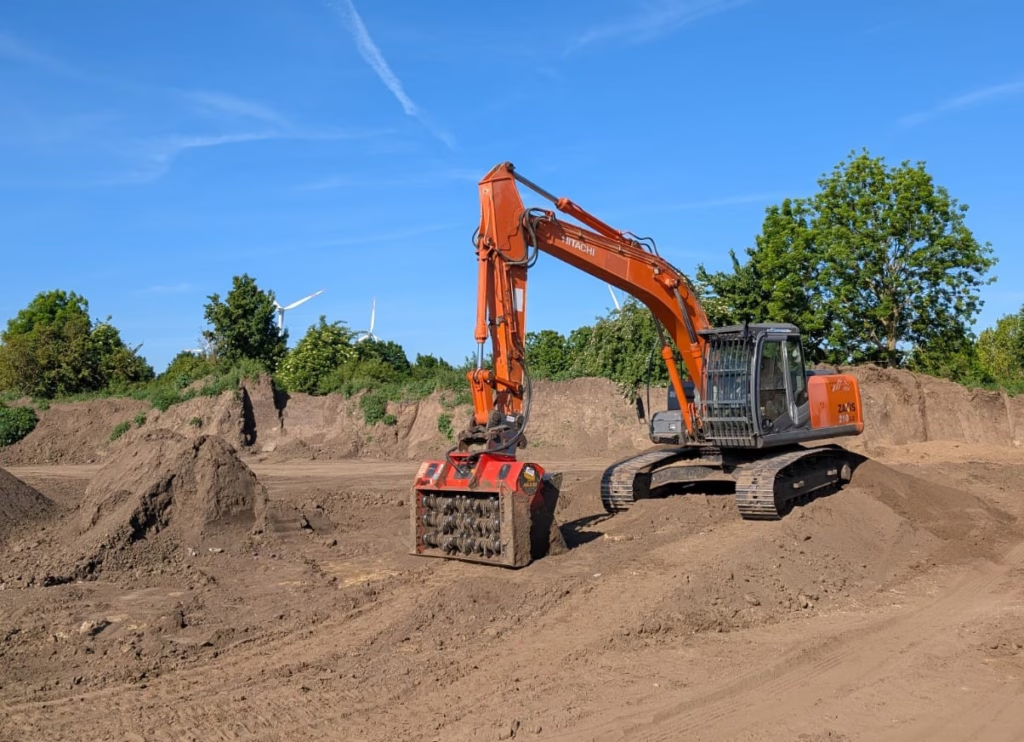
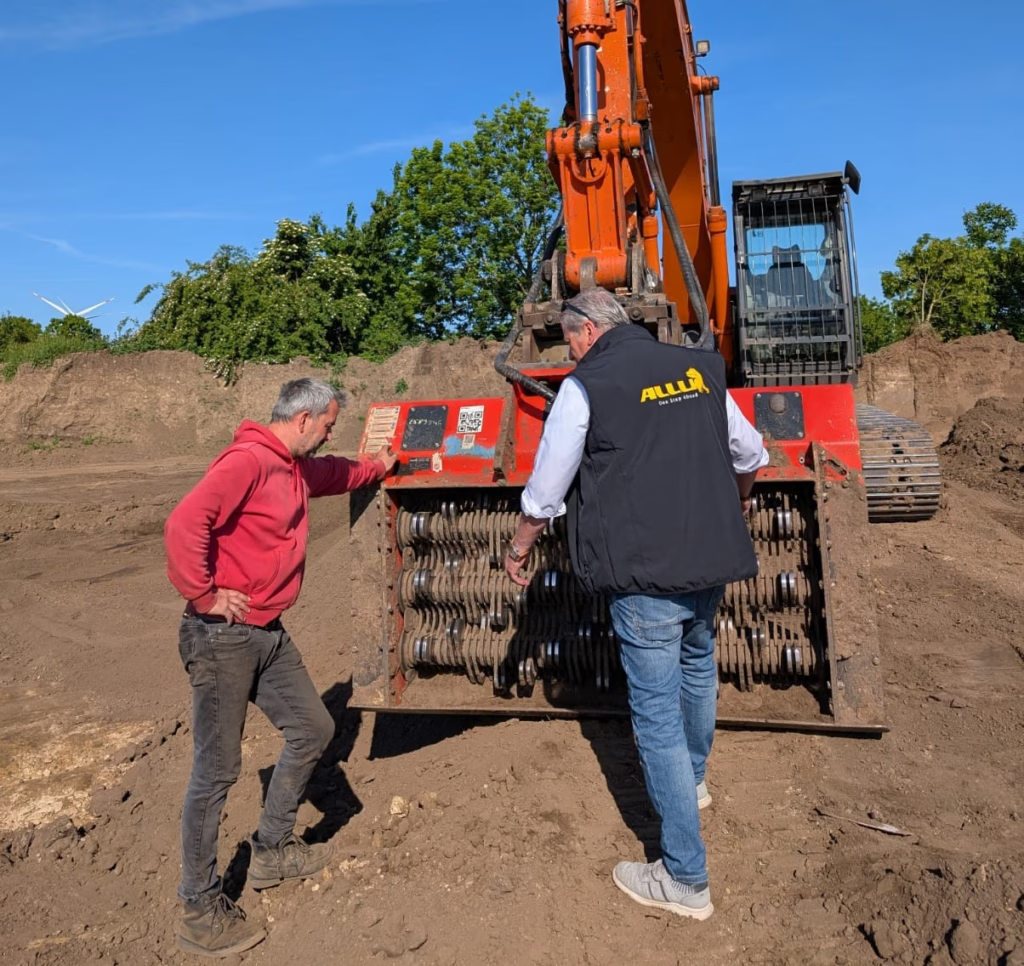
ALLU DH3-23 X75
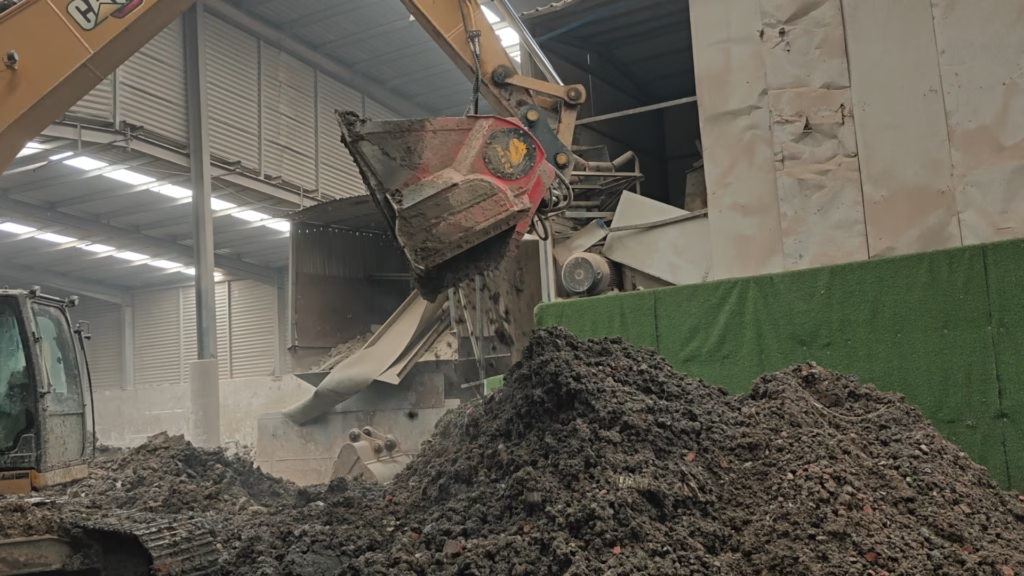
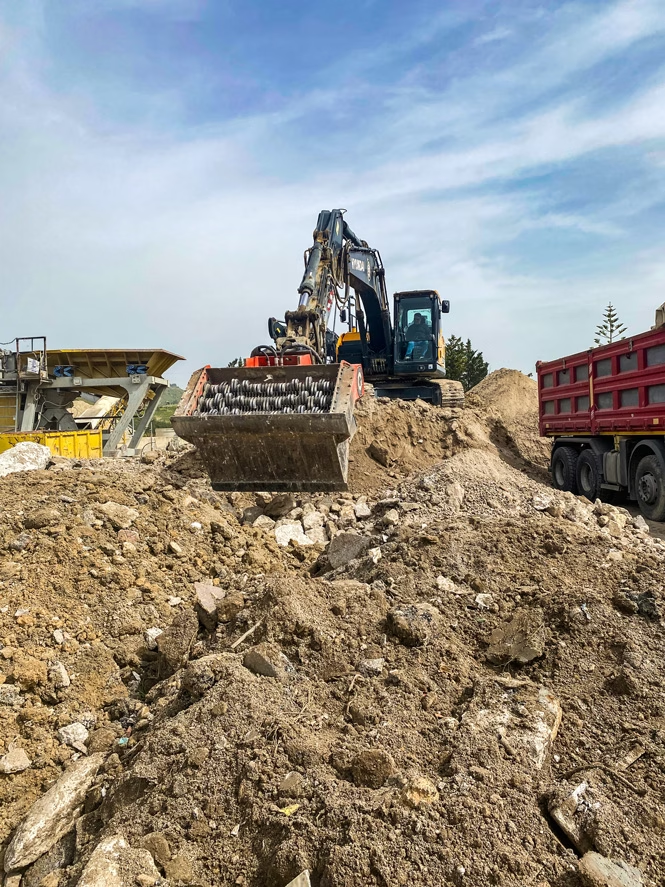
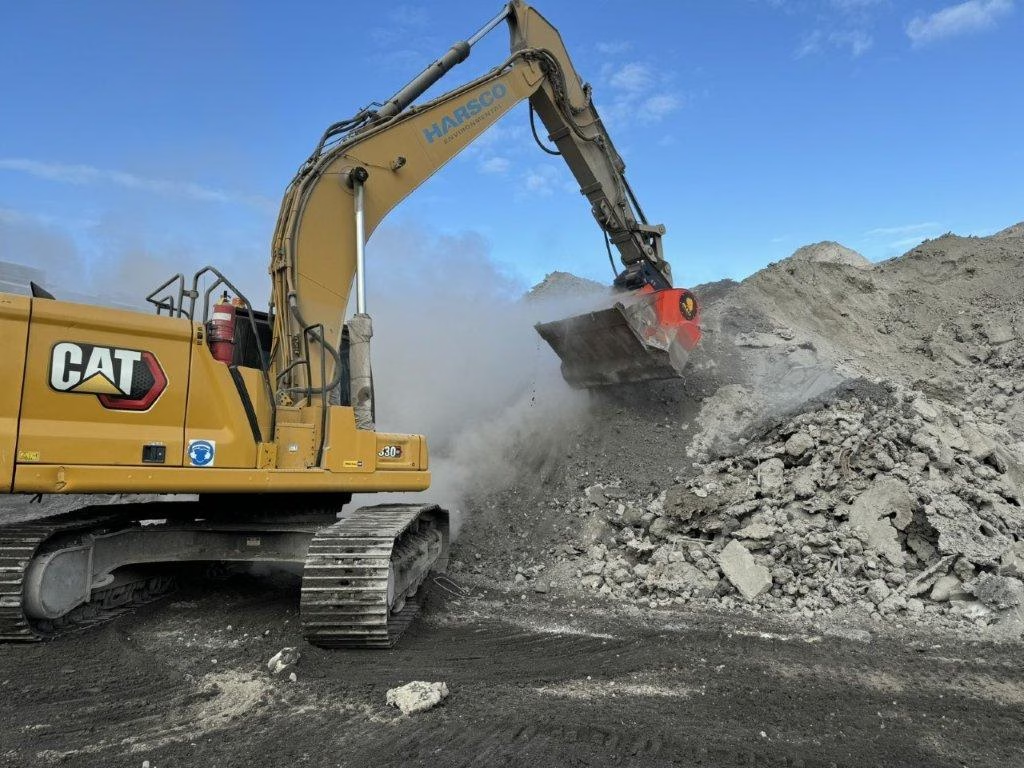
Sticky soil is one of the most difficult materials to screen. Add rebar, broken bricks, concrete chunks, and other demolition debris, and most conventional screening equipment quickly struggles. Sticky-soil material can build up on and block a screening plant’s screen deck. The wet, clayish soil cakes onto screening surfaces, while the rebar can jam the mechanism. What should be a straightforward separation process turns into a constant cycle of stopping, cleaning, and restarting.
For one contractor processing heavily clay-contaminated construction waste in China, this was more than an operational inconvenience, it was a business problem. The material contained valuable resources: soil that could be sold for agricultural use and stone that could be processed and sold as aggregate. However, accessing that value first required to overcome the screening challenge.
Why Sticky Soil Stops Other Equipment
Static screens are prone to clogging, while vibratory screens can lose screening efficiency when sticky soil coats and blocks the openings. Even purpose-built screening attachments can struggle when wet clay is present. Fine particles adhere to the screen surface, bridge across the openings, and gradually restrict the flow of material. Operators spend more time cleaning the equipment than screening, so production falls; operating costs rise, and material remains in the stockpile.
The root cause is simple: much conventional screening equipment relies on gravity or vibration to keep the screen surface open. Neither method works effectively when the material tends to stick rather than fall freely.
The ALLU Difference: Two-way rotation
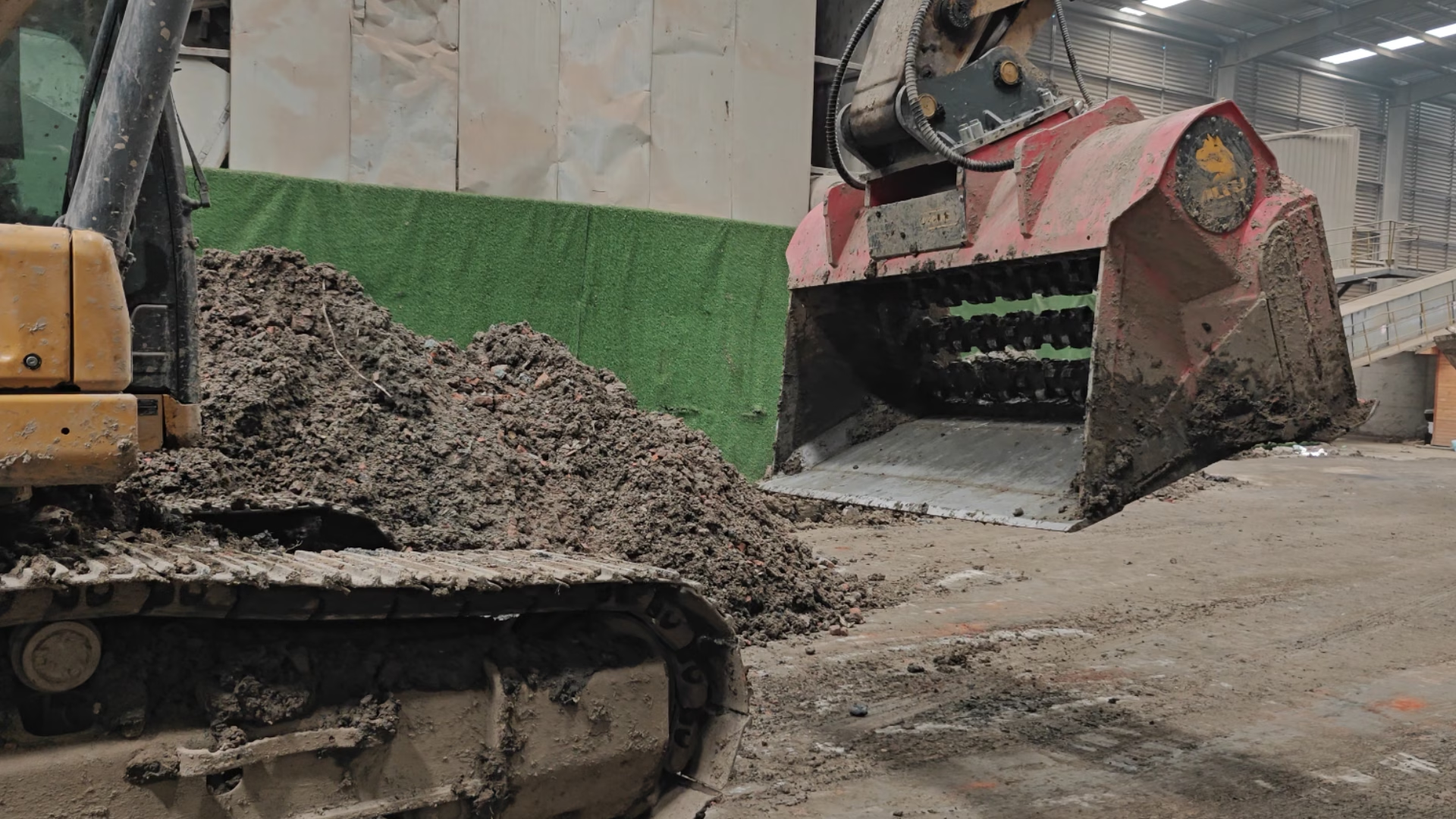
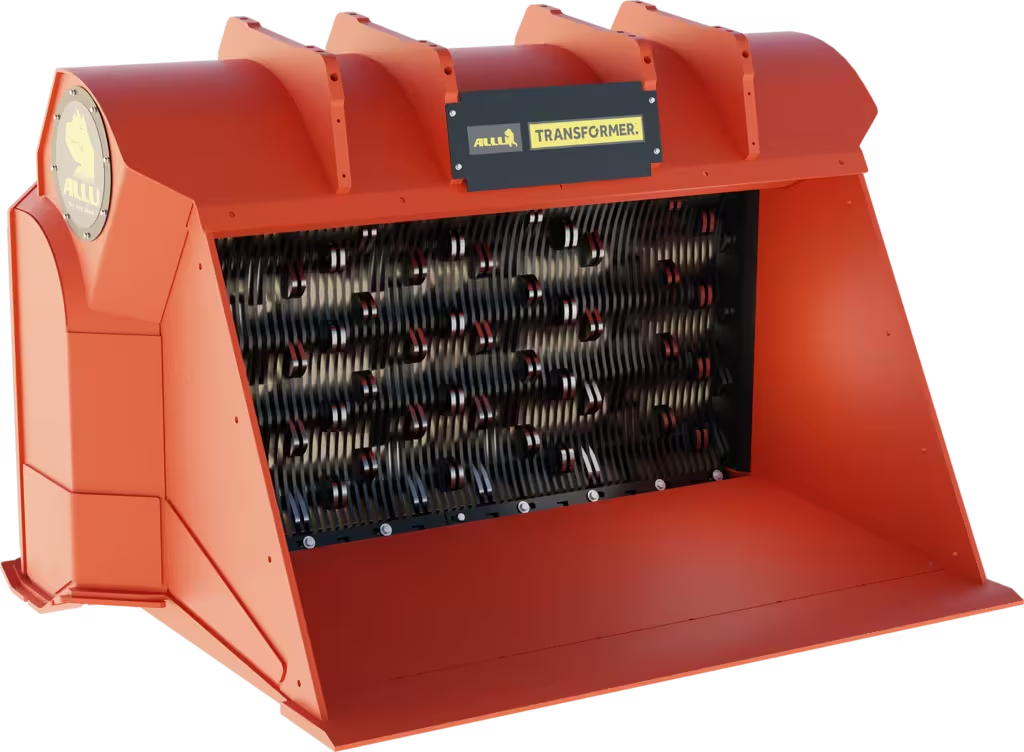
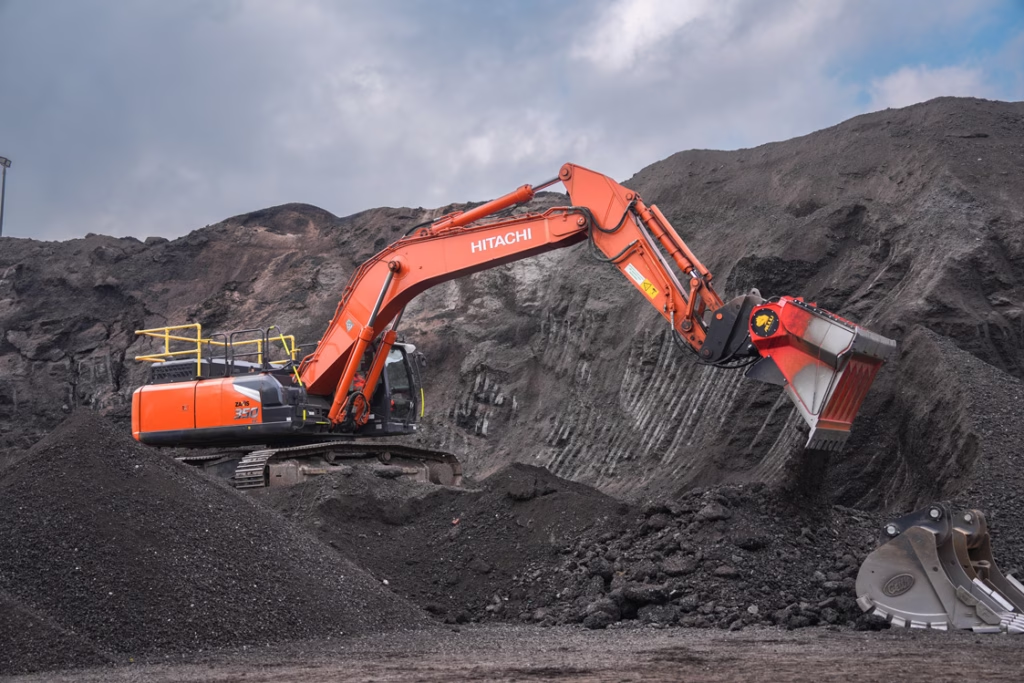
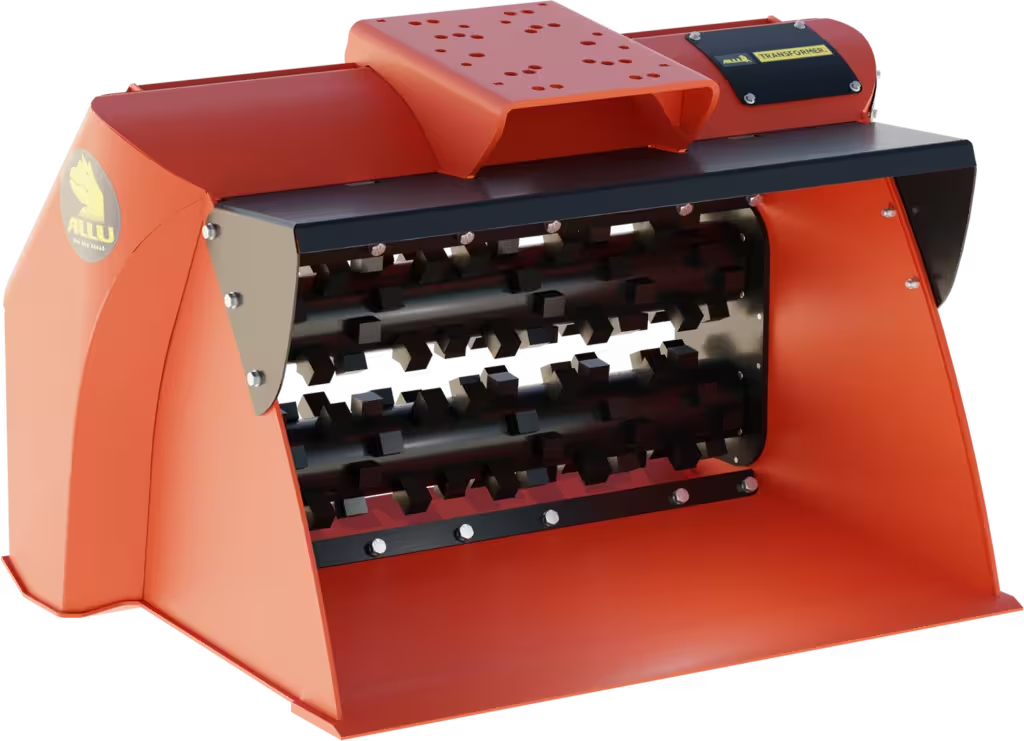
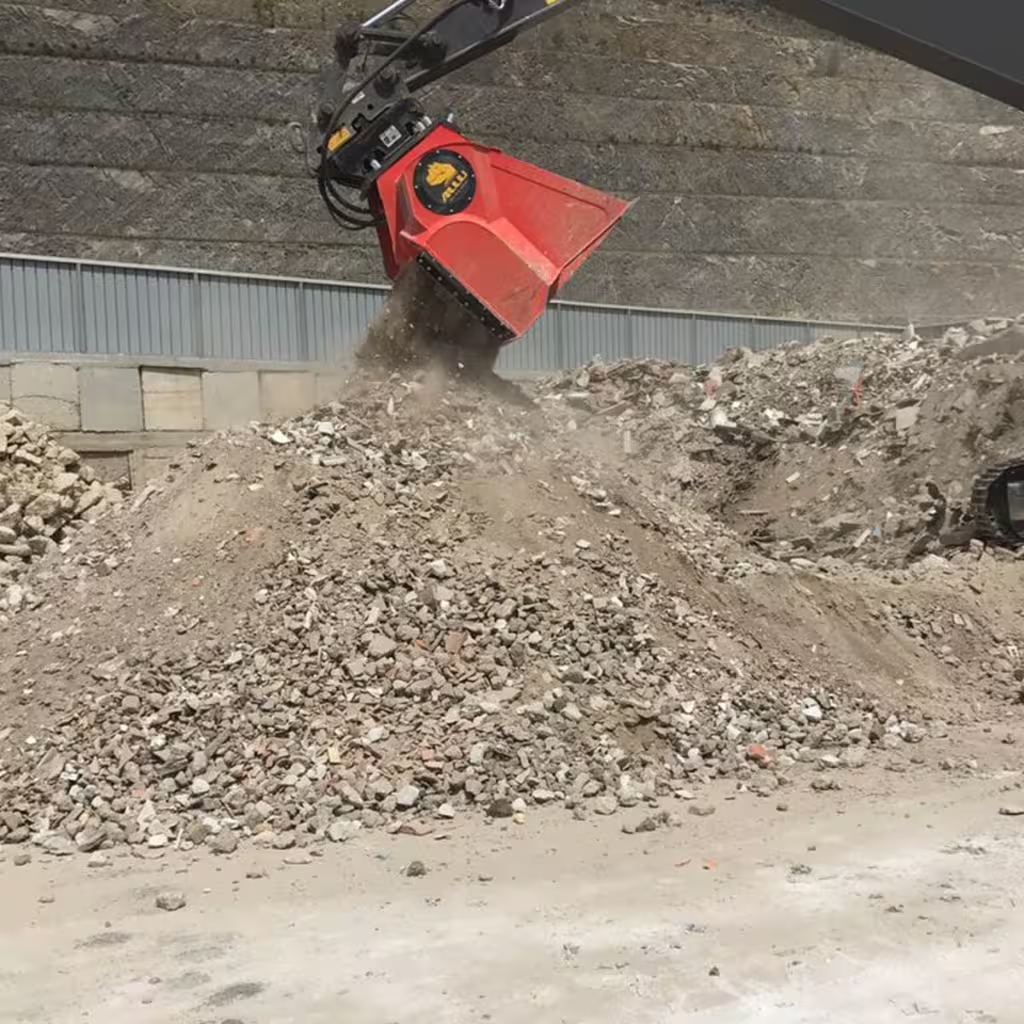
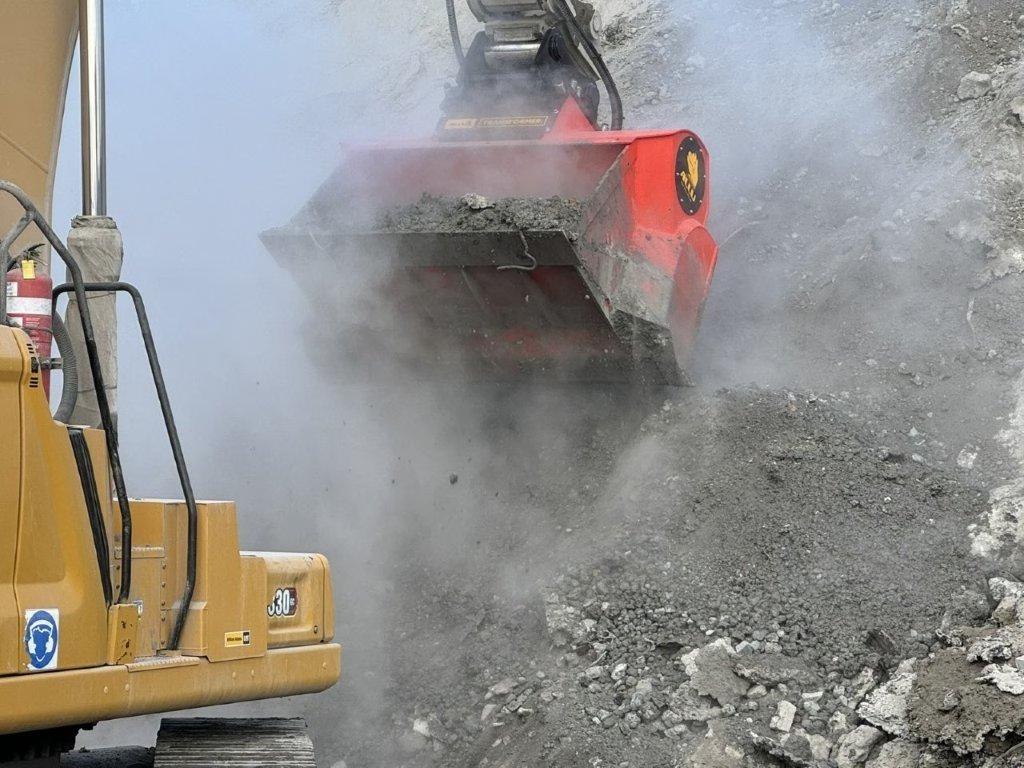
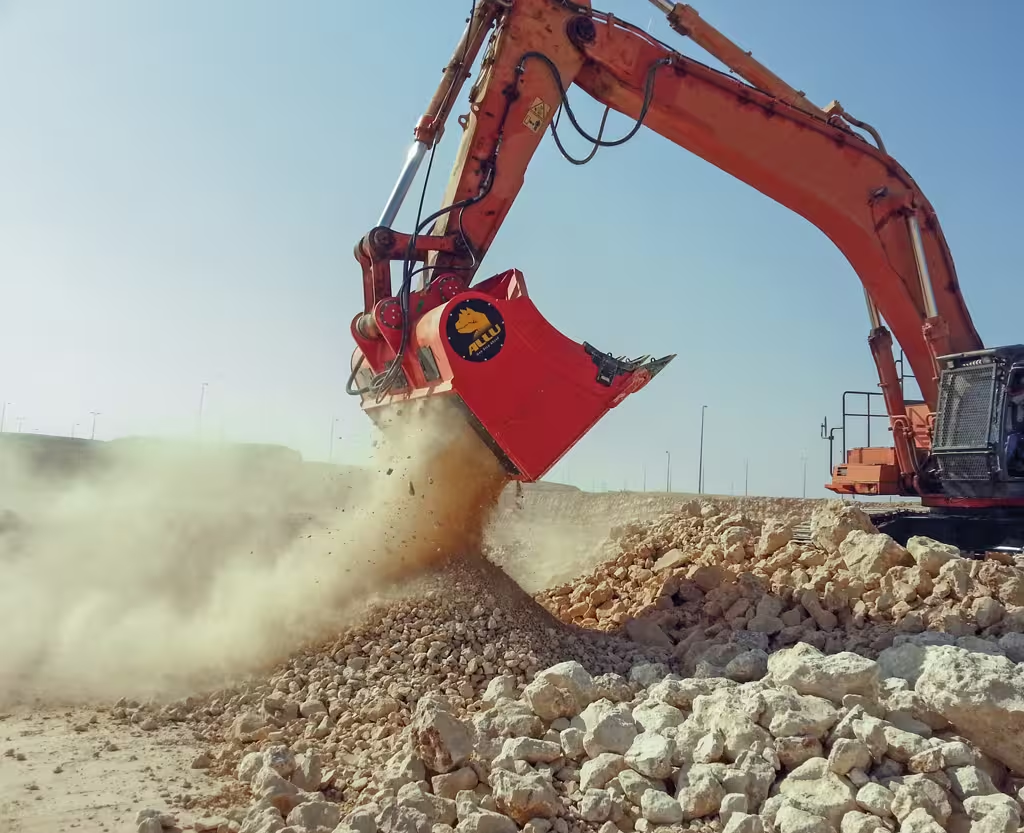
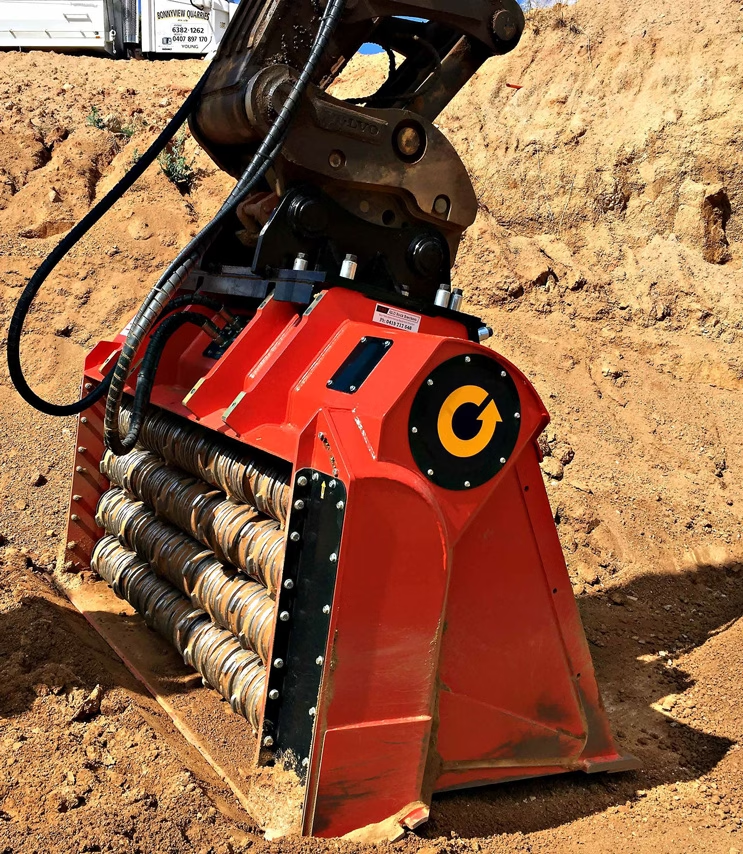
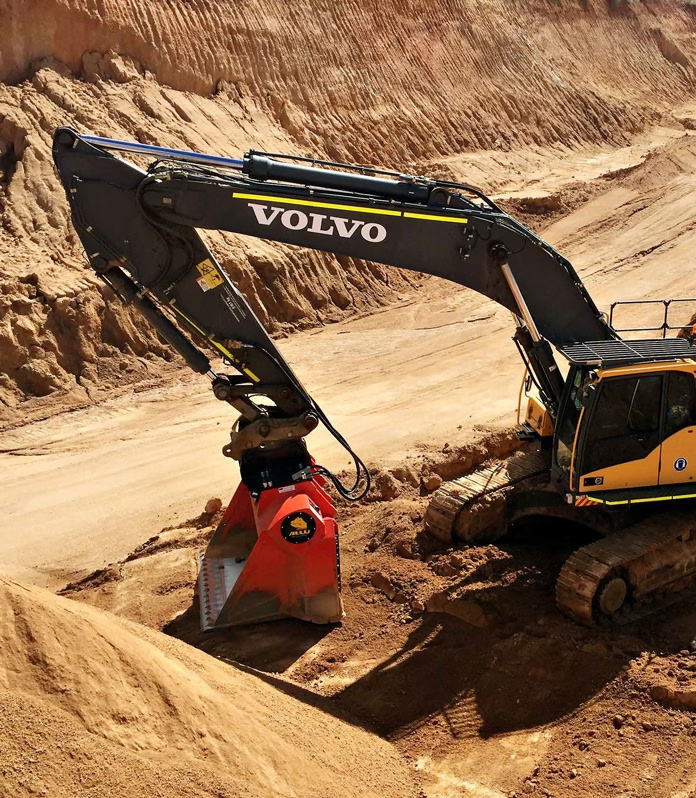
The ALLU screening bucket approaches the problem differently. Instead of using a flat screen deck, it uses rotating drums.As the drums rotate, the combs actively break up the material and move it through the screening openings.
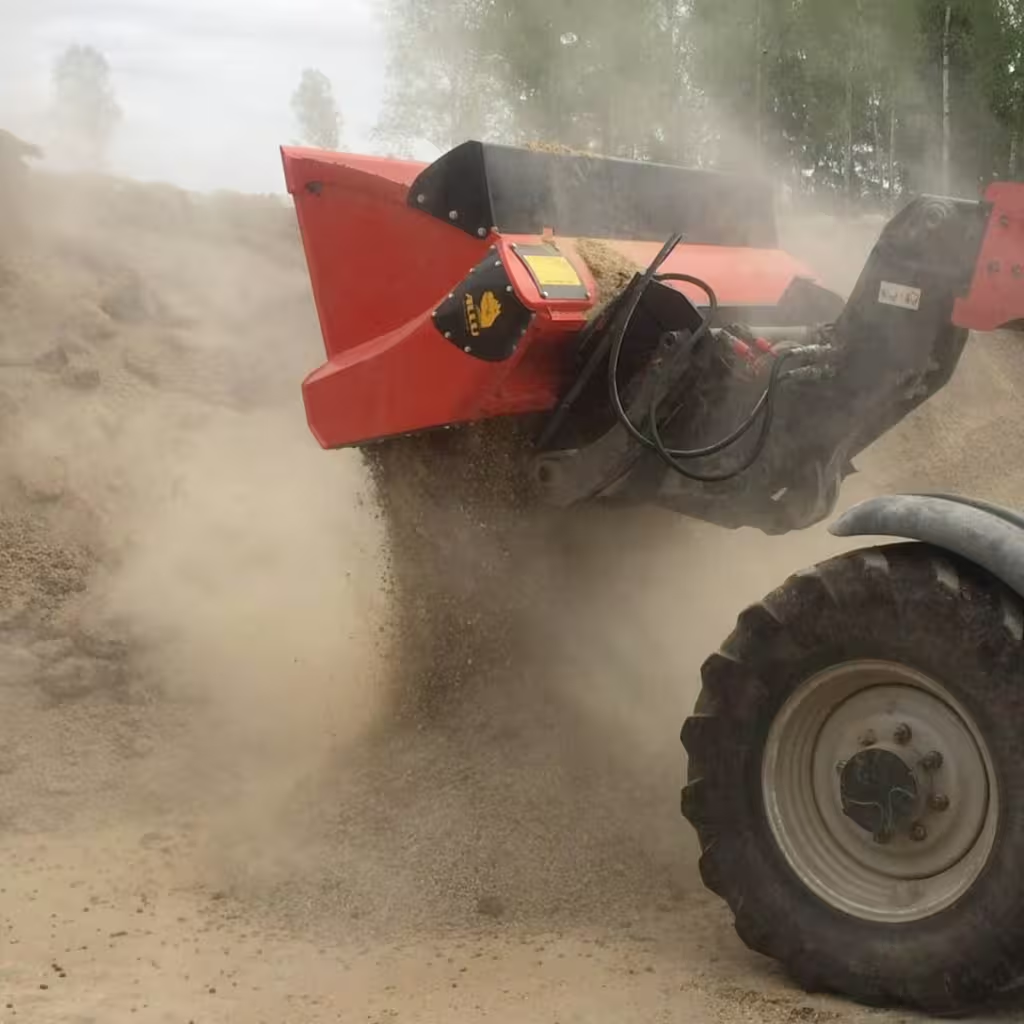
The design helps prevent sticky soil and fine particles from building up on the screening surfaces. Material that would normally pack into a static screen is kept in motion as it passes through the rotating drums. The drums can also rotate in both directions, allowing the operator to reverse the flow and clear any buildup before it becomes a problem.
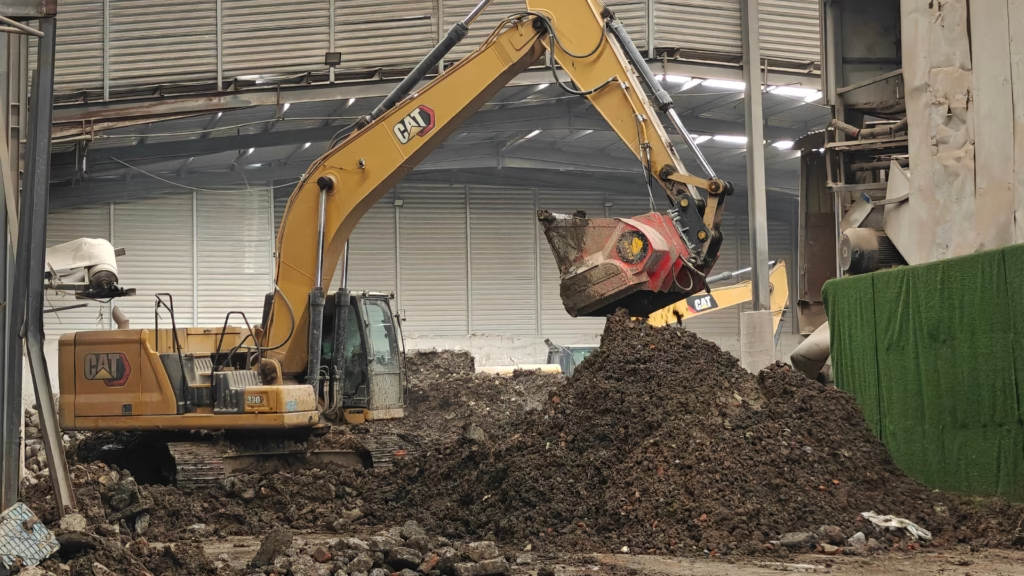
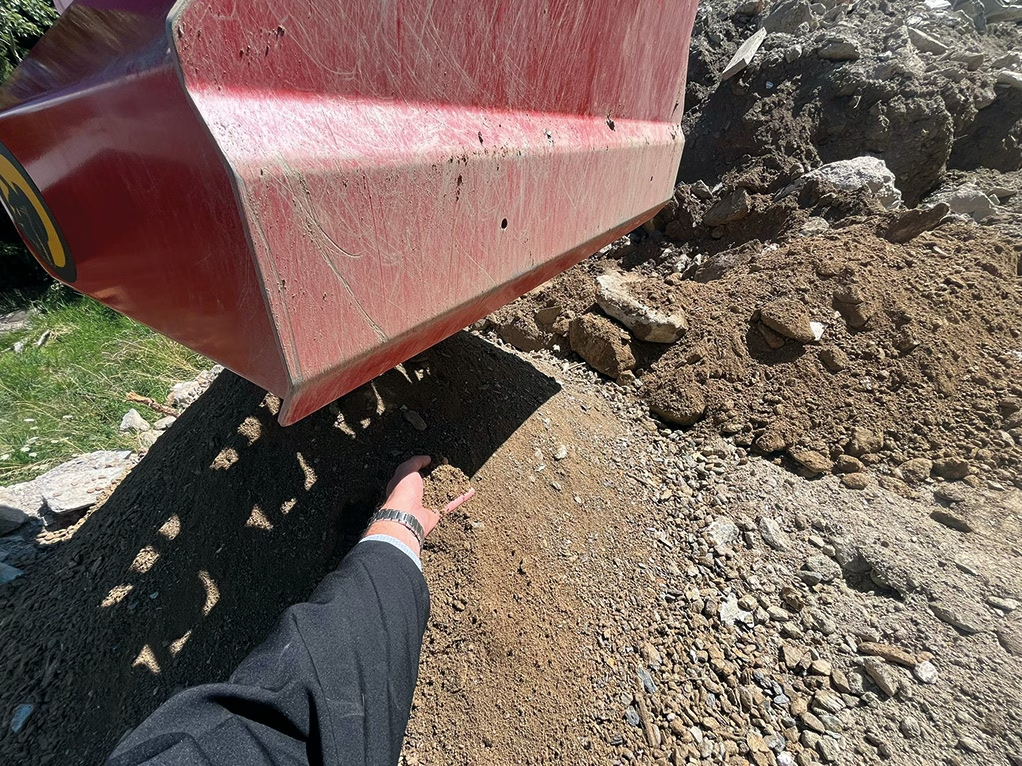
In this application, the result was immediate. Sticky soil passed through the bucket without caking onto the drums, while rebar and larger debris were screened out of the material. The bucket continued working shift after shift without the repeated cleaning stops that had affected previous attempts.
Making New Profit Streams
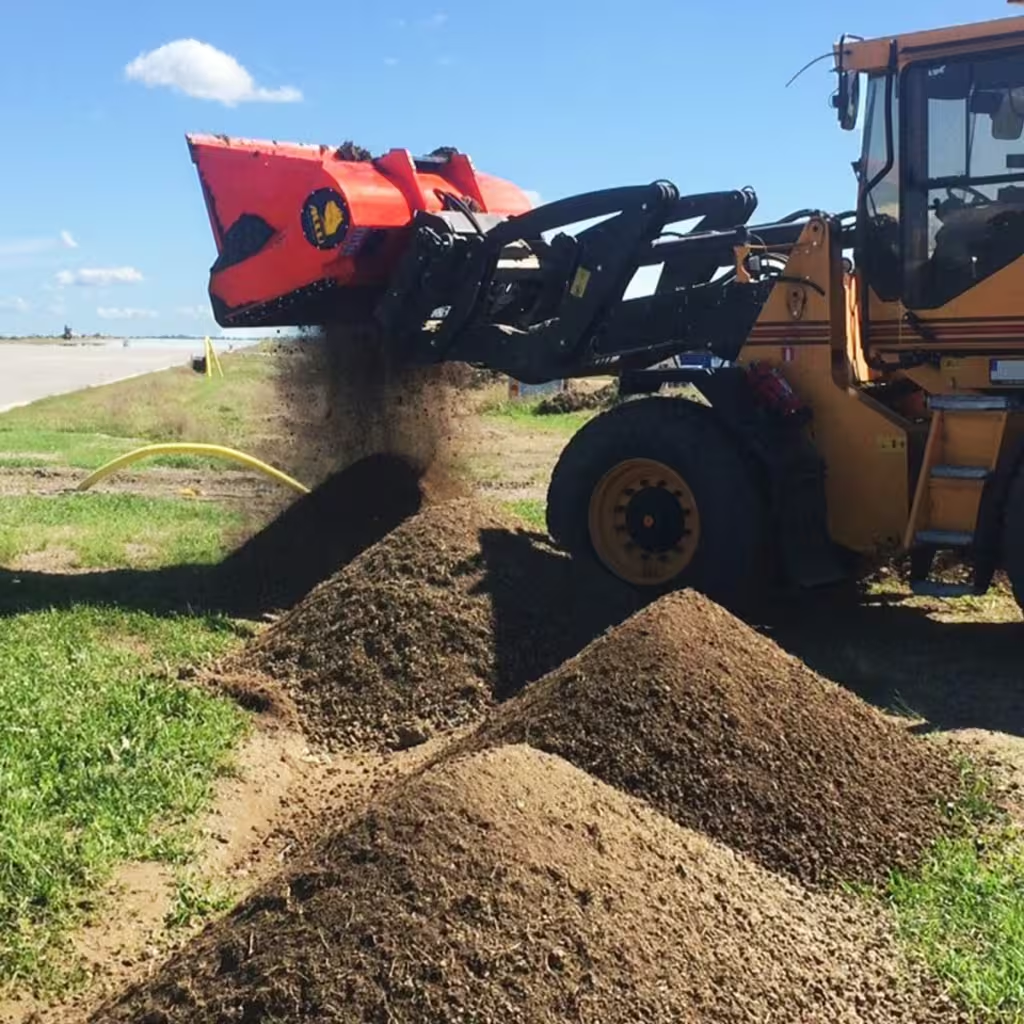
Where the contractor had previously been paying to haul material away, they were now generating income from both output streams. Maintenance was also straightforward: worn combs and blades could be replaced on site without special tools. ALLU Screening Buckets are designed to keep working – not to sit in the workshop.
“Other buckets couldn’t handle this wet clay soil. They’d clog in minutes. The ALLU runs all day. We’re selling soil we used to pay to dump. That’s the difference,” the contractor explained.
No additional equipment. No complicated processing line. Just one bucket, one excavator or loader, and material that can finally be recovered, separated, and turned into revenue.
Related products
Screening Bucket – D-Series
Carriers 6 – 45 t
Versatile DN-, DS-, and DH-Series Screening Buckets serve in a wide range of applications, ensuring high-quality material processing on-site.
The HALO Trust is one of the world’s largest humanitarian demining organizations, working to protect lives and restore livelihoods in communities affected by conflict. In Ukraine, HALO uses ALLU screening…
Turning Excavated Material into Quality Pipeline Backfill
On a 5-mile oil and gas pipeline project in Ohio, ALLU Screening Buckets transformed excavated soil into specification-ready backfill directly on-site. By screening and placing material with the same excavator,…
On-Site Remediation of Arsenic-Contaminated Soil with ALLU
Traditional remediation of arsenic-contaminated soil often requires multi-step processing and dedicated mixing plants. At a site in Hexigten Banner, Inner Mongolia, an ALLU DH screening bucket enabled on-site mixing and…
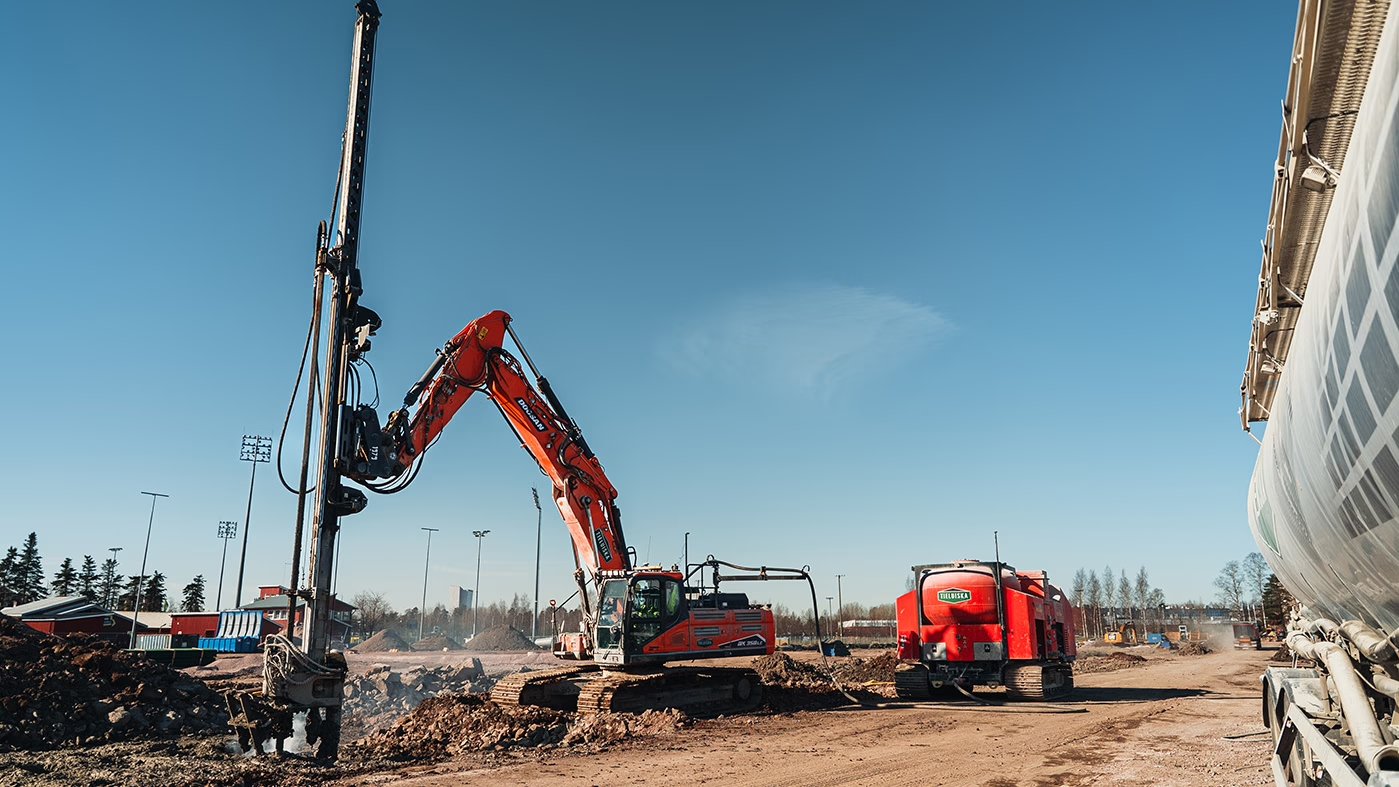
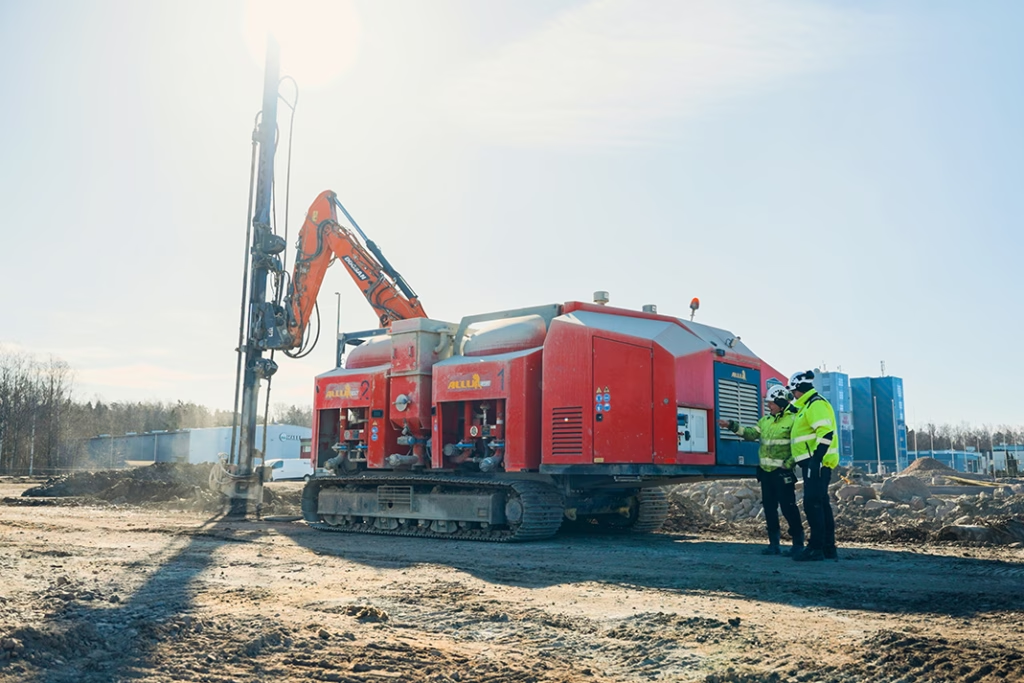
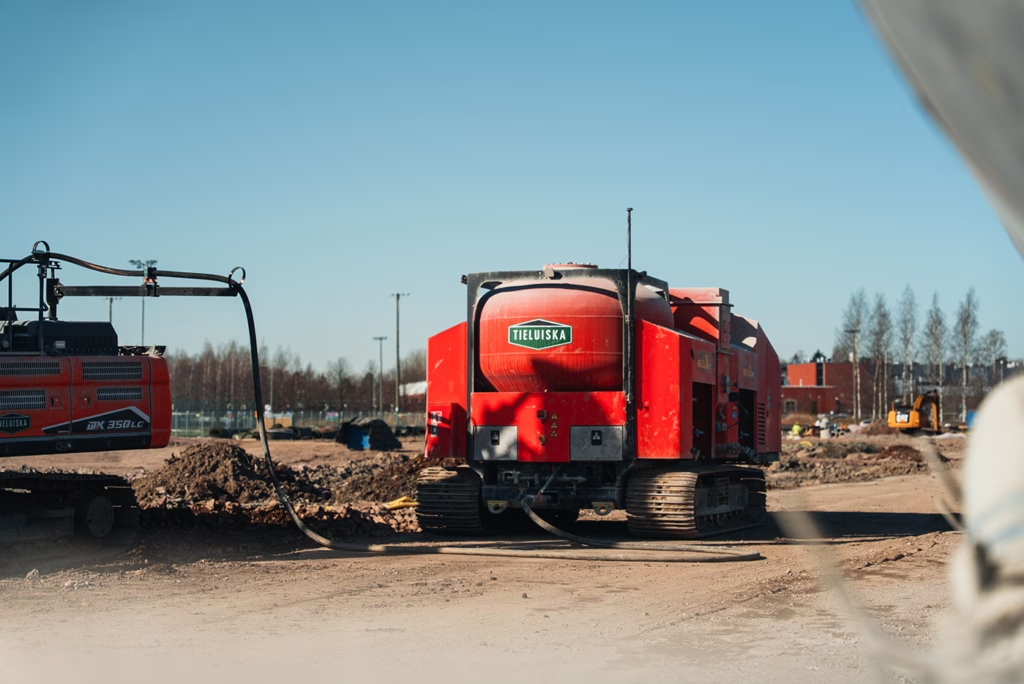
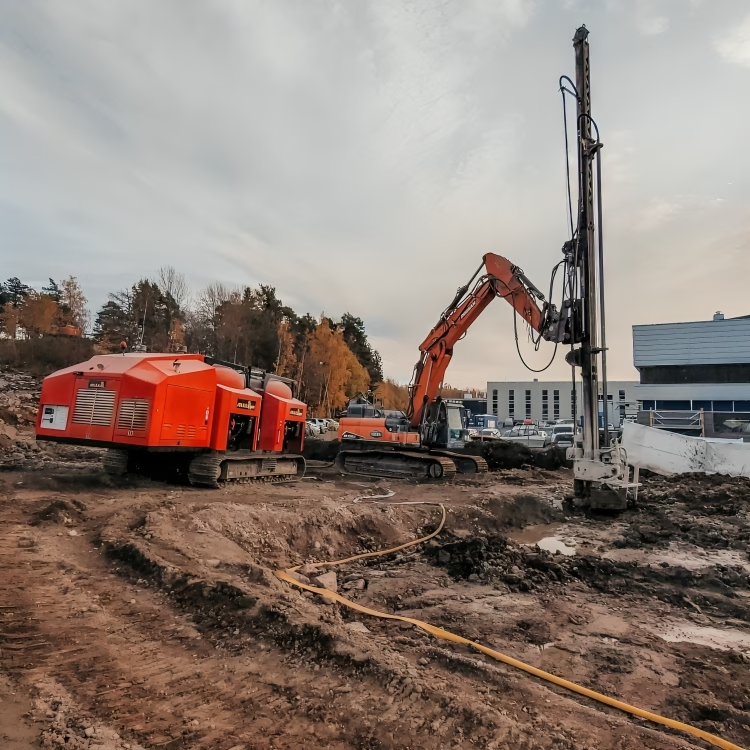
At the Tapiola Sports Park project in Espoo, Tieluiska Oy is using the ALLU PF 7+7 NextGen for efficient in-situ soil stabilization with deep dry mixing technology.
Function
In-situ ground improvement for sports facilities, streets, parking areas, and water infrastructure.
Model
ALLU PF 7+7 NextGen Pressure Feeder with column rigs for deep dry mixing
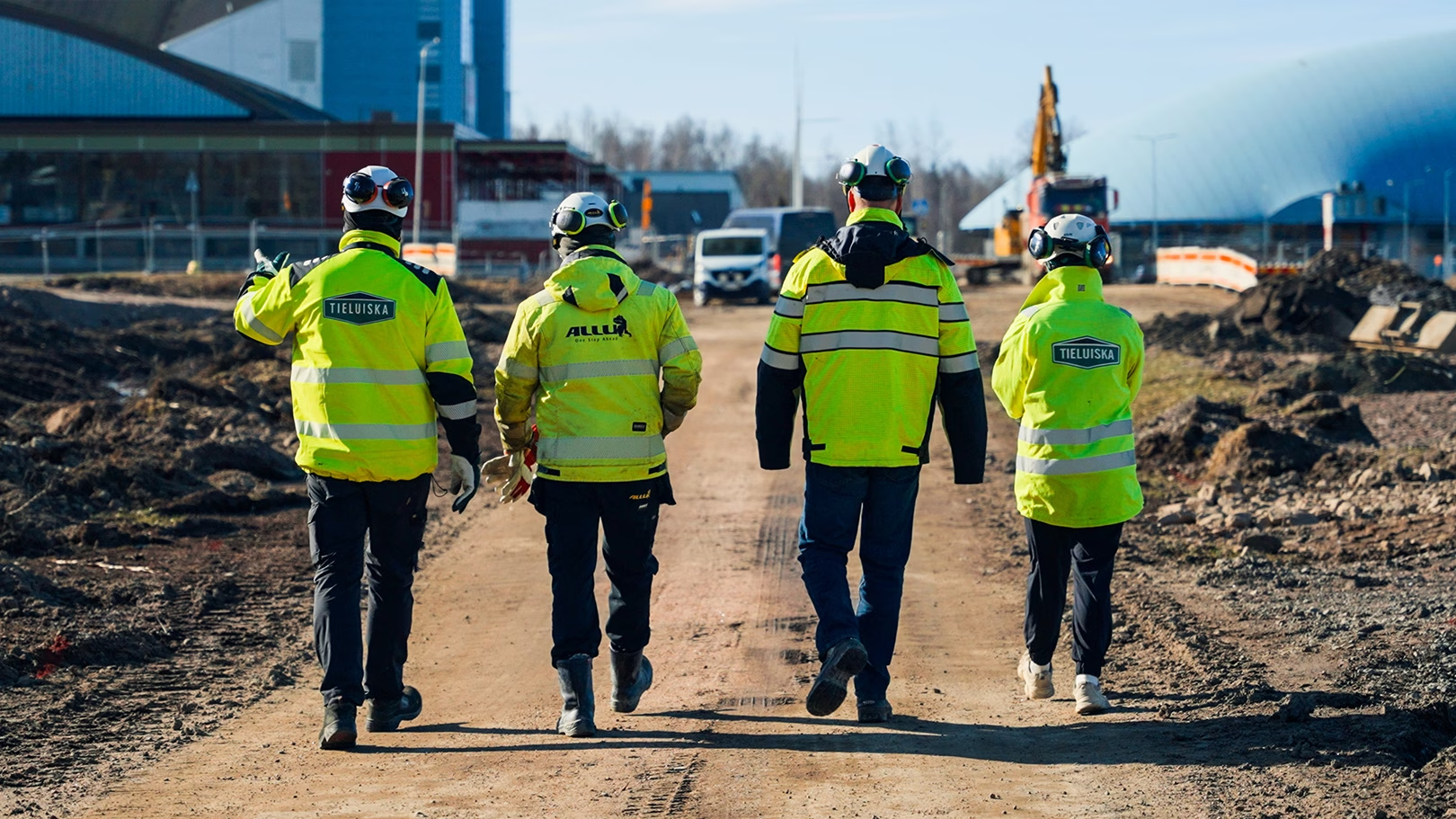
In Finland’s second-largest city, Tieluiska Oy is delivering one of the most ambitious recent public-space infrastructure projects: the northern section of the Tapiola Sports Park renovation. The work combines sports facilities, streets, water infrastructure, parking and green areas into a modern, accessible recreation hub for Espoo.
For the critical foundation works, Tieluiska is using a system it knows well: the ALLU Soil Improvement System with the PF 7+7 Pressure Feeder, paired with column rigs for deep dry mixing. The partnership between Tieluiska and ALLU Finland Oy – both Finnish – has developed over decades of site experience, direct feedback and practical support.
Tieluiska: half a century of Finnish infrastructure
Tieluiska Tikkanen & Yliniemi was founded in 1974, after the Tikkanen and Yliniemi brothers – both from Finnish railway-builder families – bought a Gradall slope-shaping machine advertised in Helsingin Sanomat. More than fifty years later, Tieluiska is a privately owned Finnish infrastructure builder with approximately 140 employees across earthworks, environmental construction, Torpanpiha® growing media production, and machinery and spare parts sales.
Roughly one third of the workforce has been with the company for more than ten years, giving Tieluiska deep institutional knowledge in streets, foundations, leisure areas, water infrastructure, parks, mass stabilisation and hydroseeding. That combination of infrastructure and landscaping experience is exactly what Tapiola Sports Park requires.
ALLU: 40 years of Finnish environmental engineering
ALLU was founded in 1985 in Pennala, Finland, as one of the country’s early environmental technology companies. It remains family-owned, with manufacturing, R&D and product development in Finland. From that base, ALLU operates internationally through subsidiaries in Sweden, Germany, the USA and China, plus a dealer network covering more than 30 countries; over 95% of turnover comes from exports.
ALLU’s range includes screening and crushing buckets for excavators and wheel loaders, and a complete soil improvement system for deep dry mixing: the ALLU Processor power mixer and the ALLU PF Pressure Feeder. Tapiola uses the latter system.
A partnership refined by real sites
Tieluiska has used ALLU’s soil stabilisation system across multiple projects, soil conditions, schedules and binder mixes. That makes the relationship more than a supplier–contractor transaction. Over hundreds of working days, feedback becomes detailed: how an interface behaves at -20 °C, where dust gathers on a track frame, and what binder feed looks like in wet glacial till versus dry sand.
This feedback loop is the principle behind the partnership: two companies, two long product life cycles and one demanding Finnish operating environment. Real ground conditions shape the next generation of ALLU equipment, and better equipment sharpens what Tieluiska can deliver to public clients.
Support matters as much as equipment. Because ALLU keeps manufacturing, R&D and product development at its Finnish headquarters, the people who develop the system remain close to the people who operate it. For Tieluiska, that responsiveness has been consistent: when a high-stakes urban project needs attention, the support comes from people who understand the application, the system and the shared history.
The project: Tapiola Sports Park, northern section
In 2024, the City of Espoo’s technical committee approved the renovation plans for the northern part of Tapiola Sports Park. Tieluiska was selected as main contractor for the €16.4 million package, running from October 2025 to October 2027. The scope includes:
New sports facilities: football pitches, a multi-purpose ground, neighbourhood exercise and play areas, a running straight, plus beach volleyball and basketball courts.
Streets and water infrastructure: renovation of Koivu-Mankkaantie; construction of Yhteispelintie, Yhteispelinkuja and Syöttäjänkuja; and two new roundabouts.
Parking and green areas: public parking integrated with parks and green spaces, connecting the site into one walkable, accessible whole.
The northern section also sits within the wider transformation of Tapiola Sports Park, which will later include a separate 6,000-seat UEFA Category 3 football stadium by Jatke Toimitilat. Tieluiska’s section is the foundational piece – literally the ground on which the rest of the area will be activated.
Why soil stabilisation was required
Like much of Espoo and the broader southern Finnish coastal zone, Tapiola sits on soft, often clay-rich post-glacial soils. Sports fields, traffic streets, parking areas and water infrastructure all need predictable ground so surfaces do not settle, pipes do not deflect, and the area performs for decades with minimal maintenance.
The conventional approach would be to excavate soft soil, haul it away and import suitable replacement material. On a €16.4 million urban project beside live sports halls, residential streets and existing infrastructure, that creates clear drawbacks: heavy truck traffic, disposal costs and environmental tracking, schedule dependence on truck cycles and aggregate availability, and extra carbon from haulage and imported materials.
Tieluiska chose a lower-impact route: stabilise the existing soil in place using the ALLU PF 7+7 Pressure Feeder with deep dry mixing column rigs.
How the ALLU PF 7+7 works
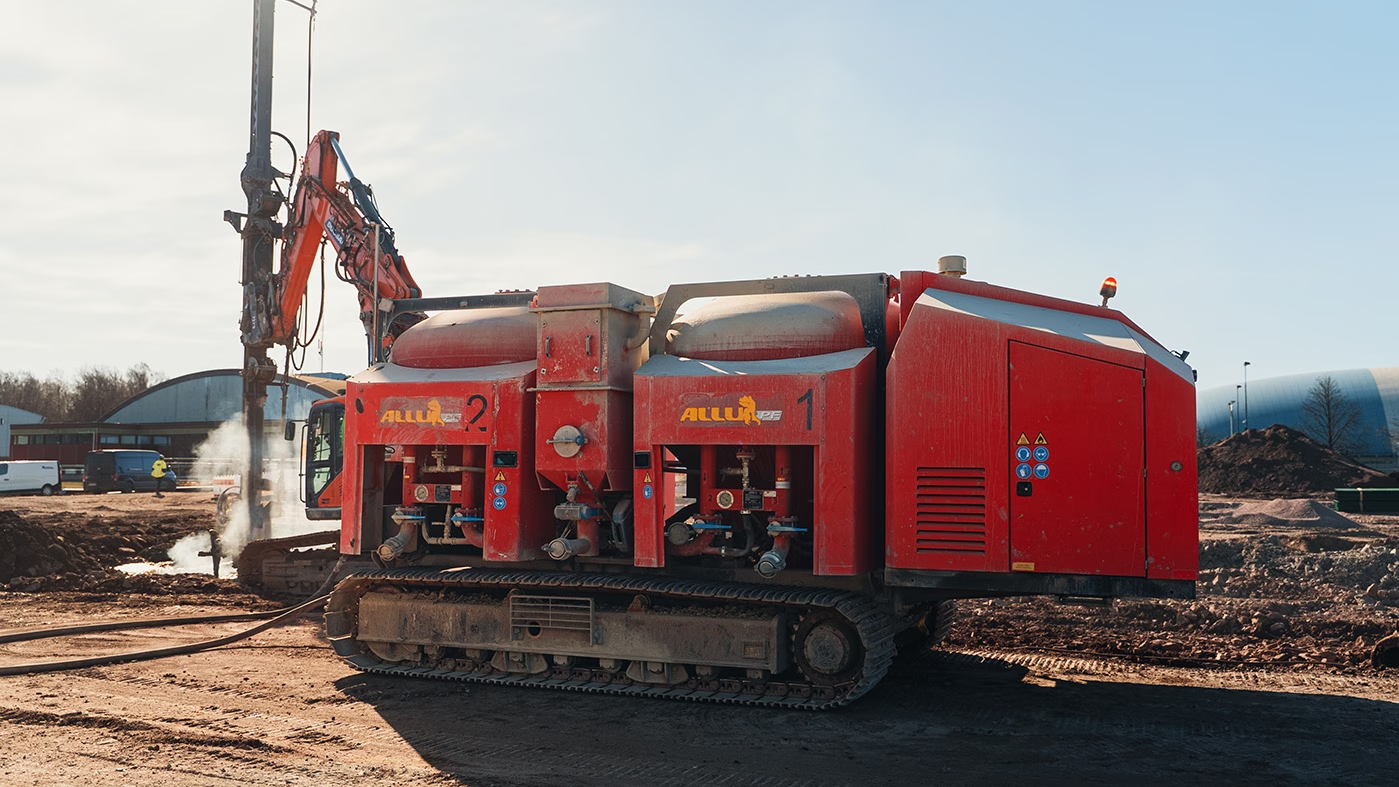
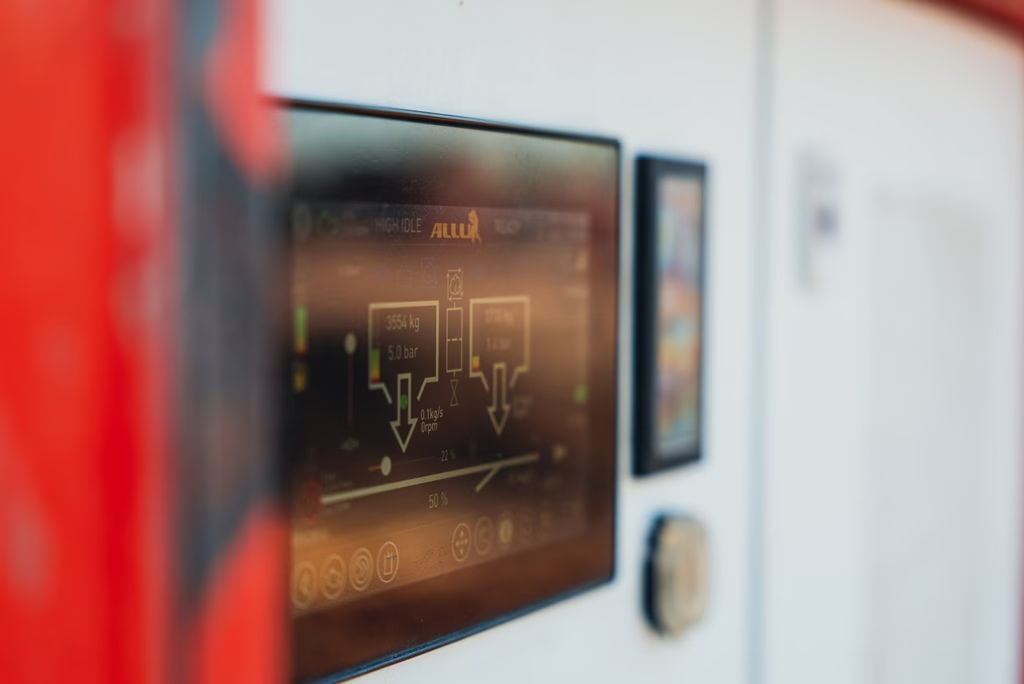
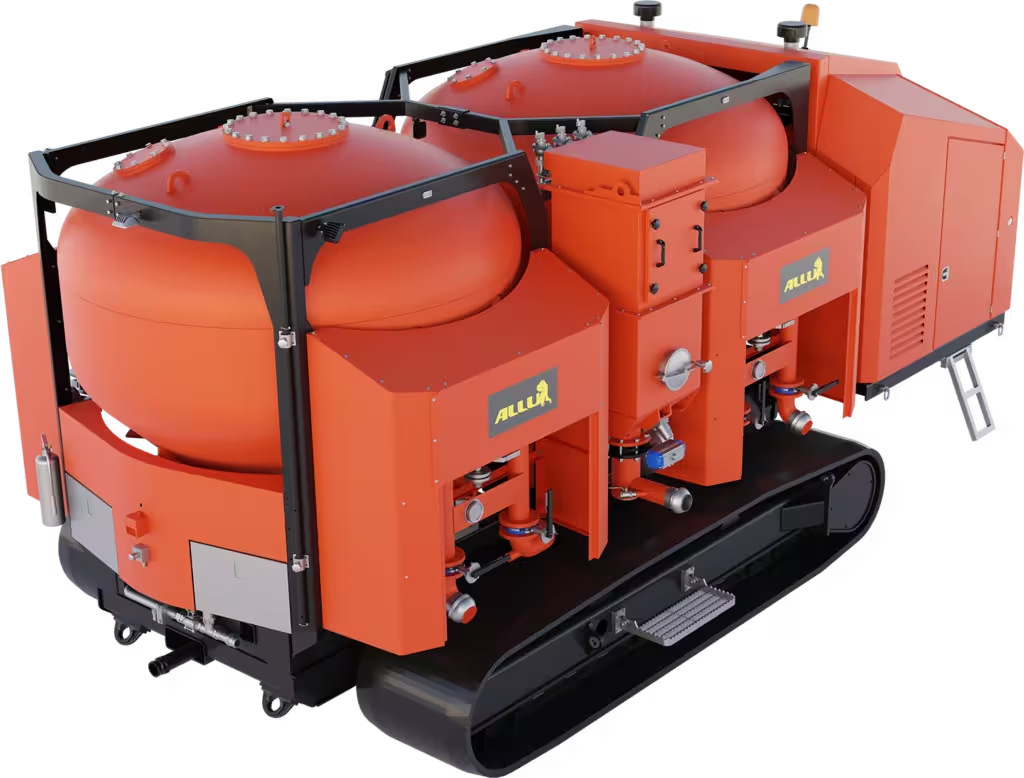
The ALLU PF 7+7 NextGen is a self-contained, track-driven, twin-tank pneumatic dry-binder delivery system. Its 2 × 7 m³ tanks allow continuous operation: while binder feeds from one tank, the other can be refilled. It operates at up to 10 bar (145 psi), with an adjustable feed rate of 3–15 kg per second, delivering binder up to 200 m horizontally and 30 m deep. The system is computer-controlled by ALLU DAC 2.1 and records numerical or graphical job-site data.
In Tapiola, column rigs drive a mixing tool into soft ground while dry binder – typically lime, cement or a cement-based blend – is pneumatically delivered through the rig and mixed into the soil column at depth. The result is a network of stabilised columns that act as load-bearing foundation elements without mass excavation.
Why in-situ dry mixing fits Tapiola
The benefits of stabilising soil in place using ALLU’s dry mixing system, rather than digging it out and replacing it, are particularly pronounced in tight, public, urban sites – and Tapiola is exactly that kind of site.
No mass haulage of soft soil: The existing ground stays where it is. There is no fleet of dump trucks running through the surrounding residential streets, no replacement aggregate being shipped in. On a sports-park renovation flanked by active facilities, the operational impact and the public-amenity impact both drop dramatically.
Reduction in binder consumption: The binding agent (cement, lime, or blends) is typically the most expensive single line item in any soil stabilisation or remediation project. With Dry mixing, the work uses less binder vs. wet slurry method or bucket mixing. Compared to bucket mixing, data from real project sites show that ALLU’s dry mixing system delivers a minimum 30% binder saving and up to 70% under optimal conditions. For a mid-sized project, that single difference can translate into hundreds of thousands of euros.
Dry binder vs wet slurry – precision over excess: Wet-slurry methods deliver binder mixed with water. To guarantee that every column reaches the required strength, the slurry method tends to over-dose: more binder is added because the wet delivery is harder to control with precision. Dry binder delivery via the PF 7+7’s computer-controlled, sealed, pneumatic system places exactly the dosage the design calls for at exactly the depth specified. Less binder used means lower material cost, lower CO₂ from cement production, and a more uniform stabilised column.
Same job in a fraction of the time: Dry mixing with ALLU Soil Stabilization System can complete the same stabilization work in up to one-eighth of the time required by traditional methods, and one ALLU machine can replace approximately five conventional excavators on a comparable mass-stabilisation task – with corresponding labour savings of around 75%. On a fixed-schedule public project, schedule certainty has direct commercial value.
Lower dust, fewer machines, safer site: Dry mixing through the PF 7+7’s enclosed pneumatic system produces less dust than open bucket-mixing approaches. Fewer machines on site means fewer people working around active equipment, lower fuel consumption, and a smaller traffic footprint inside the working area – important when the project is bordered by sports halls and public routes.
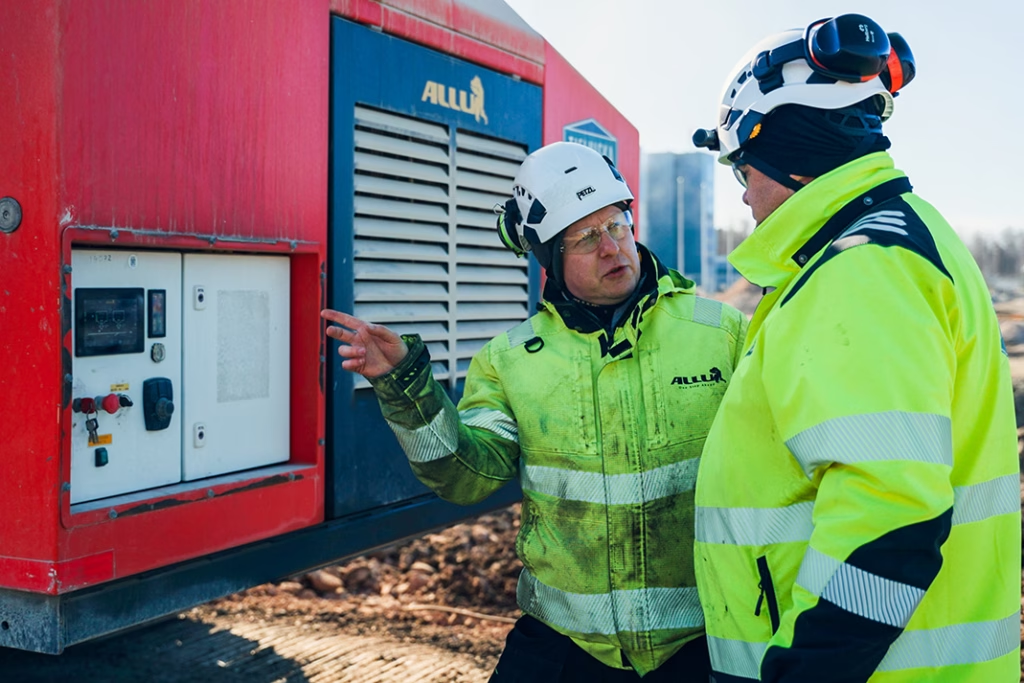
Verifiable quality, on the record: The DAC 2.1 control system records binder feed rate, depth, and column data continuously. For a city client (Espoo), that is auditable evidence that every stabilised column was constructed to specification – supporting acceptance, hand-over, and long-term maintenance documentation.
The big picture
Soil stabilisation is often won or lost on binder cost. Reducing binder use by 30–70% while delivering the same or better engineered ground performance is the largest economic lever in this type of work. Dry mixing with precise, computer-controlled feed is how that lever is pulled.
The Tapiola Sports Park project shows a practical Finnish way of building public infrastructure in dense urban environments: keep the existing ground in place where possible, stabilise it where needed, minimise truck movements through residential areas, document the work, and hand over a site that can perform for decades.
It also shows the value of long-term industrial relationships. Tieluiska, founded in 1974, and ALLU, founded in 1985, have worked together long enough that today’s equipment is partly shaped by operator feedback from earlier Finnish job sites. That feedback is visible in machine design, support responsiveness and the confidence with which Tieluiska can choose in-situ dry mixing for a high-visibility public project.
From Soft Ground to Solid Foundation: ALLU PMX at the Xiangjiang Riverside Sports Park
At the Xiangjiang Riverside Sports Park, soft soil conditions threatened to slow construction progress. Facing reliability challenges and limited production capacity, the contractor adopted the ALLU PMX for in-situ mass…
Schaumlava Grube Herchenberg GmbH enhances its efficiency and sustainability in lava rocks processing by integrating the ALLU DH 4-17 Screening Bucket directly into quarry operations. By crushing material on-site, the…
Recycling of Asphalt, PFA, and More: ALLU & MRD Plant
Discover how MRD Plant in Leicestershire uses ALLU screening buckets, including the DH 4-17 and DS 3-23 models, to revolutionize waste material handling. From recycling asphalt road planings to processing…
Material
Excavated soil, trench backfill material, mixed and wet materials
Industry
Construction, Earthmoving, Infrastructure
Application
Trench backfilling and pipe bedding
Function
Screening, separating, mixing, and aerating material on-site
Model
ALLU DC 2-08
HOW BEAUTIFUL THE MOUNTAIN IS
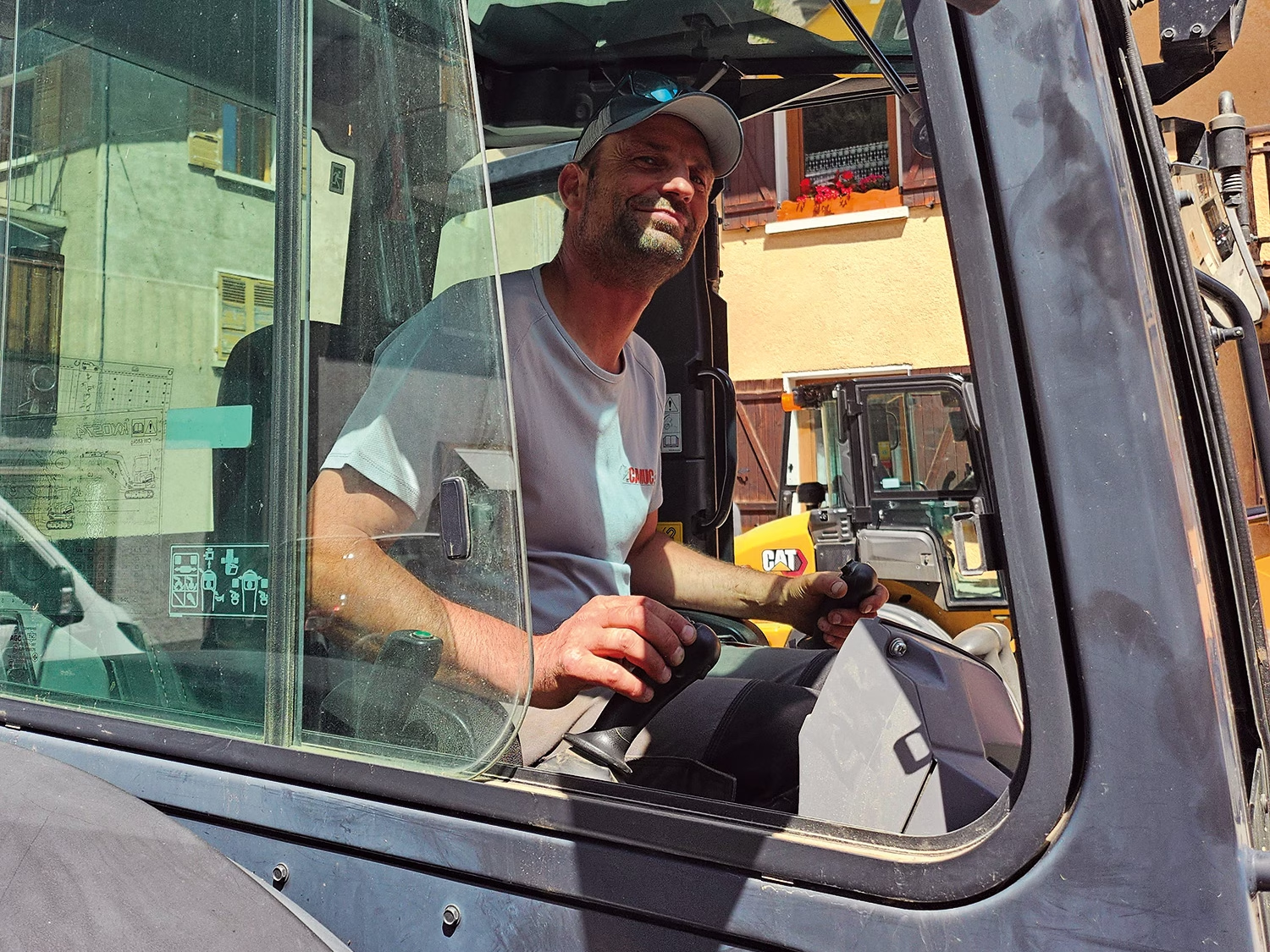
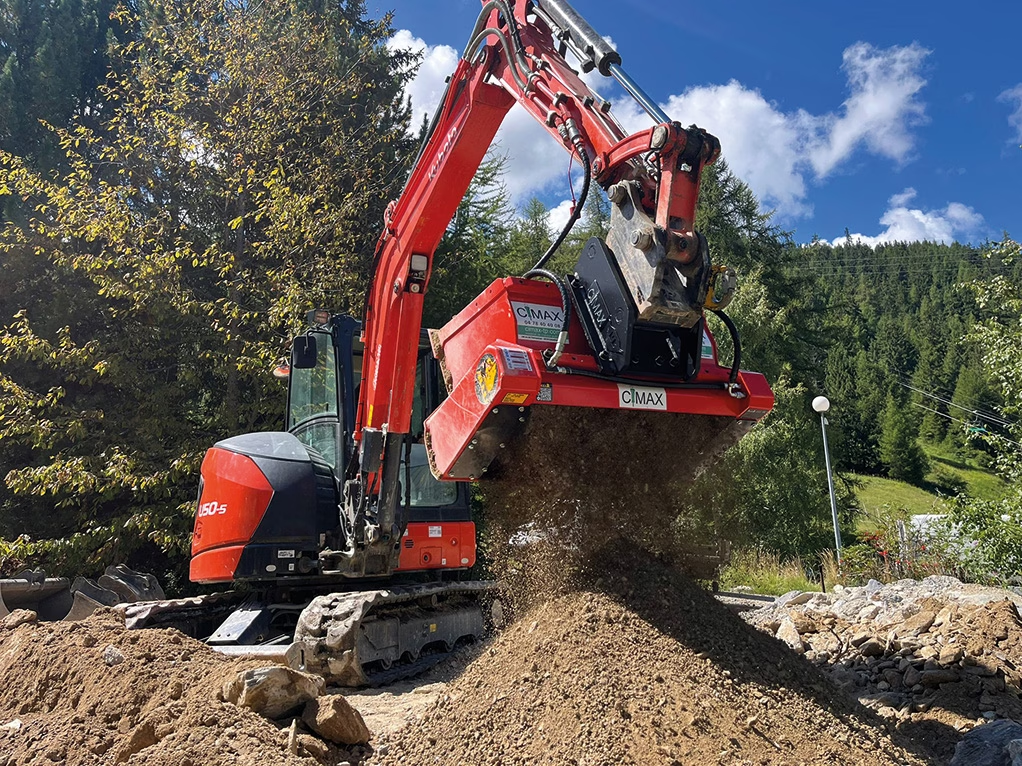
There is no need to extract from nature what can simply be produced on site with a screening bucket, namely fine trench backfill material. For a mountain contractor from Haute-Maurienne like Yoan Bernard, screening excavated material directly on site is more than obvious, it is a necessity. After a first successful experience with a screening bucket mounted on his 10-ton spider excavator, he moved to a more compact model: an ALLU DC 2-08 Bucket weighing 275 kg for his 5-ton Kubota.
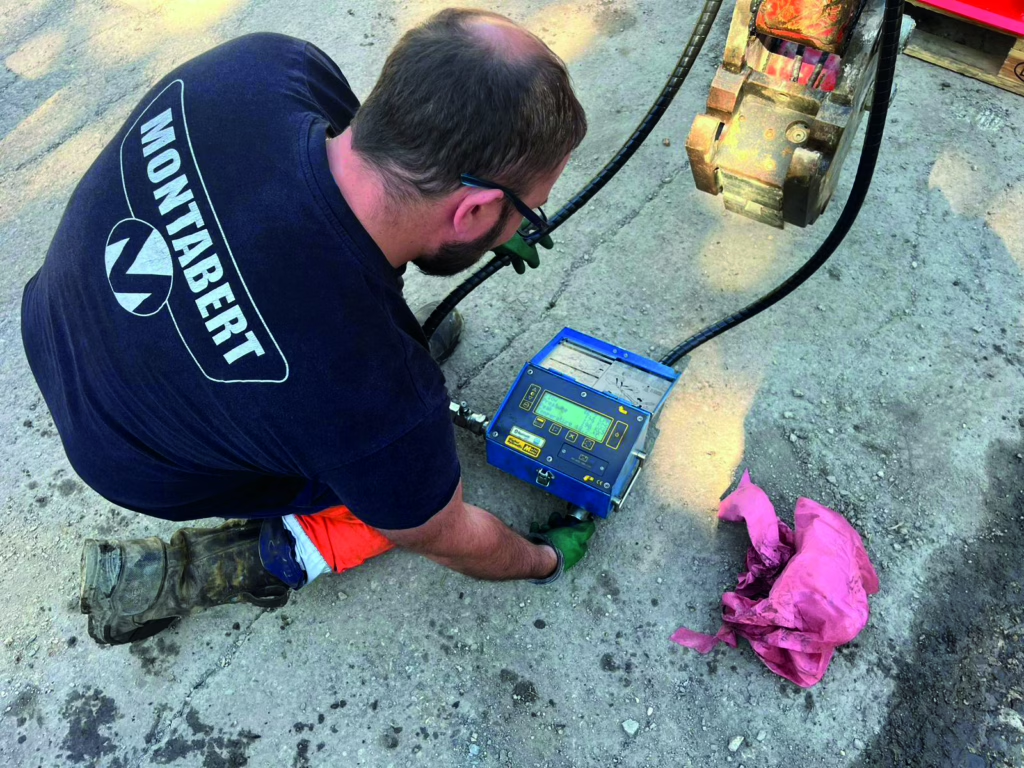
For the commissioning, Yoan is operating the machine while Pierre Ratigner, workshop manager at Cimax, adjusts the hydraulic flow. While the manufacturer recommends a range of 20 to 40 l/min, for this 5.5-ton KX057-4 excavator the flow is set to 38 l/min. The maximum operating pressure is 200 bar and does not require any particular adjustment.
For the operation of its bucket, as with its heavier models DL-series for excavators up to 12t, D-series for excavators up to 45t, ALLU has chosen a drive system where the first rotor is powered by a hydraulic motor, with transmission to the opposite side via a gear and a well-dimensioned metal chain.
On the DC-series for compact excavators from 2 to 10 t, the same drive design is used with the integrated Transformer technology. This allows efficient screening regardless of the type of material: from hard and compact to soft and malleable, from dry to more or less wet and sticky.
THE SCREENING EXPERIENCE
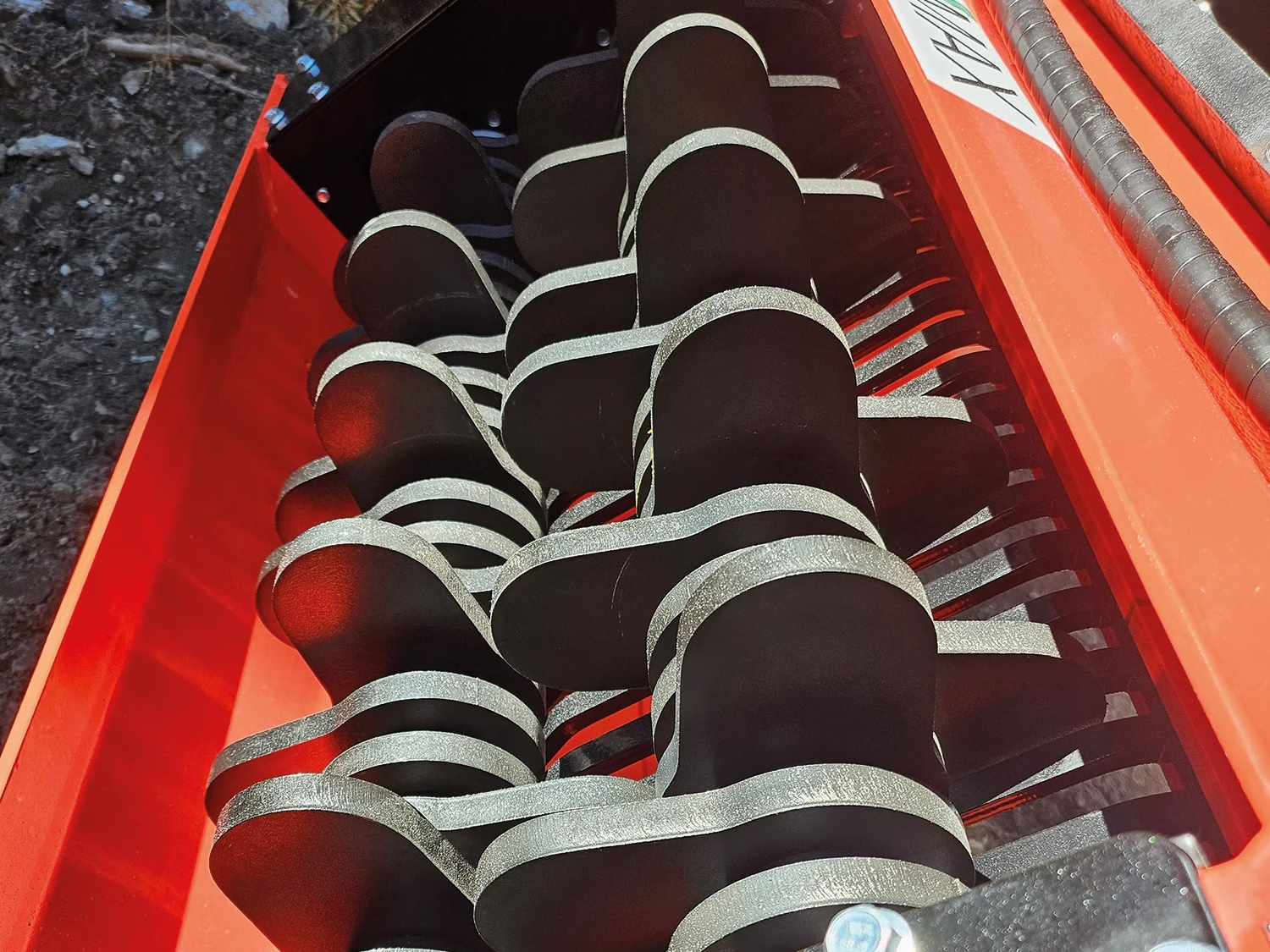
The main difference with the ALLU bucket lies in its fixed screening grid positioned above the rotors. This ensures that the loaded material always remains in contact with the grid. The blades pass through the grid and clean themselves automatically, which helps maintain:
optimal productivity
consistent particle size quality
reduced wear on the bearing housings, since the rotors are not in direct contact with the raw material.
In addition, the bucket features special wear-resistant steel blades. They are individually replaceable because they are not welded, and are designed to mix the material effectively, break up lumps, aerate it, loosen it if wet, and ultimately allow only the fine fraction to pass through.
ALLU offers different blade sizes for its TS screening rotors, the most frequent being 16mm to get a 0/20 material output. 8mm, 25mm and 35mm TS blades are also available to provide respectively 0/10, 0/30 and 0/40 output size. The TS system also offers the possibility to pair the blades easily to double the output fragment size.
EASY OPERATION
Using the bucket is straightforward. Once the bucket is filled (capacity of 0.26 m³ for the DC 2-08), Yoan activates the rotor movement using a roller on his joystick. The rotation direction lifts the material upward.
If a blockage occurs, for example if a blade is jammed by a stone, Yoan can reverse the rotation, since the ALLU bucket hydraulic line is double-acting.
“The market offers quite a wide range of screening buckets. The advantage of the ALLU lies in the sizing of its structural steels and especially the quality of the weld seams — it’s industrial-grade. The blades are made of wear-resistant steel. What interests me most is a tool that performs reliably throughout its lifespan and guarantees efficient production, even when the material is wet,” explains Yoan.
Here, the bucket is used to select materials in order to produce a finer fraction suitable for trench backfilling and pipe bedding.
According to productivity calculations made by Nils from Cimax, the average daily output of this DC 2-08 screening bucket will be between 70 and 130 m³ per day. Many variables influence this: moisture content and the nature of the material. These estimated values are non-contractual.
Mr. Lawn Guru saves costs and reduces waste with the ALLU DL 2-12 TS16 screening bucket, efficiently separating contaminants and reusing clean soil on-site.
Material
Mixed soil with wood, concrete, metal, and vegetation contaminants
Industry
Construction
Application
Site clearing, soil recycling
Function
Screening and separating contaminants to produce clean, reusable soil
Model
ALLU DL 2-12 TS16
Mr. Lawn Guru is an Australia-based company located in Melbourne, specializing in site clearing and land levelling services. The team ensures that every site is properly prepared for new home construction, landscaping, or other development projects.
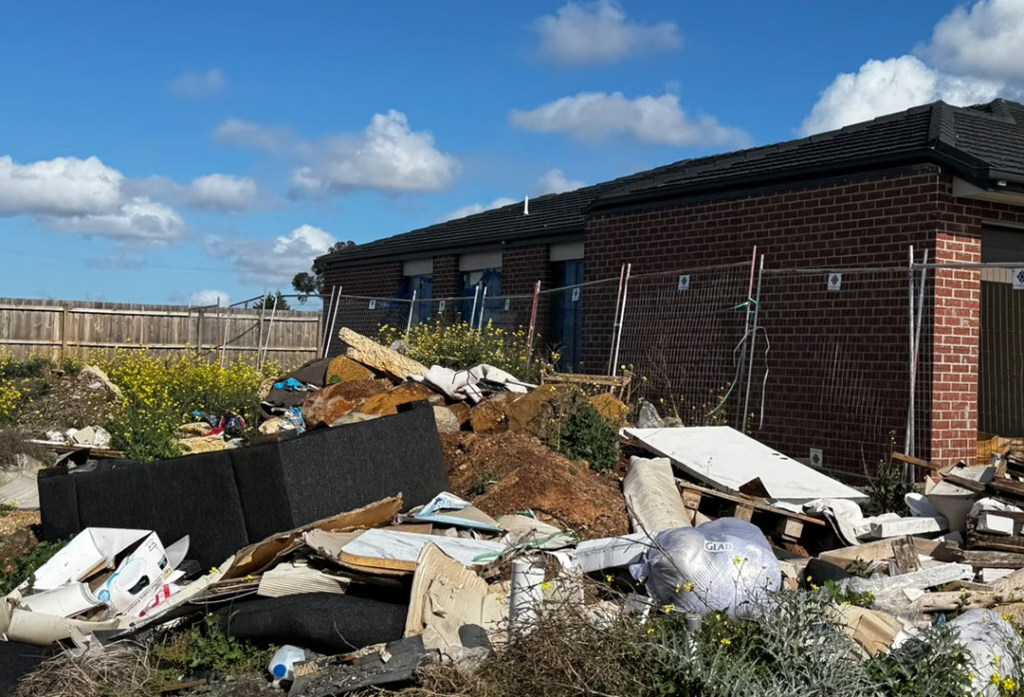
Andy, the company’s owner, has been in the industry for many years. Over time, he has witnessed waste and recycling yards across Australia becoming increasingly strict about accepting only clean materials or raising dumping fees for mixed waste.
For example, if the soil is clean and free from contaminants, Andy can dispose of it for around $150 per tonne. However, if it contains a mix of materials such as wood, bricks, concrete, rebar, or vegetation, the cost can rise to $300 per tonne.
In many cases, when clean soil is available, developers are happy to buy it back or keep it for future landscaping. This is exactly what Andy prefers, as it helps reduce costs even further by avoiding the need to transport the material to waste or recycling yards.
The industry is highly competitive, and unfortunately, many unreliable contractors try to cut corners when disposing of materials. This often leads to illegal dumping in remote areas, which can result in hefty fines and legal issues.
Andy’s motto is to use only the best machinery available on the market, believing that efficiency is the key to keeping costs under control. By equipping his primary machines with high-performance attachments, he ensures productivity, safety, and compliance with environmental regulations.
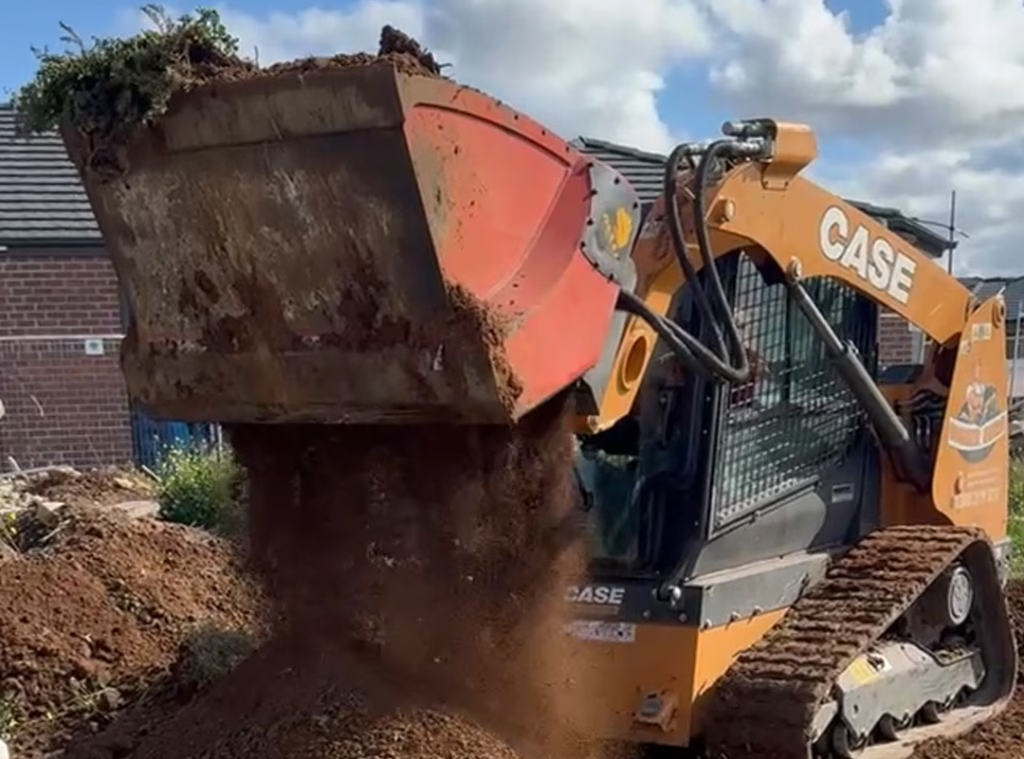
That’s when Andy began exploring hydraulic screening buckets and decided to test ALLU alongside other brands available in Melbourne, Victoria. He contacted ALLU’s dealer, Walkers Hammers, who arranged an on-site demonstration. Within just 15 minutes of testing the ALLU DL 2-12 TS 25 (which produces 0–25 mm material), Andy could clearly see the bucket efficiently separating wood, branches, concrete, plastic bottles, and metal rebars.
After the demo, Andy mentioned that if the output fragment size could be reduced further — down to 0–15 mm — it would capture even more concrete and other contaminants. To achieve this, it was recommended to change the blades from TS25 to TS16, which would deliver the desired result. Andy was convinced and decided to purchase the ALLU DL 2-12 TS16 on the spot. The bucket was delivered within two weeks.
As regulations continue to tighten and the cost of screening rubble at waste and recycling yards increases, these facilities are placing greater emphasis on clean soil. Contractors who deliver cleaner material are rewarded with lower dumping fees, encouraging more sustainable practices. This clearly demonstrates that the ALLU bucket pays for itself, not only by reducing waste and operational costs, but also by minimising the overall carbon footprint.
Related products
Screening Bucket – DL-Series
Carriers 2 – 12 t
Lightweight DL-Series Screening Crushing Bucket is an easy and simple but still strong and reliable screening attachment.
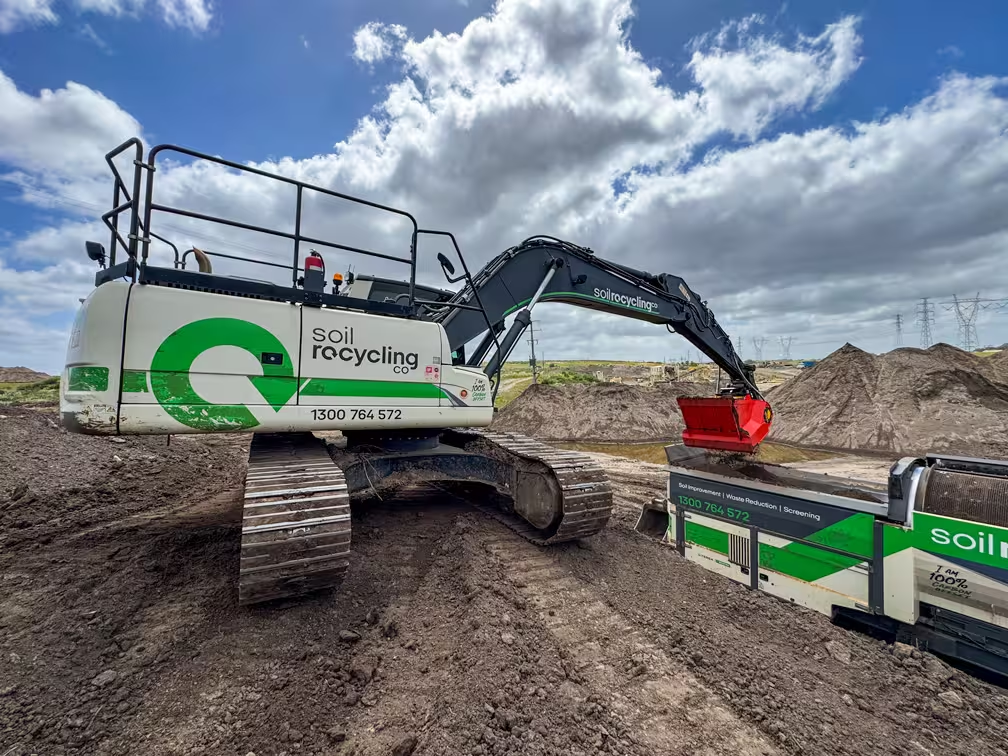
Soil Recycling Co. is at the forefront of soil screening in Victoria, dedicated to promoting the reuse of soil as a valuable resource rather than disposing of it in landfills.
Enhancing Mushroom Substrate Preparation at Tvedemose
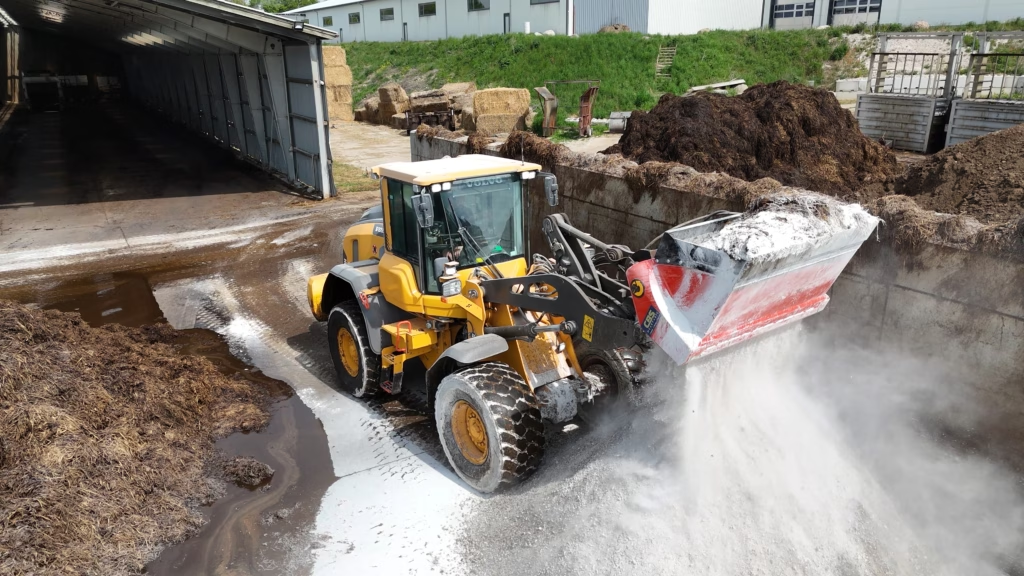
Tvedemose uses the ALLU bucket to efficiently mix and crush manure, gypsum, and straw in substrate preparation. The axe blades pulverize chicken manure into a fine powder, releasing nutrients evenly…
Hazardous Waste Processing in Latvia’s Largest Remediation Project
When Latvia launched its most ambitious environmental cleanup to date, A/S BAO turned to ALLU to handle the extreme materials and conditions at the infamous Inčukalns tar ponds. More than…
Contact our team and we’ll help you find the perfect solution for your business.
Screening Clay-Rich Soil
Müller Beton Magdeburg chose the ALLU DN 3-17 TS16/32 to handle tough, clay-rich soil. The bucket delivered efficient fine screening without clogging or over-crushing, boosting both throughput and worksite productivity.
Application
Fine screening and material preparation
Function
Soil screening
Model
ALLU DN 3-17 TS16/32
Müller Beton Magdeburg relies on a powerful solution when processing cohesive soil: the DN 3-17 TS16/32 screening bucket. The demands on the screening result are high – the soil must be finely processed, but not crushed too much, as this can quickly become problematic with such a material.
The local soil is quite unique: it contains clay and loam, is heavy, and tends to form large clumps. Such cohesive soils place high demands on any type of screening or separation technology – not every bucket or shaft can handle it.
Over time, the company has tested a variety of screening buckets with different shaft shapes and screen sizes – including those from other manufacturers. In the end, ALLU impressed across all relevant points.
“The ALLU bucket does exactly what we need: not too coarse, not too fine – just right for this soil,” explains Mr. Kusebach, Managing Director of Müller Beton Magdeburg.
In addition to screen quality, daily performance on the job site was also a key factor: “A bucket from another manufacturer did provide a finer result, but just didn’t process enough material – and that’s not cost-effective on the job site. With ALLU, both quality and efficiency are spot on.”
Successful use over several years
The ALLU DN 3-17 TS16/32 has now been in use at Müller Beton for three years. It is paired with a Hitachi excavator, which has proven effective in day-to-day operations. The team is also familiar with other ALLU models previously used through rental.
“We’ve tested various separators – but with our heavy, clay-rich soil, ALLU clearly worked the best.”
With ALLU, Müller Beton has found an economical and reliable solution to process even demanding materials efficiently – another example of successful ALLU separator usage in real-world conditions.
Benefits of using the ALLU DN 3-17 TS16/32 for Müller Beton Magdeburg
Reliable fine screening of heavy, clay-rich soil
Balanced combination of screening quality and performance
Higher material throughput
Related products
Screening Bucket – D-Series
Carriers 6 – 45 t
Versatile DN-, DS-, and DH-Series Screening Buckets serve in a wide range of applications, ensuring high-quality material processing on-site.
Soil Recycling Co. is at the forefront of soil screening in Victoria, dedicated to promoting the reuse of soil as a valuable resource rather than disposing of it in landfills.
Enhancing Mushroom Substrate Preparation at Tvedemose
Tvedemose uses the ALLU bucket to efficiently mix and crush manure, gypsum, and straw in substrate preparation. The axe blades pulverize chicken manure into a fine powder, releasing nutrients evenly…
Hazardous Waste Processing in Latvia’s Largest Remediation Project
When Latvia launched its most ambitious environmental cleanup to date, A/S BAO turned to ALLU to handle the extreme materials and conditions at the infamous Inčukalns tar ponds. More than…
Contact our team and we’ll help you find the perfect solution for your business.
Efficient aggregate production
DTS Servizi SRL found a simpler way to process demolition waste in Sicily. By using the ALLU DN 3-17 TS 25 bucket, they now screen and separate material with just one machine - saving time, fuel, and effort on every job.
Function
Sorting fines and feeding oversize to crusher
Model
ALLU DN 3-17 TS 25
Aggregate Screening in Sicily: Efficient Material Recovery with Fewer Machines
DTS Servizi Srl is a Sicilian based company with a focus on collection and transportation of hazardous waste materials. Materials resulting from demolition, construction sides are collected, transported and recovered into useful aggregates. Which further are used back in new construction projects as valuable sub-base or secondary raw materials. DTS Servizi offers safe and reliable operations to its customers.
The Challenge: Expensive operations
At DTS Servizi Srl finding the balance between smooth and economically cost-effective operations was important. At the same time maintaining quality and ease of operations.
Problem Overview: Too much equipment on site makes it expensive to run. In addition, due to different customer needs, the level of mobility to adjust was limited.
Impact:
High operational costs due large machinery.
Absence of mobility in operations when needed.
Expensive and long downtimes.
The Solution: ALLU Transformer Bucket
In the search of solution DTS Servizi got in contacted with ALLU dealer; ALMH SRL to try ALLU Transformer DN 3-17 TS 25.
The Result: Mobility at affordable cost
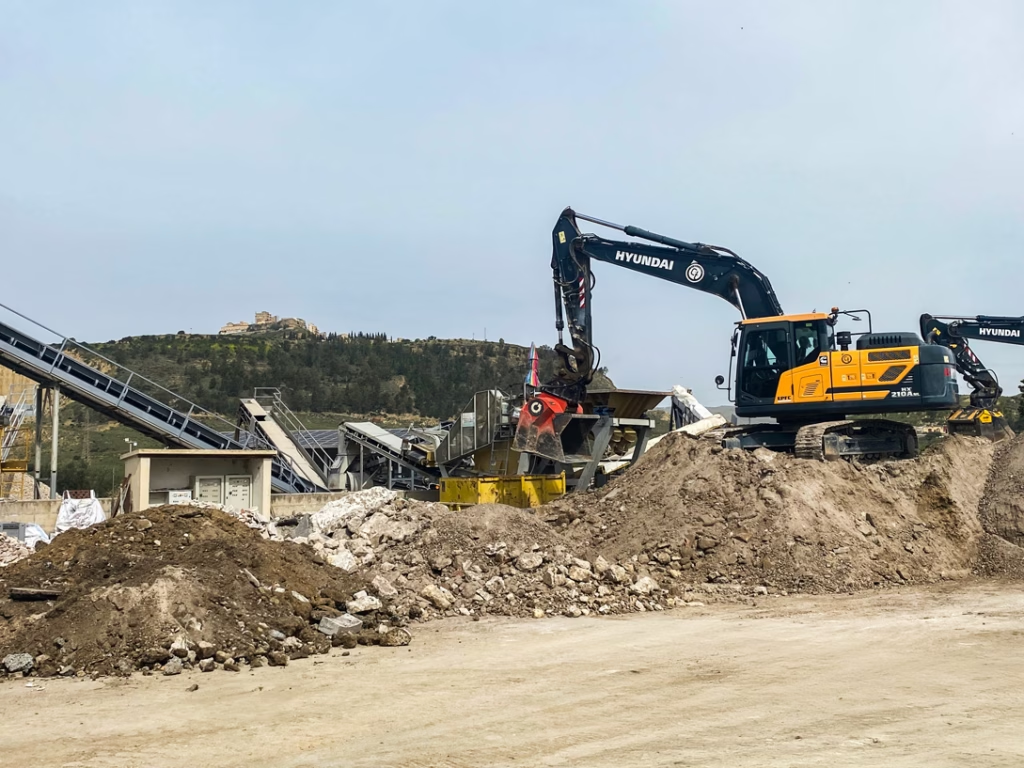
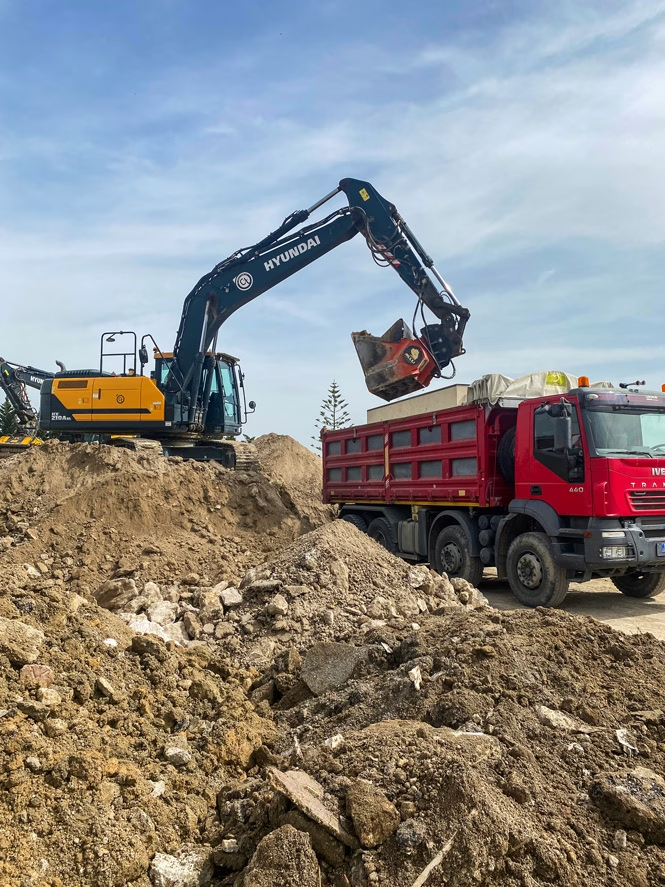
ALLU Transformer DN 3-17 TS 25 is sorting fines out of oversize aggregates at DTS Servizi yard. With ALLU customer can do his operation in one-step. Thus, a dump truck can be filled up with fines because of screening, and oversize is fed into mobile crusher. To happen in one-cycle. By doing so customer is utilizing his excavator as a sorting plant. In return, this helps to keep the costs down when it especially comes down to fuel and maintenance.
Conclusion
The collaboration between DTS Servizi and ALMH highlights the value of effective problem-solving and productive communication between parties. The introduction of the ALLU DN 3-17 TS 25 bucket resolved a critical challenge, enhancing productivity and mobility at customer’s side. With such a solution DTS Servizi has become more agile in its focus and operations whilst keeping the level of quality.
Related products
Screening Bucket – D-Series
Carriers 6 – 45 t
Versatile DN-, DS-, and DH-Series Screening Buckets serve in a wide range of applications, ensuring high-quality material processing on-site.
ALLU Transformer Screener Crusher Processing Construction Waste
Construction waste emanating from a development project needed to be processed for disposal, with material for re-use being separated from material to be landfilled.
A gas plant’s incoming material quality, shape and size varied due to it coming from a variety of different sources. This led directly to oversized material ‘jamming’ the plant’s feed…
A runway excavation project involved cutting straight through the airfield, with the reuse of the excavated material being stipulated so as to avoid the need to buy and bring in…
By efficiently screening and removing metal rebars and oversized contaminants, Harsco minimizes conveyor belt damage, reduces downtime, and repurposes slag into valuable materials for construction and road applications.
Material
Slag with embedded metal rebars and oversized contaminants
Industry
Construction, Waste material handling
Application
Slag processing and material screening
Function
Screening slag, separating contaminants
Model
ALLU DN 2-12, ALLU DH 3-17 with X75 drums
Harsco Metals and ALLU – A Partnership for Operational Excellence
Harsco Environmental is a global leader in providing sustainable solutions for the steel and metals industries. At its Laverton branch in Melbourne, Australia, the team specializes in slag processing, repurposing industrial byproducts into valuable products like aggregates for the road and civil industries. However, recurring operational challenges threatened efficiency and productivity, prompting the need for an innovative solution.
The Challenge: Conveyor Belt Tearing
At Harsco’s Laverton branch, the conveyor belts were frequently damaged during slag processing. The issue arose from the fact that the slag collected from the caster pit contained metal rebars and other oversized contaminants that were not effectively screened out using the existing equipment. These materials were not properly filtered using a skeletal bucket, leading to sharp items damaging the downstream conveyor belts during transfer to the crushing line. This caused increased downtime due to frequent maintenance, high operational costs from repairs and inefficiencies, as well as safety risks and disruptions in the overall slag processing operations.
Impact:
Increased downtime due to frequent maintenance.
High operational costs from repairs and inefficiencies.
Safety risks and disruptions in slag processing.
The Solution: ALLU Transformer Bucket
Recognizing the need for a more efficient and robust screening solution, Harsco Metals’ maintenance team contacted Walkers Hammers, the ALLU dealer in Melbourne, Victoria.
Site Study and Demo: On 12th April 2024, Sami Rahman, ALLU area sales manager conducted a site study and recommended the ALLU DN 2-12 Transformer bucket with specialized X75 drums. Carlo Costanzo, Walkers Hammers’ service technician, prepared the equipment by fitting a head bracket for a CAT excavator.
Key Stakeholders at the Demo: The demo was attended by General Manager Andrew Hayes, site supervisor Nazz, and Dan from the maintenance team. The ALLU bucket demonstrated its ability to screen slag efficiently, removing metal rebars and oversized contaminants while protecting downstream equipment.
Extended Testing: Impressed by the demo, Harsco Metals rented the ALLU DN 2-12 bucket for two weeks to test it with their operators across multiple shifts. This ensured operator familiarity and confidence in the equipment’s performance.
The Result: Quick Decision and Seamless Delivery
At the conclusion of the rental period, Walkers Hammers presented a sales offer tailored to Harsco’s needs.
Bucket Selection: Considering the continuous-duty operation and need for a robust solution, the ALLU DH 3-17 with X75 drums was proposed.
Features:
Two hydraulic motors for enhanced torque.
Heavy-duty frame for durability in demanding conditions.
X drums with Changeable blades to easily replace when they wear out
Approval and Delivery: Harsco’s management swiftly approved the purchase, thanks to the proven performance during trials and Walkers Hammers’ prompt service. The equipment was ordered and delivered in July 2024, ensuring minimal disruption to operations.
Conclusion: A Partnership for Productivity
The collaboration between Harsco Metals and Walkers Hammers highlights the value of effective problem-solving and reliable dealer support. The ALLU DH 3-17 bucket not only resolved a critical challenge but also set new standards for efficiency, productivity, and sustainability in the metals recycling industry.
With ALLU’s robust solution and the dealer network’s readiness, Harsco Metals reinforced its commitment to operational excellence and sustainable processing—setting a benchmark for efficiency in the metals recycling industry.
Timeline:
April 2024: Problem identified and demo conducted.
April–May 2024: Two-week rental period for extended testing.
July 2024: Delivery and implementation of the ALLU DH 3-17 bucket.
Related products
Screening Bucket – D-Series
Carriers 6 – 45 t
Versatile DN-, DS-, and DH-Series Screening Buckets serve in a wide range of applications, ensuring high-quality material processing on-site.
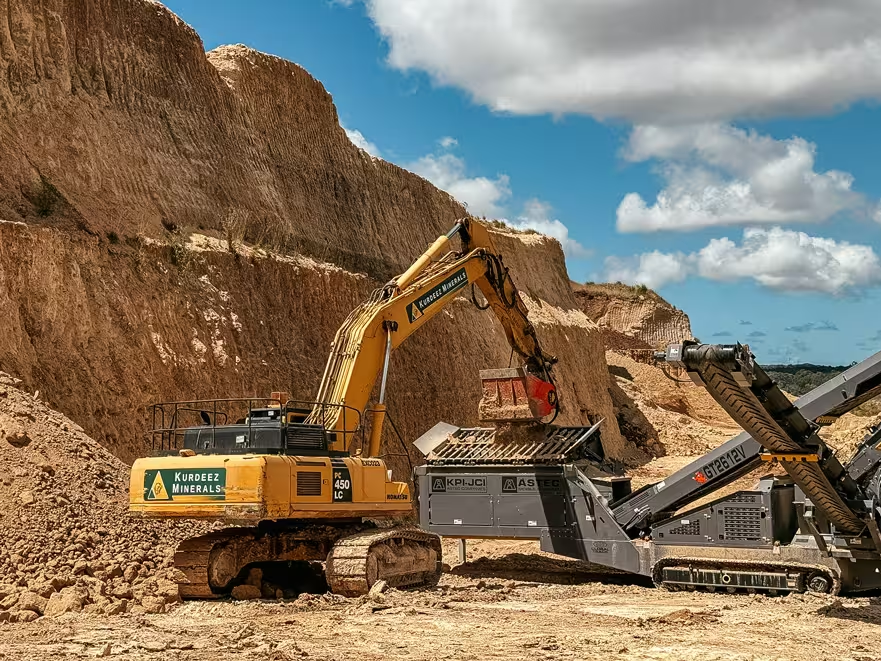
Kurdeez Minerals improved their lime screening process by incorporating the ALLU DH3-17 TS 25 with double TS50 Axe blades. This change helped break down lime lumps, streamline material flow, and…
ALLU DH3-23 TS35 transforms quarry waste into valuable resources. By efficiently separating stone and clay, larger stones are ready for resale, and fine materials are repurposed for road construction or…
See how BonnyView Quarries in NSW improves efficiency and reduces costs with ALLU DH4-23 XHD25 screening buckets for soil stabilization and material processing.
Material
Topsoil, blacktop, dirt, excavated and waste soil, clay, peat, bark
Industry
Construction, Mining, Quarrying
Application
Mining, quarrying, material processing
Function
Screening, crushing, mixing, separating and loading materials
Model
DH4-23 XHD25
BonnyView and ALLU the perfect partners
When mine and quarrying veteran Len Hardy decided he needed two “big” new buckets for his of Bonnyview Quarries business in NSW, he knew exactly what brand he wanted and where to turn to when he wanted to buy them.
Having used a number of smaller ALLU buckets on his excavators over the years, Len had his eyes on a pair of ALLU DH4-23 XHD25 screening buckets to take on the bigger jobs and provide additional versatility to his operation, which supplies customers right across NSW.
Built by Finnish private limited company ALLU Finland Oy, the ALLU screen crushers are highly versatile and the ideal tool for creating material such as road base and building materials.
According to Len, they are the perfect fit for his business.
“They are the best constructed buckets for the applications we use them for. They are really well engineered and provide a very reliable performance,” he said.
“The two new buckets we acquired are performing really well and we couldn’t be happier.”
Len is just as high in his praise for local ALLU support distributors in Australia, with whom he has had a lengthy relationship.
“RDW group are a very, very, good company to deal with. They are great suppliers and will always come up with what you want,” he recently told Australian Mining Review.
RDW group has been the Australian importer and distributor for ALLU for around four years. distributing the product through a nation wide network, servicing major infrastructure projects including water and gas , however, the versatile ALLU system is quickly making inroads with civil and composting contractors.
Sales Area Manager in Rockbreakers Queensland, Craig Einam, said ALLU bucket applications and installations continue to grow and develop each year.
The versatility of the buckets to be fitted to 5T – 80T excavators and larger style loaders makes them particular popular with quarry operators like Len, while the smaller buckets are also effective on skid steer loaders.
About the ALLU Screener Crusher
With the ALLU Screener Crushers you can screen, crush, pulverise, aerate, blend, mix, separate, feed and load materials all in one stage.
The versatile accessory can process many types of material such as topsoil, black top and dirt, excavated and waste soil, contaminated soil, clay, peat, bark, compost, biowaste, demolition waste, construction waste, milled asphalt, glass, coal, oil shale, limestone and several other materials.
The versatility of the highly efficient ALLU screening buckets can also mean big savings for their users as they no longer need to bring both a wheel loader/excavator and a crusher on site. Instead, this is a bucket which screens, crushes, pulverises, aerates, blends, mixes, separates, feeds and loads materials.
ALLU has the widest range of screening buckets and screener light crushers on the market. The units fit for almost any base machine size starting from the most compact ALLU DL Series to the massive ALLU M Series that will fit up to 160 tonnes excavator.
The DH4-23 XHD25 screening buckets are part of the impressive ALLU Transformers range which are purpose built for efficient material processing by reducing the number of process steps needed and transforming waste into useable material.
Mining applications
Efficient material flow is a key issue in any mining operation, power plant, bulk harbour and bulk material or storage area.
ALLU Transformer Screener Buckets mounted on an excavator improve efficiency in material processing due to work speed and reach which results in almost double the processing capacity compared to a slow-moving wheel loader as a carrier.
With ALLU’s Screener technology, existing loaders and excavators can be converted into effective processing, sorting and screening equipment due to the ALLU Transformers ability to deliver a one-step screening and loading solution capable of handling all materials from wet soils to coal and softer rock materials.
This helps improve efficiencies through less chute blockages and also reduces the need for buffer storage areas and transportation of material heaps that are clogged due to moisture or contamination.
When looking at a project with a holistic approach given multiple equipment mobilisations, fuel costs and cost to process in low margin return Ore reclaiming projects etc.
ALLU Case studies have shown between $1.50-$2.50 per tonne savings in running costs in comparison to multiple unit processing configurations.
The ALLU Transformer M series of buckets for mining applications suit 50 to 160 tonne excavators and 30-90 tonne wheel loaders. To meet the specific needs of each application – a range of blade and drum sizes are available to provide fragment sizes of 50, 75, 100 and 150mm.
Dealer Network Servicing the country.
All the ALLU distributors are well known across Australia as suppliers of an extensive range of leading European and Australian manufactured excavator and skid steer attachments, such as those from ALLU.
They have a strong focus on ensuring the customers are using the right attachment for the task – ensuring it is not only safer, but also helps reduces downtime, lower operating and lifetime ownership costs and – most importantly – helps them reduce the cost per tonne of material moved.
When a full turn-key solution, integration or varied application for equipment is required, the network have it covered, engineering and project management resources have proven record of delivering innovative, high-quality and cost-effective solutions to optimise your operations.
Australian ALLU dealer network:
QLD Rockbreakers in QLD and NT:
rdw.com.au/qld-rock-breakers
Walkers Hammers in VIC:
walkershammers.com.au
Total Rockbreaking Solutions in WA:
totalrockbreaking.com.au
Related products
Screening Bucket – D-Series
Carriers 6 – 45 t
Versatile DN-, DS-, and DH-Series Screening Buckets serve in a wide range of applications, ensuring high-quality material processing on-site.
Kurdeez Minerals improved their lime screening process by incorporating the ALLU DH3-17 TS 25 with double TS50 Axe blades. This change helped break down lime lumps, streamline material flow, and…
ALLU DH3-23 TS35 transforms quarry waste into valuable resources. By efficiently separating stone and clay, larger stones are ready for resale, and fine materials are repurposed for road construction or…
Soil Stabilization with Nordic Dry Deep Mixing Method
Finland
Material
Lime-cement mix
Industry
Construction, Soil Stabilisation
Application
Soil stabilization in roadworks
Function
Improving soil stability without added water
Model
ALLU PF 7+7 NextGen Feeder
Why Add Water When It Isn’t Necessary? A Practical Solution for Soil Stabilization in Nordic Roadworks
In the realm of construction, challenges posed by soft or unstable soils can be daunting. However, innovative techniques such as Nordic Dry Deep Soil Mixing (NDDM) offer reliable solutions without unnecessary complexity. This method demonstrates its value by improving soil stability and strength without the excessive use of water—an approach both efficient and environmentally considerate.
Project Overview: Foundation Preparation with Precision
A recent roadworks foundation project in the Nordic region highlighted the practical application of NDDM. The project scope included the construction of 12,000 soil-stabilizing columns, each reaching a depth of 10 meters (32 feet) with a diameter of 600 mm, collectively spanning an impressive total length of approximately 120 kilometers (74 miles).
Using a lime-cement mix as the binder, 40 kilograms (88 pounds) were applied per meter of each column. The outcome was a durable foundation capable of withstanding demanding load-bearing conditions.
Equipment in Action: Reliable Tools for Reliable Results
The success of the project hinged on the integration of robust equipment:
ALLU PF 7+7 NextGen 10 Bar Pressure Feeder: Ensuring consistent and precise delivery of dry binders deep into the ground.
MOVAX MSL-300 Column Stabilisation Leader: An excavator-mounted tool designed for the efficient creation of stabilization columns.
This combination provided seamless operation, even in the most demanding soil conditions, ensuring the job was completed with precision and reliability.
Why Choose Dry Over Wet Stabilization?
Nordic Dry Deep Mixing sets itself apart from traditional methods by omitting the need for added water, a factor that significantly simplifies the process. Some notable advantages include:
Environmental Considerations By reducing water usage, NDDM minimizes the risk of runoff and contamination, particularly in regions with high groundwater levels. This makes it a preferred choice for environmentally sensitive areas.
Enhanced Precision Dry binders allow for controlled application, ensuring uniform strength and stability, even in soils with varying properties like clay or peat.
Faster Results Dry binders typically achieve the desired strength more quickly than their wet counterparts, shortening project timelines and reducing waiting periods for curing.
Suitability for Difficult Conditions In saturated or clay-rich soils, where water-based methods may fail due to dilution, NDDM excels by providing consistent results.
Reduced Complexity With no added water, there’s no need for managing slurry or dealing with excess waste, streamlining logistics and cutting down on ancillary costs.
A Method Rooted in Practicality
The Nordic Dry Deep Mixing method isn’t just about achieving technical excellence; it’s about approaching projects with care and foresight. By avoiding the unnecessary addition of water, this method prioritizes efficiency and environmental responsibility.
For the foundation project in question, the combination of NDDM and ALLU’s PF 7+7 NextGen feeder exemplified how precision equipment and proven methods can align to create lasting infrastructure. The resulting columns are a testament to how carefully planned construction can address even the most challenging soil conditions.
Related products
PF 7+7 Pressure Feeder
The double tank ALLU Pressure Feeder PF 7+7 NextGen allows for continuous feeding and precise dosing of dry binders in soil improvement projects.
Kurdeez Minerals improved their lime screening process by incorporating the ALLU DH3-17 TS 25 with double TS50 Axe blades. This change helped break down lime lumps, streamline material flow, and…
ALLU DH3-23 TS35 transforms quarry waste into valuable resources. By efficiently separating stone and clay, larger stones are ready for resale, and fine materials are repurposed for road construction or…
Having to transport waste from a construction site to a waste center. This increases costs due to transportation and material purchases.
Solution
ALLU Screening Bucket is an ideal choice whenever you need to screen, crush, mix, separate, sort, pulverize, or load these materials to the desired fragment size. Reducing the waste to smaller or more uniform fragment sizes makes it easier and faster to reuse them.
The debris that is generated in construction and demolition sites is bulky and heavy to handle, traditionally increasing your transportation costs and double-handling operational costs. ALLU takes these issues away, increasing your operational efficiency.
The ALLU recycling bucket sorts materials from actual waste. Doing this lowers the transportation and landfill costs, increasing your efficiency and productivity at the work site, along with your sustainability credentials. Helping you to increase your sustainability, ALLU enables you to recycle construction and demolition debris in an environmentally friendly way. Turning waste material into profit by producing aggregates and reusable materials such as bricks, concrete, metals, wood, cardboard, and bitumen. Bringing your waste to life!
Benefit
Increased the sustainability of the business, reducing costs and time yet increasing the business profits and efficiency.
Related Products
Screening Bucket – D-Series
Versatile DN-, DS-, and DH-Series Screening Buckets serve in a wide range of applications, ensuring high-quality material processing on-site.