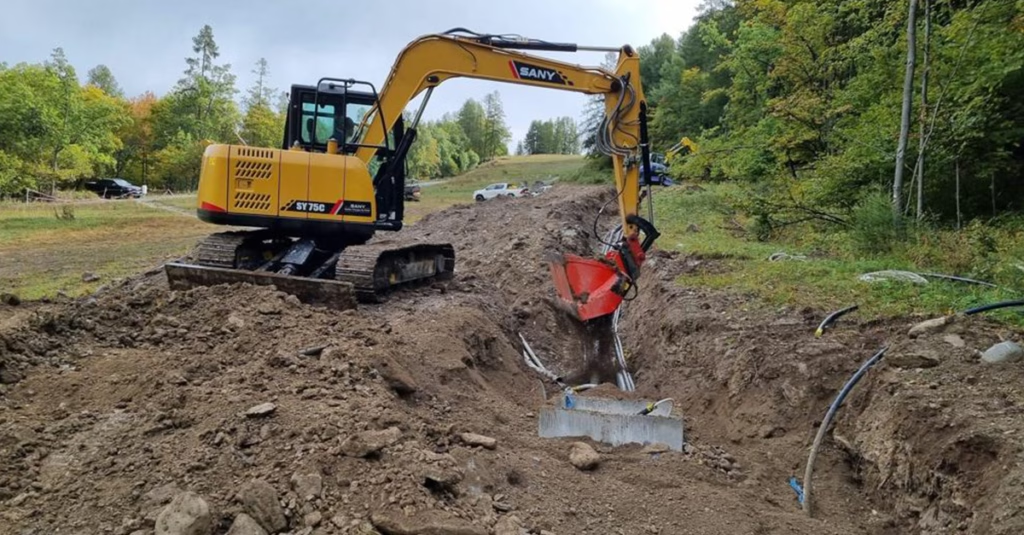
The Trench, Zone by Zone
Every utility trench has the same anatomy. From the bottom up, it breaks into four parts, and each part has different cost economics.
The pipe itself takes up about 5 percent of the trench volume. Whatever you’re laying, water main, sewer line, fiber conduit, electric duct, the pipe displaces a small slice of the cut. Nothing fills this space. It’s the pipe.
Underneath and surrounding the pipe, including roughly a foot above the crown, is the bedding and embedment zone. This zone takes up about 25 percent of the trench. The material here is engineered aggregate, typically washed #57 stone or graded sand depending on pipe type and county spec. The material is specific. It seats the pipe correctly, distributes load, and passes inspection. This is purchased material that comes from a quarry. In South Florida right now, washed bedding stone delivered to job site runs $30 to $35 per ton.
Above the embedment, from about a foot over the pipe up to the surface, is the backfill zone. This is the largest part of the trench, about 70 percent of total volume. The backfill spec on most jobs allows processed native soil, as long as it’s free of organics, free of oversized rock above the spec threshold, and compactable to a specified percentage of standard proctor density.
This is where utility trench economics get decided.
Why the Backfill Zone is the Lever
Bedding aggregate has to come from a quarry. That’s not changing. Whatever workflow you run, you’re still buying bedding. Anyone telling you a screening attachment eliminates your imported aggregate cost is overstating the case, and any utility contractor who’s been around the trade for more than a year knows it.
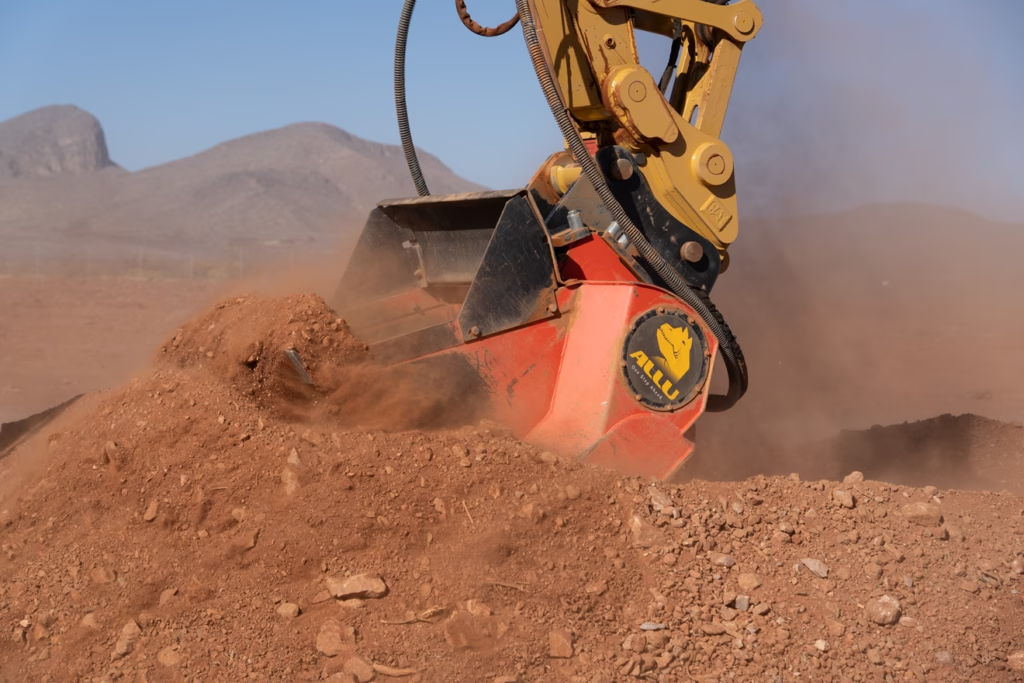
The backfill zone is different. The backfill spec usually allows processed native soil, which means the dirt you pulled out of the trench can go back in, as long as it’s been screened to remove the oversize and debris that would otherwise disqualify it.
Take a 400-foot trench at 3 feet wide and 6 feet deep. That’s roughly 267 cubic yards, about 370 tons of native spoil coming out of the cut. The backfill zone needs roughly 260 tons.
In the standard workflow, the contractor exports all 370 tons at $14 per ton hauling and disposal, then turns around and imports 260 tons of clean backfill at $18 per ton. That’s $5,200 to get rid of the dirt and another $4,700 to bring different dirt back, for a total of about $9,900 in material logistics on a single trench. Add the bedding ($3,200 for the 100 tons of washed stone) and the all-in dirt-moving cost on this trench is about $13,100. Not the project bid. Not labor. Just dirt going one way and dirt coming back the other way.
When the contractor processes the native spoil on-site to meet backfill spec, the math changes. Hauling drops by about 80 percent because most of the spoil stays at the trench instead of going to the dump. Backfill imports drop to near zero because the contractor produces compliant backfill from his own native material. Bedding stays the same.
Net savings on this trench: roughly $6,500 to $7,500.
Across 30 to 50 trench jobs a year, that’s six figures of savings on a line item that most utility contractors have never sat down and added up.
What Screening On-Site Actually Looks Like
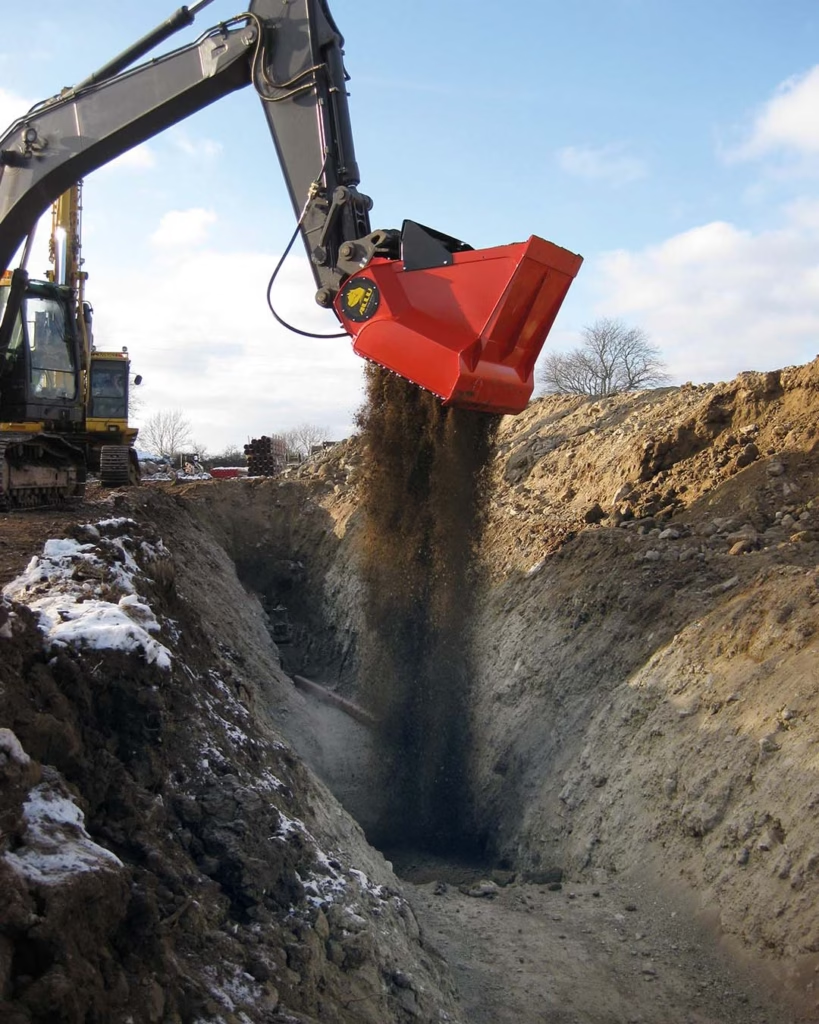
The technology that makes this work is straightforward. An attachment mounts on the excavator already at the trench. The native spoil goes through the attachment. The blades break it up and screen it. About 80 percent comes out as compliant backfill material, ready to go back in the trench. About 20 percent rejects out as oversize and gets hauled like normal spoil.
The ALLU DL-series is purpose-built for this. It mounts on excavators in the 5 to 15 ton range, processes spoil right at the trench where the work is happening, and the recovery rate in typical sandy and silty soils sits comfortably in the 80 percent range.
The contractor stops moving spoil to a central yard, stops paying for imported clean fill on the upper trench, and keeps the operation distributed across the job sites where the work actually lives.
For utility contractors running 30 to 80 trench jobs a year across the metro, that workflow fits the way the work actually happens. The spoil is already at the trench. The excavator is already on the machine. The backfill goes back in the same hole it came out of, just cleaner. The economics show up in the first quarter for most operators.
Article Credits:
Gustavo Lopez
Vulkan Prime,
Doral, FL