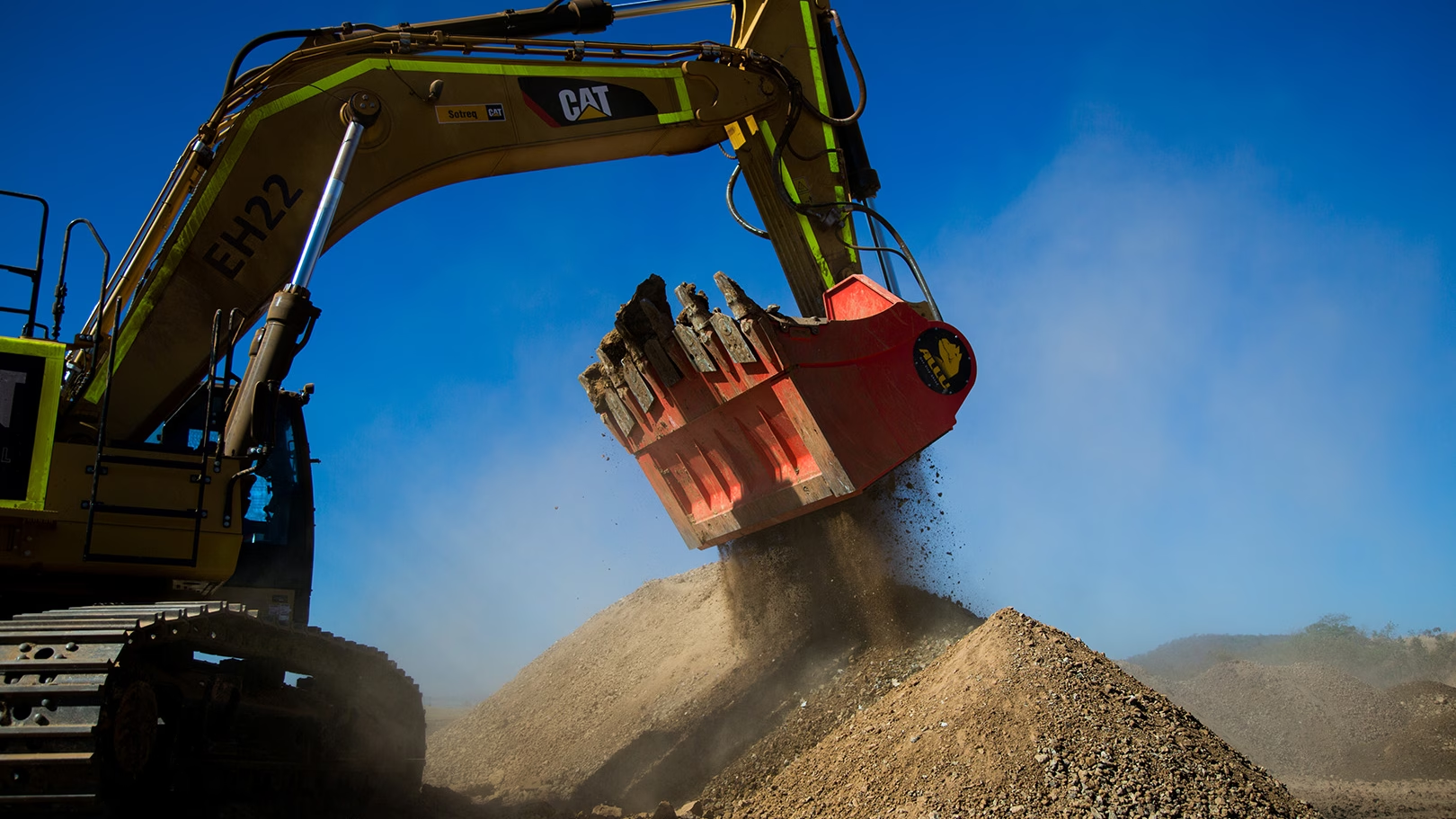
In the mining of soft-rock commodities like coal, lignite, bentonite, phosphate, and similar sedimentary deposits, the material itself is rarely the engineering challenge. The challenge is what comes with it. Embedded boulders, harder rock intrusions, and rocky overburden mix at the face, and once that mixed material enters the loader bucket, it moves through every downstream stage: haulage trucks, preparation plants, crushers, screens, and wash circuits. Every tonne of hard waste rock that makes it past the loading stage costs money at each one of those steps and adds nothing to the final product.
The good news is that soft ore and hard waste rock have a defining physical difference that can be exploited right at the point of loading: one can be crushed with relatively low force; the other cannot. An ALLU screening and crushing bucket mounted on an excavator or wheel loader takes advantage of exactly this contrast. By processing the material in the bucket itself, soft ore is broken to specification and passes through; hard rock is retained and left behind. The separation happens where it matters most: before the waste rock leaves the mining cell.
The Reality of Soft-Rock Mining: It Is Rarely Pure
Coal seams, bentonite deposits, and phosphate beds are almost never perfectly clean. They are interlayered with harder rock bands, penetrated by dykes, capped by rocky overburden, and studded with boulders. During blasting and excavation, these hard rock fragments break free and fall into the same dig zone. Without selective processing at the face, they end up in the same bucket.
The scale of this contamination problem is significant. Coal mine waste rock (CMWR) is among the world’s most substantial streams of industrial solid waste. A study in China estimated 4.5 billion tonnes of coal mine waste rock have accumulated in more than 1,700 waste dumps, and more than 315 million tonnes of coal mine waste rock are generated every year from underground coal mining operations. (Source: ScienceDirect / Bian et al., 2009)
KEY STAT
| In open-pit mining operations, waste rock production is typically 2 to 10 times the ore quantity. In coal mining specifically, recent trends of mining thinner seams with larger equipment have pushed out-of-seam dilution (OSD) material to 50% or more of the run-of-mine coal in some operations. (Source: International Journal of Coal Science & Technology) |
That figure – out-of-seam dilution exceeding 50% of run-of-mine volume – means that in some coal mines, more than half of everything being loaded, hauled, and processed has no calorific value. It is dead weight moving through a system designed for live material
How Hard Waste Rock Harms the Soft-Rock Mining Process
When hard rock contaminates a soft-ore stream, the damage is not limited to one stage of the operation. It compounds across the entire production chain:
- Crushing and preparation plant equipment: Preparation plants for coal and bentonite are sized and configured for soft material. Hard rock boulders cause accelerated wear on crusher liners, screen panels, and wash plant components. Unplanned downtime for repairs and part replacements is one of the most costly consequences of rock contamination, as it halts the entire production circuit, not just one machine.
- Product quality and calorific value: In coal mining, hard rock dilution directly lowers the average calorific value (CV) of the product. A shipment that should grade at 6,000 kcal/kg may test at 5,600 kcal/kg once dilution rock is factored in. For customers operating under strict quality specifications, this is either a contractual breach or a commercial penalty, sometimes both.
- Haulage capacity and fuel consumption: Every hard rock boulder hauled to the preparation plant consumes truck payload capacity, fuel, and tyre life, all for material that will be rejected downstream and then hauled again to a waste dump. Each tonne of waste rock that could have been separated at the face is instead being moved twice.
- Waste dump volume and environmental liability: Hard rock rejected at the preparation plant must be stockpiled somewhere. Coal mine waste dumps are a significant and long-lasting environmental liability. Sulphide-bearing waste rock generates acid mine drainage (AMD); waste pile fires from spontaneous combustion of carbon-bearing material are a documented risk. The US Abandoned Mine Reclamation Fund – financed at 35 cents per ton of coal mined from the surface, 15 cents per ton of coal mined underground, and 10 cents per ton of lignite at the time – had collected nearly $6 billion by 2000, reflecting the sheer scale of historic mine waste remediation costs. (Source: PERC / Buck & Gerard)
- Processing water and chemical use: Wash plants and beneficiation circuits that process rock-contaminated ore consume more water, more chemical reagents, and more energy per tonne of clean product than those receiving uncontaminated feed. In bentonite processing in particular, maintaining consistent product rheology and purity is highly sensitive to hard mineral contamination.
KEY STAT
| The US mining and mineral processing industry generates approximately 1.6 billion metric tonnes of mineral processing waste per year – nearly half of all solid waste generated annually in the United States. Accumulated mining waste from past decades is estimated at 50 billion metric tonnes or more. (Source: Recycled Materials Resource Center / US EPA) |
The ALLU Approach: Crush the Soft, Remove the Hard – at the Bucket
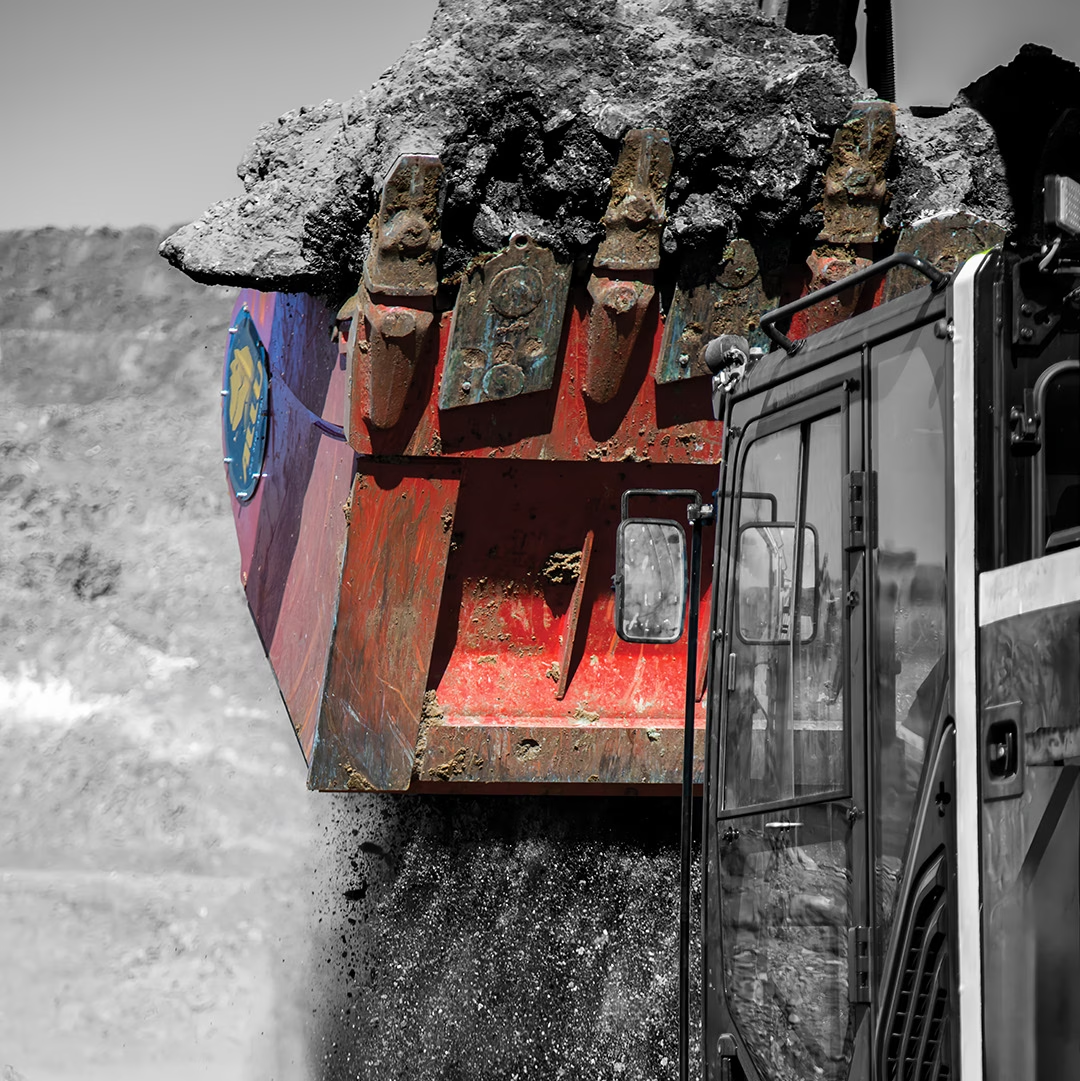
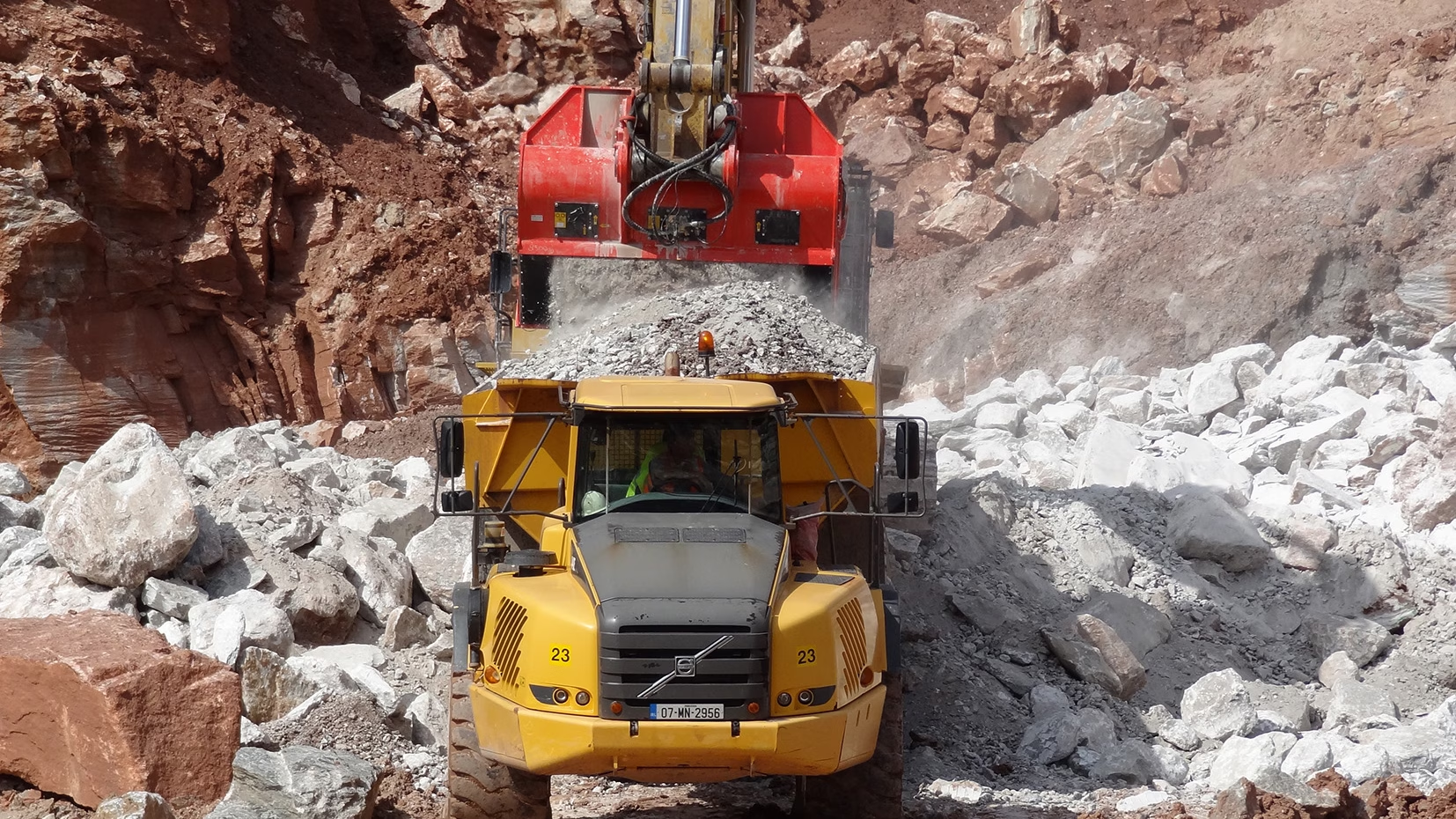
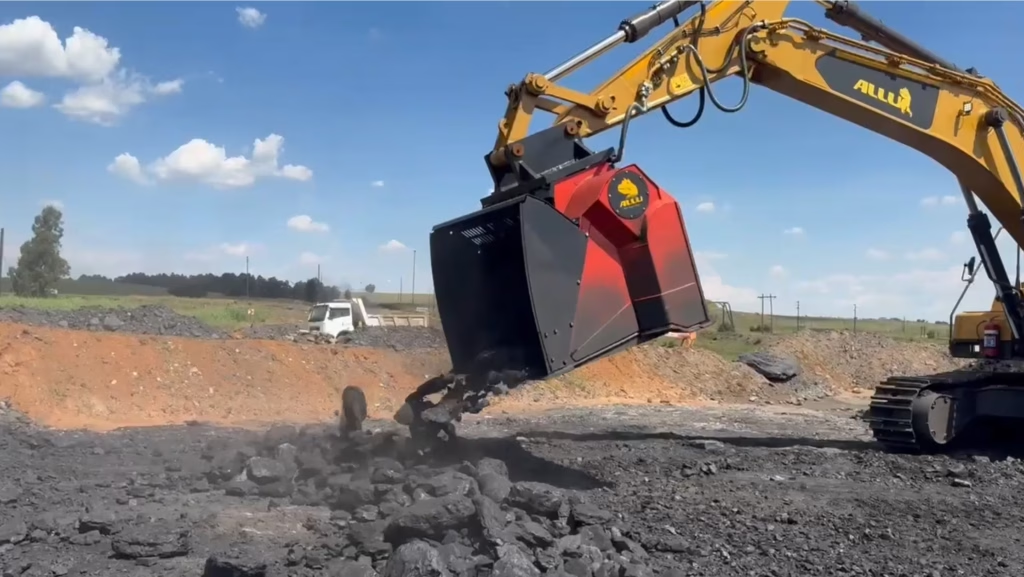
ALLU’s M-Series and DH-Series Transformer screening and crushing buckets are designed for exactly this scenario. Mounted on an excavator or wheel loader operating directly at the face, the bucket processes material in a single, continuous cycle: the rotating cutting drums crush soft rock such as coal, lignite, bentonite, soft phosphate to a specified output size, while hard rock that cannot be crushed at those force levels is retained inside the bucket and left behind at the face, or deposited separately.
This is the key operational insight: the hardness contrast between soft ore and hard waste rock is not a problem to be managed downstream, it is a separation mechanism to be exploited upstream. The ALLU bucket uses it as one.
Configurable output sizes of 50 mm, 75 mm, 100 mm, or 150 mm allow operators to match bucket settings to preparation plant feed requirements. Wet, sticky, or partially frozen material – a common condition in coal and bentonite operations – is handled without clogging. The M-Series is rated for excavators from 50 to 120 tonnes and wheel loaders from 35 to 70 tonnes, suitable for large-scale open-cast operations; the DH-Series covers excavators from 18 to 45 tonnes and wheel loaders from 8 to 30 tonnes for more selective or constrained environments. Learn more.
The Compounding Benefits of Getting Separation Right at Source
Removing hard rock at the loading stage rather than at the preparation plant, or not at all, triggers a cascade of operational improvements:
- Cleaner feed to the preparation plant: When the bucket screens out hard rock at the face, the material delivered to the crusher, wash plant, or screen is already partially sized and freed of oversized contaminants. The preparation plant runs on material it was designed for, reducing wear rates, maintenance intervals, and unplanned downtime.
- Consistent product quality: For coal, a cleaner feed means a more consistent calorific value and lower ash content per tonne. For bentonite, it means more uniform rheology and mineralogical purity. Both translate directly into stronger market positioning and fewer quality-related penalties or rejections.
- Fewer machine moves and less double-handling: By combining screening, crushing, and loading into one bucket cycle, ALLU eliminates the need for a separate scalping screen or additional mobile plant at the face. Material that would otherwise be loaded, hauled, rejected, and re-hauled as waste is never loaded in the first place.
- Smaller waste footprint: Hard rock left at the dig face, rather than transported to a dedicated waste dump, reduces the volume and footprint of waste infrastructure. Less waste to manage means lower long-term environmental liability, reduced monitoring costs, and a smaller closure obligation.
- Lower fuel and tyre costs per tonne of product: A truck loaded with clean, crushed coal carries revenue material on every tonne of its payload. A truck loaded with mixed coal and hard rock is discounting part of every cycle. The improvement in effective payload utilisation reduces the number of cycles needed per tonne of product with proportional savings in fuel, tyres, and machine hours.
- Compliance and ESG positioning: As regulatory scrutiny of mine waste management intensifies and as ESG reporting frameworks require more detailed disclosure of waste volumes and environmental liabilities, the ability to demonstrate reduced waste generation at source becomes a material business advantage.
IN PRACTICE
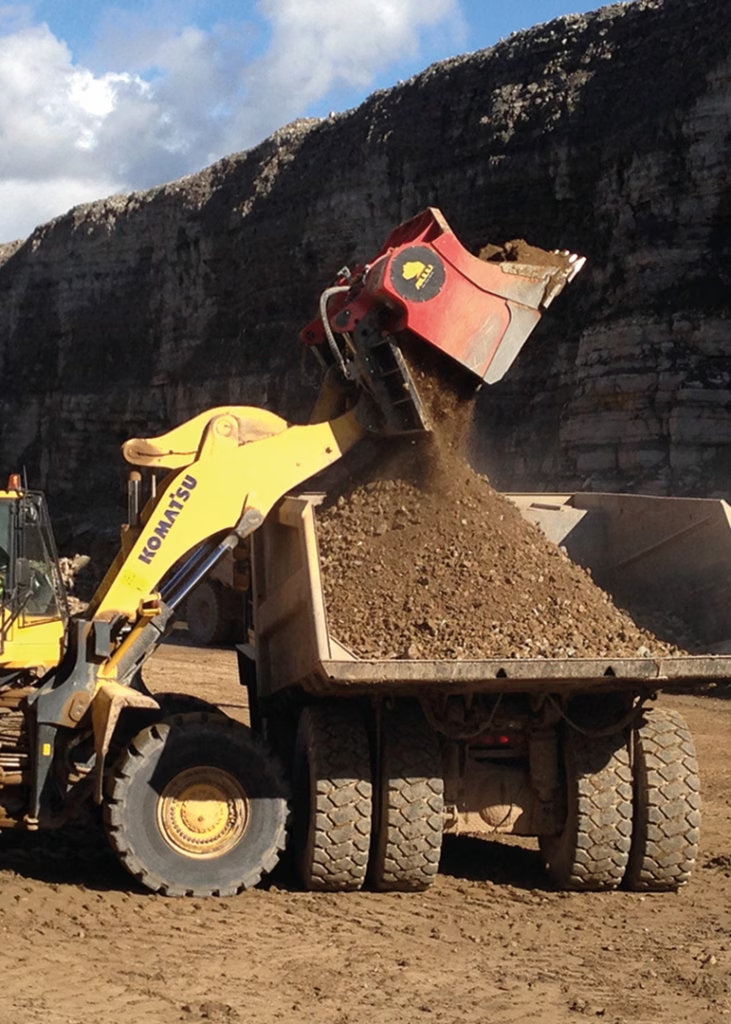
| ALLU buckets have been used in coal crushing and screening operations using DH and M-Series units with X55 and X75 blades to deliver a one-step process that reduces double-handling and increases the commercial value of the coal loaded. The same principle applies to bentonite and other soft-rock commodities where hardness contrast makes face-level separation practical. |
The Right Place to Separate Is the First Place
The mining industry’s productivity challenge is not, at its core, a processing challenge – it is a materials handling challenge. Loading hard rock that should never have been loaded in the first place costs money at every stage it travels through. The preparation plant pays for it in wear. The haulage fleet pays for it in wasted payload and increased fuel consumption. The environment pays for it in waste dump volume. The balance sheet pays for it in all three.
For operators of coal, bentonite, shale, and other soft-rock mines, the practical implication is clear: the separation from waste rock should happen at the face – at the first point where a physical difference between the two materials can be exploited. The ALLU screening and crushing bucket makes that separation possible in a single loading cycle, without additional equipment, without additional passes, and without sending unwanted material into a system that was never designed to handle it.