Construction markets remain under pressure. In July 2026, EU construction output was 1.8% lower than a year earlier, with building construction down 5.6%. In the United States, August 2026 construction spending ran at an annualized $2.20 trillion but was 1.7% below August 2025. When margins are tight, avoiding unnecessary material handling becomes a practical cost priority.
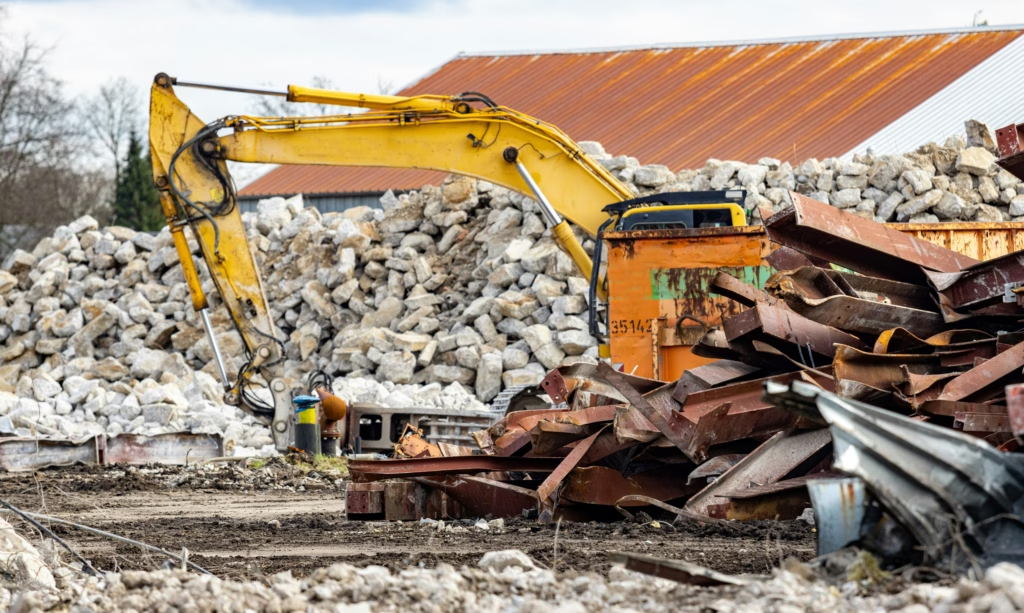
Construction and demolition waste recycling (C&D waste recycling, or CDW recycling in Europe) involves recovering materials such as concrete, asphalt, brick and suitable soils for further use. For contractors, the opportunity is not just to divert waste from landfill, but to retain valuable construction materials and reduce replacement purchases.
Why construction and demolition waste recycling matters
Construction and demolition (C&D) material represents more than one-third of all waste generated in the EU. European waste law set a minimum 70% by-weight target for preparing non-hazardous C&D waste for reuse, recycling or other material recovery, including backfilling. Europe has surpassed that headline target overall, but the European Commission’s Joint Research Centre notes that much of the volume still goes to lower-value recycling or backfilling rather than high-quality reuse. Separating materials, documenting destinations and identifying appropriate reuse opportunities therefore matter.
Disposal costs reinforce the pressure. In England and Northern Ireland, the Landfill Tax from April 2026 is £130.75 per tonne for standard-rate waste and £8.65 for qualifying lower-rate material, in addition to the operator’s normal gate fee. Waste classification matters, but so does the decision to dispose of potentially reusable material.
Construction waste recycling in the United States
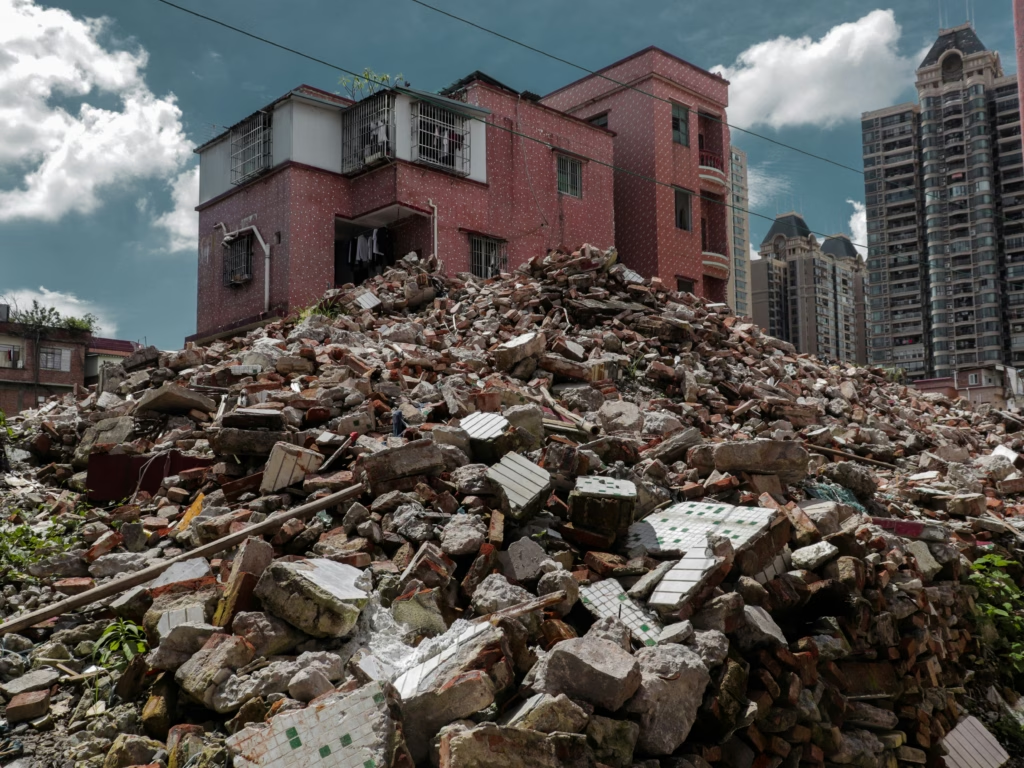
The U.S. picture is more fragmented. The EPA’s latest comparable national estimate remains historical: in 2018, the country generated 600.33 million short tons of C&D debris, of which 143.78 million tons went to landfill. EPA’s “next use” category is not a verified recycling rate; it includes intended destinations such as aggregate, manufactured products, fuel and soil amendment. State reporting is incomplete and inconsistent, so there is no reliable 2025 or 2026 nationwide C&D total.
Requirements vary by location. Massachusetts bans asphalt pavement, brick, concrete, clean gypsum wallboard and metals from disposal. Washington, D.C. requires at least 50% construction-waste diversion on certain projects. Florida says C&D debris represents almost 25% of its municipal solid-waste stream; state law calls for processing before disposal where economically feasible. In Austin, Texas, affected projects must reuse or recycle at least 50% of debris, or keep landfill disposal below 2.5 pounds per square foot.
Asphalt recycling shows the value of recovered materials
Reclaimed asphalt pavement (RAP) demonstrates what happens when recovered material is treated as inventory rather than waste. The latest National Asphalt Pavement Association survey, produced with Federal Highway Administration support, found that 101.4 million tons of RAP were put back into use during the 2024 construction season. About 99% of available RAP was reused, replacing more than 96 million tons of virgin aggregate and producing an estimated $4.7 billion in material savings.
How much does it cost to haul construction waste off site?
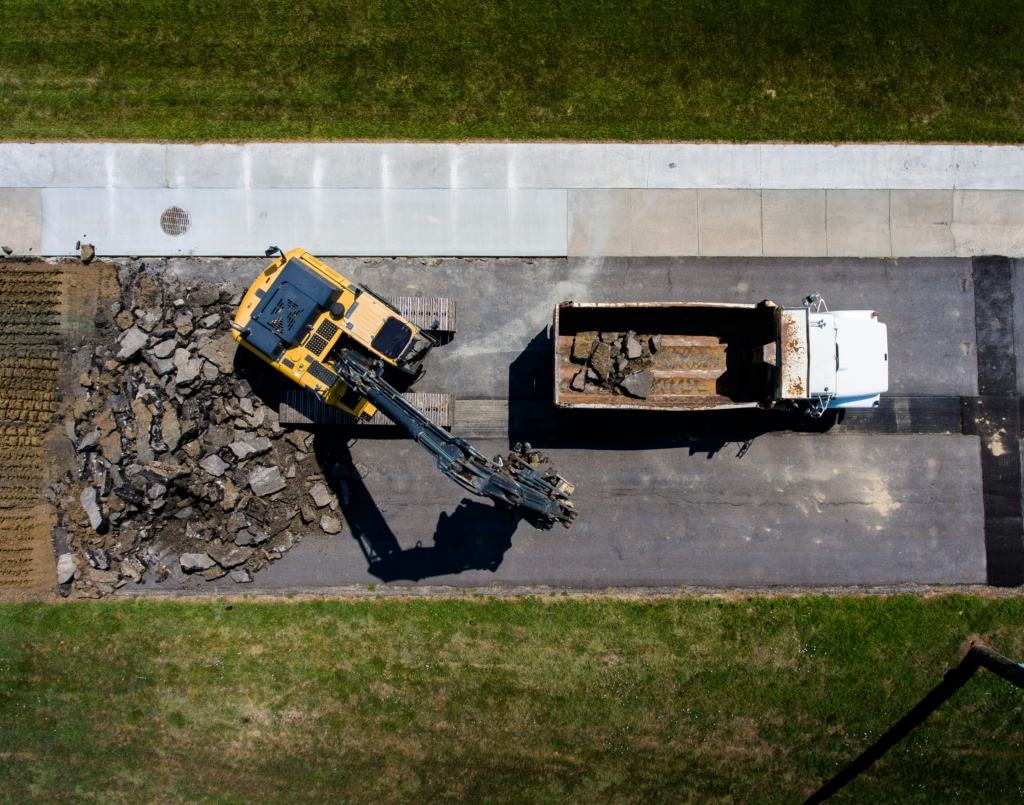
Consider a project with 1,000 short tons of suitable material, a truck carrying 20 tons per load, and a landfill 25 miles away. The assumptions below show why construction waste hauling costs and disposal fees deserve attention before material is removed from site.
Material to transport
1,000 short tons
Truck payload
20 short tons
One-way distance to landfill
25 miles
Total truckloads
50
Round-trip mileage
2,500 miles
Transport cost (ATRI 2025 proxy: $2.336/mile)
$5,840
Gate fees (EREF C&D benchmark: $65.84/ton)
$65,840
Combined estimated external cost
$71,680 ($71.68/ton)
The estimate excludes loading, queueing, administration, and buying and delivering replacement aggregate. It is not a net savings claim: on-site processing also requires equipment, fuel, an operator, wear parts, testing and sometimes permits. Local costs differ. EREF’s 2024 municipal solid-waste averages were $80.67 per ton in the Northeast, $50.12 in the Southeast and $44.87 in South Central states; these are not C&D disposal quotes, but illustrate regional variation.
When does on-site construction material recycling make sense?
On-site recycling allows contractors to process suitable construction and demolition materials where they are generated, potentially reducing hauling, disposal and the need for replacement materials. Concrete recycling and asphalt recycling can support production of recycled aggregates for permitted applications; soils and other materials may also be screened or prepared for reuse, provided they meet project requirements.
The first question is whether the material can be reused safely and to specification. Contractors need to consider contamination, grading, engineering requirements, available space, throughput, local regulations and the cost of on-site processing versus off-site handling. Recycling on site is an option to assess, not an automatic saving on every project.
Where screening and crushing buckets fit
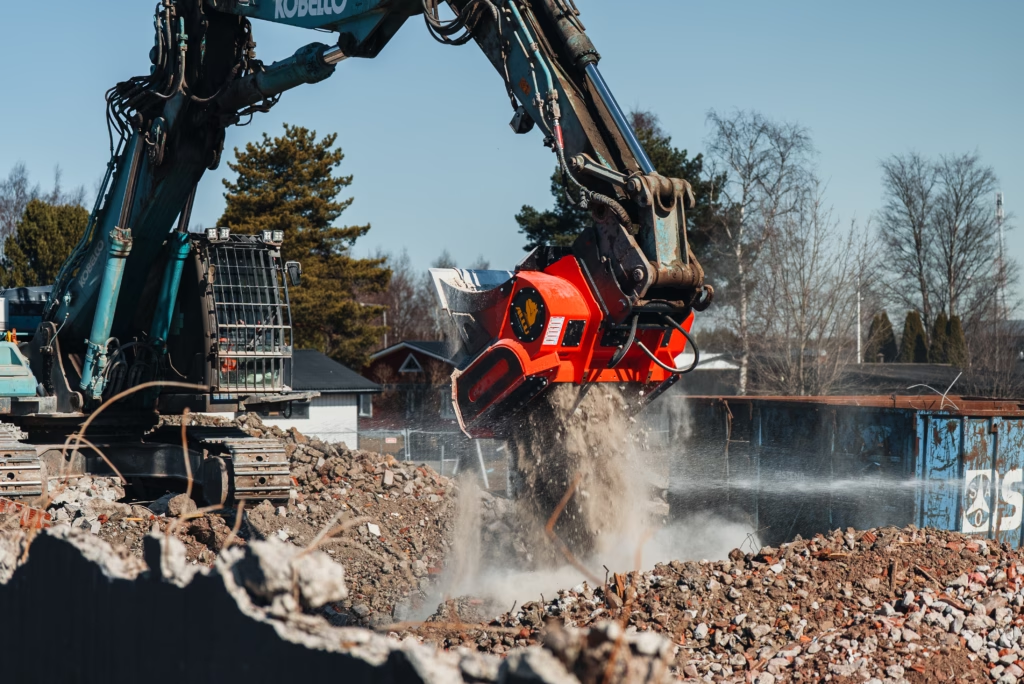
ALLU screening and crushing buckets attach to excavators, wheel loaders and other suitable carrier machines already working on site. They can screen, crush or prepare suitable soil, concrete, asphalt and other materials for further use, integrating on-site material processing into existing workflows. This can reduce additional handling, transport and reliance on separate processing machines where the application allows.
For contractors, the decision should be based on the total cost per tonne of usable output—not merely the price of an attachment. For dealers, that creates a more useful discussion about site logistics, material reuse and project economics. Before booking another line of trucks, ask: are we removing waste, or paying to haul away a resource the project still needs?