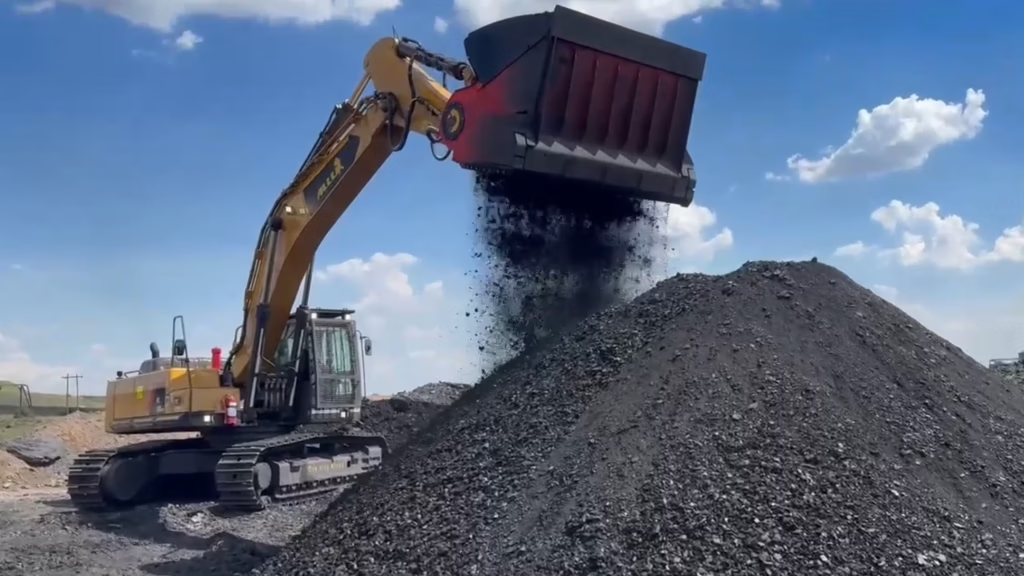
Coal processing efficiency is often discussed in terms of what happens at the preparation plant. But much of the cost and complexity is created before the coal ever gets there.
Coal seams can carry harder waste rock, clay and other impurities, while the coal itself may need to be reduced to a suitable size before further processing. Traditionally, this can mean loading the material, transporting it, crushing and screening it, and handling it again.
ALLU has long approached this differently: process the material while it is already being handled.
That principle has been used in demanding mining applications with the ALLU M-Series, where screening and crushing buckets turn excavators and wheel loaders into mobile processing machines. Now, ALLU is bringing the same concept into a new dedicated solution for coal.
Introducing the new ALLU Coal Bucket
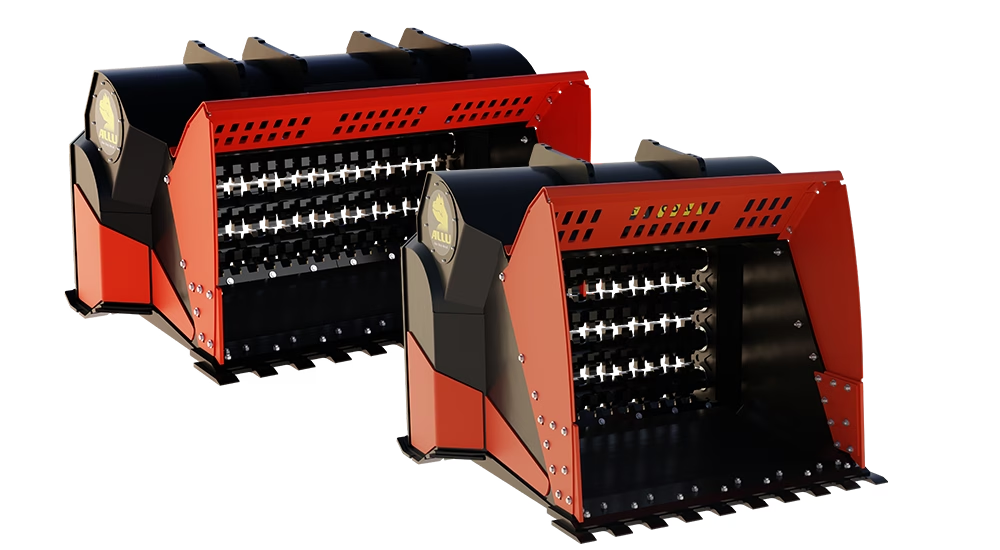
The new ALLU Coal Bucket brings high-capacity coal processing to smaller carrier machines.
While the M-Series is designed for larger mining equipment, the Coal Bucket range is built for 25 – 45 tonne excavators and 15 – 30 tonne wheel loaders, opening this processing approach to a wider range of coal operations.
Instead of using the carrier only to move material towards a separate crushing or screening stage, the bucket processes the coal during loading.
The rotating drums break down the softer coal, while harder waste rock and impurities can be retained and separated. This helps increase the quality of each load before the material moves further downstream.
The result is simple: loading becomes part of the processing operation.
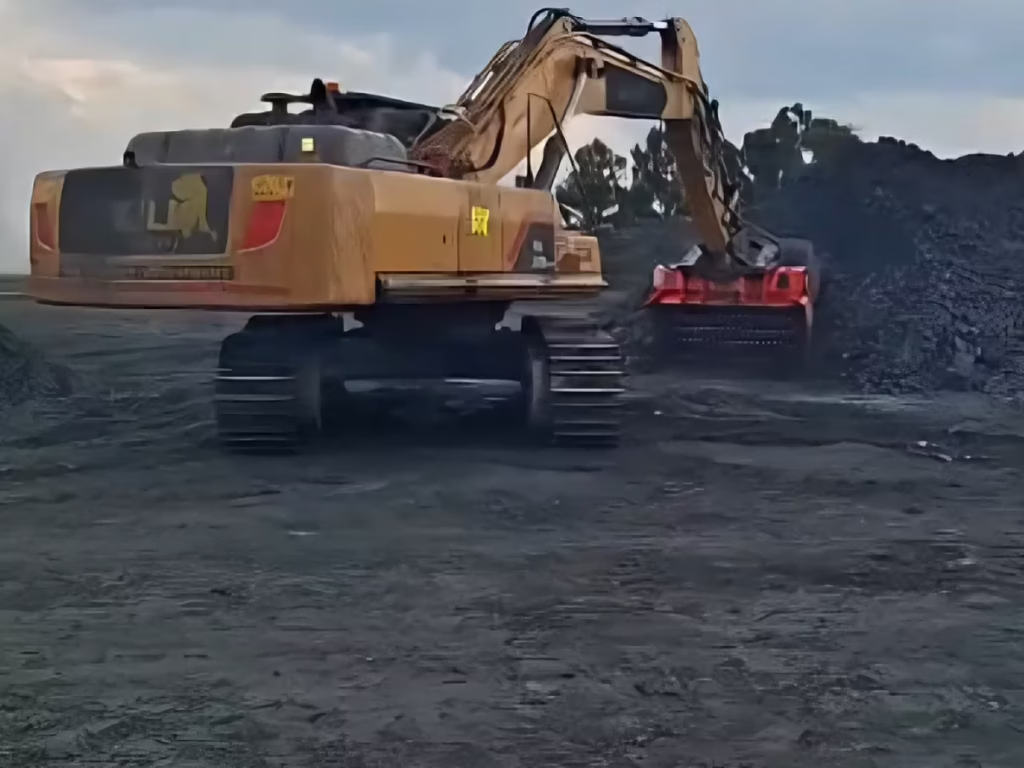
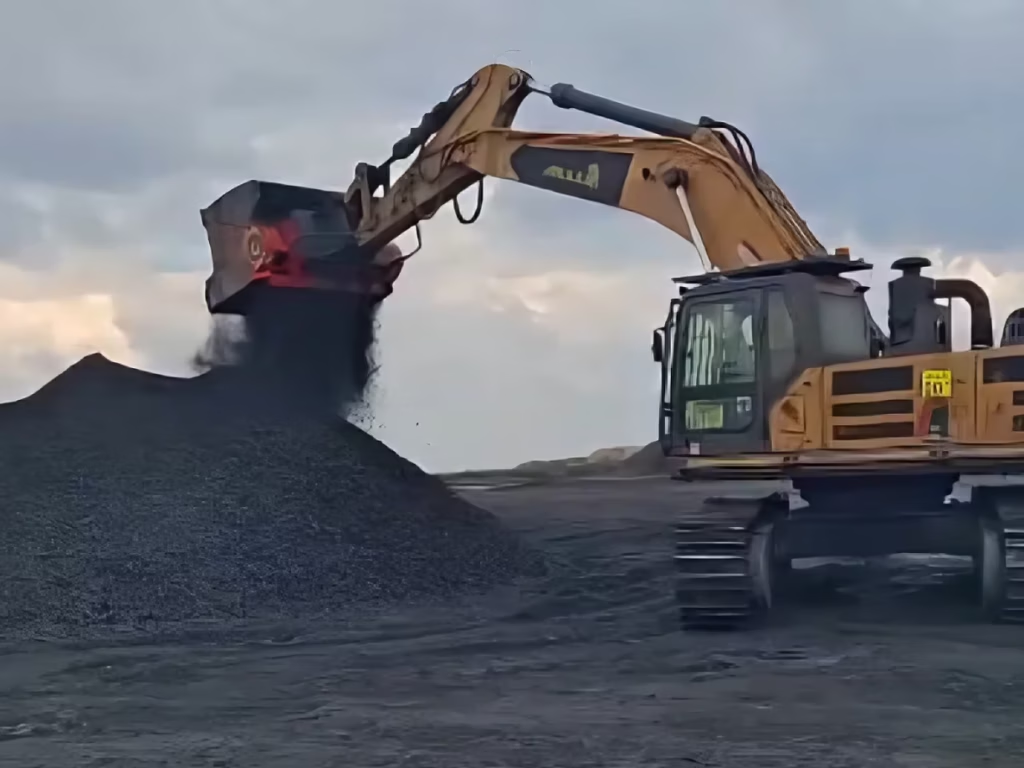
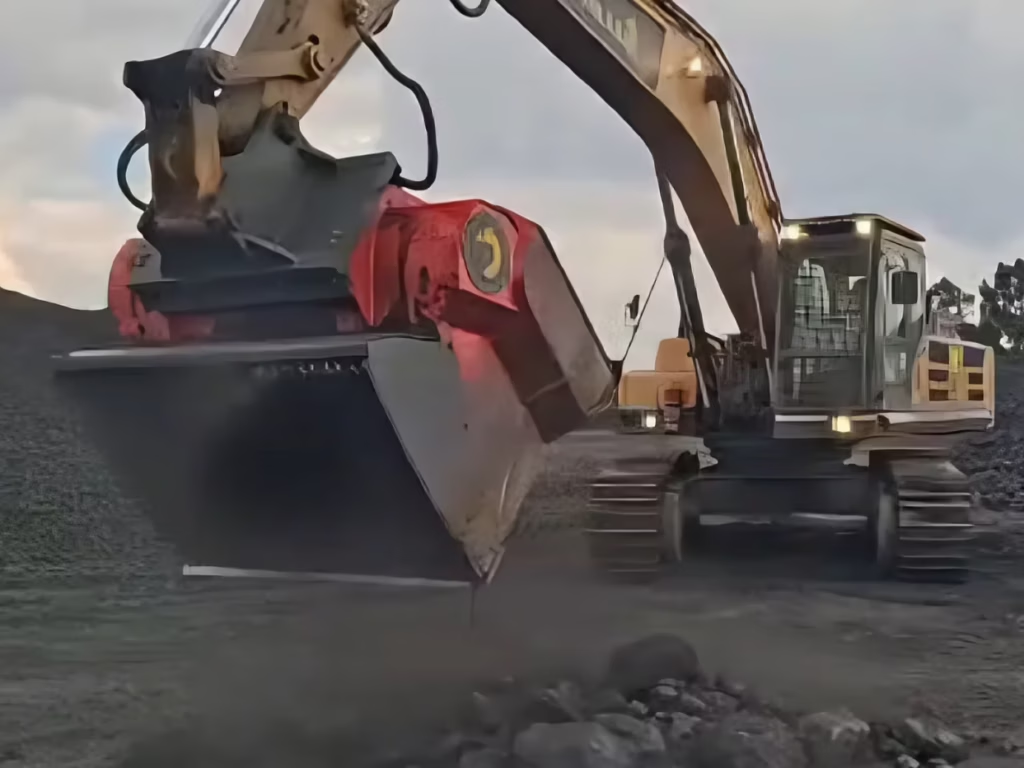
Size the coal while you load
The Coal Bucket can be configured for 0–50 mm, 0–100 mm or 0–150 mm output depending on the drum, and the change of the drum or maintenance happens fast thanks to the Variable Drum design. This allows operators to adapt the attachment to different processing requirements without changing the complete bucket.
Up to 300 tonnes per hour
The new Coal Bucket is designed for high-volume work, with processing capacity of up to 300 tonnes per hour, depending on material and operating conditions.
The range includes four models, with bucket volumes from 1.8 m³ to 3.6 m³. Extra bucket sides increase material volume, while the serrated cutting edge helps the bucket penetrate stockpiles efficiently. Additional reinforcement provides extra wear resistance for demanding working conditions.
This brings significant processing capacity into a machine that is already part of the loading cycle.
Processing capacity that moves with the operation
Coal operations change continuously. Mining areas move, stockpiles change and material quality can vary from one section of a seam to another.
Because the Coal Bucket is attached directly to the carrier, processing capacity can move with the material.
If impurities become a problem in a particular area, the bucket can be deployed there without changing the whole processing setup. This gives operators another option alongside fixed and mobile crushing and screening equipment.
It can complement an existing plant by removing unwanted material earlier, or in suitable applications reduce the number of processing stages required altogether.
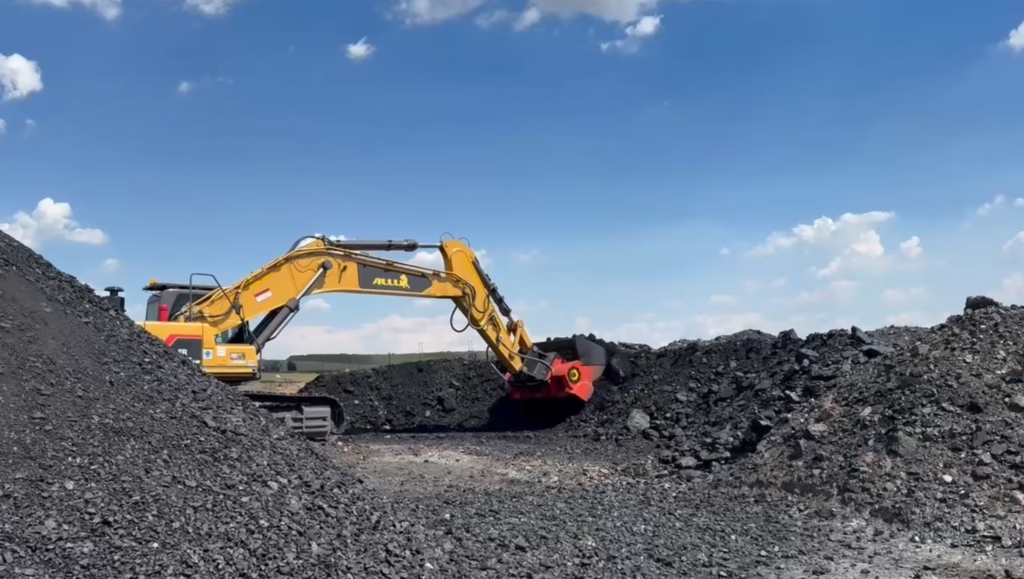
Designed for practical maintenance
High capacity only matters when the equipment is available to work.
The Coal Bucket uses quick-release Variable Drum design to make routine maintenance faster and simpler.
The operating concept is also straightforward: the same excavator or wheel loader handling the material performs the processing. No separate processing machine or dedicated plant operator is required for the bucket itself.
From M-Series experience to a dedicated coal solution
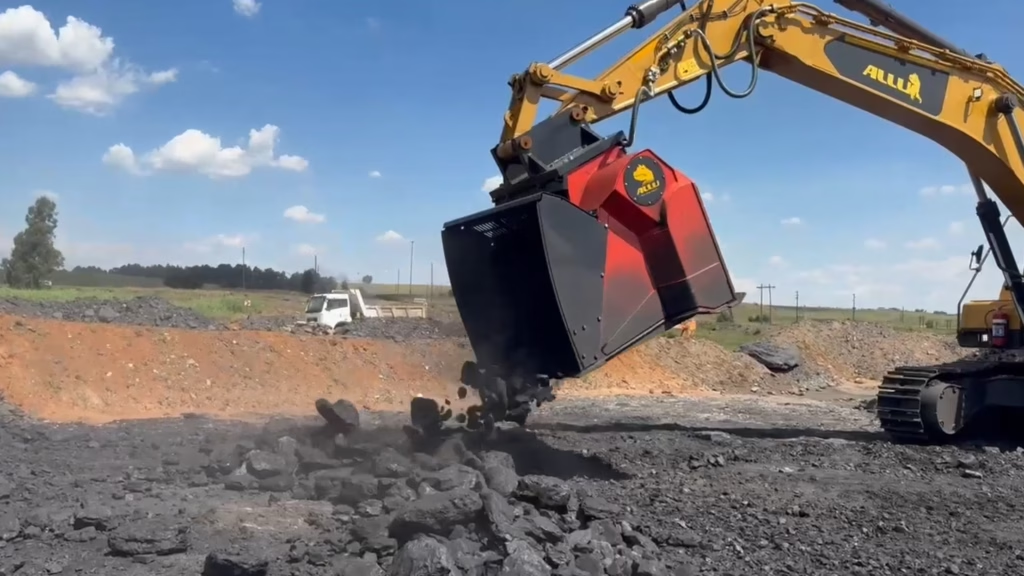
The new Coal Bucket builds on an approach ALLU has already used in mining with the larger M-Series: combining material handling with processing.
Instead of asking only how to make the crushing and screening plant more efficient, operators can now ask an earlier question: how much processing can be completed before the coal leaves the loading point?
For the right application, that can mean fewer handling stages, earlier removal of unwanted material, more consistent sizing and better use of the machines already working on site.
Sometimes, improving coal processing efficiency does not mean adding another machine.
It means making the loading stage do more.