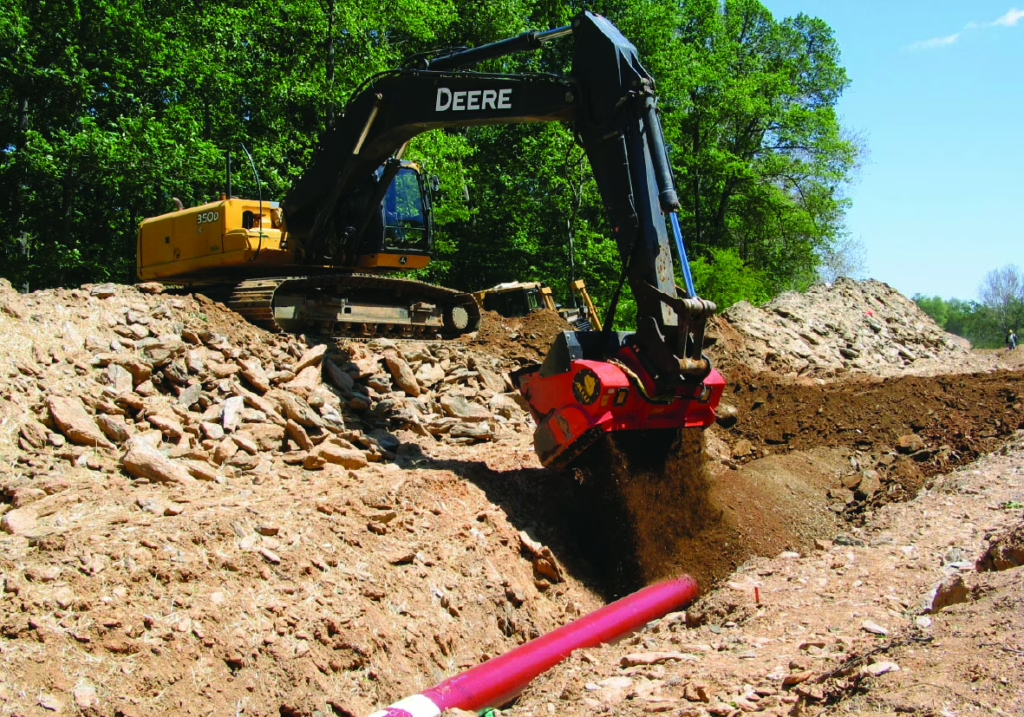
A Shift in How Pipelines Are Built
Pipeline construction requires teams to analyze costs while balancing productivity with regulatory requirements. Among all the stages required to install a safe, high-performing pipeline, padding and backfilling have traditionally been viewed as routine tasks. Yet in the last decade, this phase has undergone a re-evaluation. Owners, contractors, and regulators increasingly recognize that properly sourced and installed padding influences installation speed, long-term integrity, and overall cost.
In today’s construction environment, imported padding material has become more expensive and less predictable. Hauling, stockpiling, and sourcing challenges add complexity, especially in remote regions. Environmental expectations have also risen, and trucking thousands of cubic yards of material now conflicts with sustainability goals. As a result, the industry is seeking better ways to control material production and reduce reliance on external suppliers.
This is where ALLU’s on-site material processing approach is reshaping pipeline workflows. The ALLU Screening Bucket enables efficient processing during the backfilling phase, allowing contractors to achieve the required particle-size distribution directly at the trench. Rather than treating excavated soil as a waste burden, the system turns on-site material into a resource ready for immediate use.
The Padding and Backfill Challenge in Traditional Pipeline Construction
Padding and backfilling influence material quality, coating protection, settlement performance, and overall construction cost. Natural soils often contain clumps, stones, and inconsistencies that make them unsuitable without processing. Teams therefore rely on imported engineered fill, which introduces cost volatility, haul logistics, and delays tied to aggregate availability.
This traditional approach requires additional machines, operators, staging areas, and truck traffic. In environmentally sensitive areas, these factors complicate compliance and minimize opportunities for reuse. With growing scrutiny on emissions and waste reduction, the industry increasingly sees traditional padding methods as misaligned with modern expectations.
The ALLU Approach: One-Step On-Site Material Processing
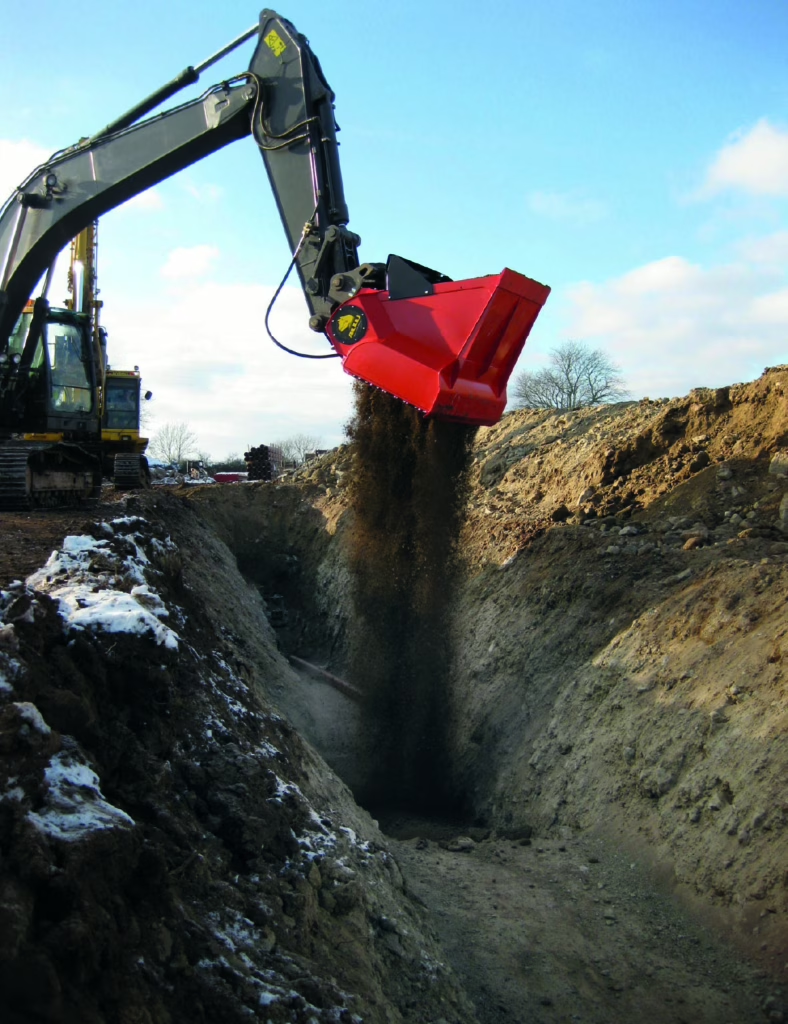
ALLU screening and crushing buckets address these challenges directly. By attaching excavators, wheel loaders, or backhoes, the bucket transforms the carrier into a processor capable of screening, crushing, and separating material in one step.
Excavated soil enters the bucket and passes through rotating components that break down lumps and remove oversized particles. This results in fine, uniform outputs that meet padding specifications and can be placed directly back into the trench. This continuous workflow eliminates dependence on off-site processors or imported aggregates.
Case studies show projects achieving cost reductions as high as eighty percent per cubic yard when using on-site screening instead of imported material. These savings stem from reduced trucking, lower fuel use, fewer operators, and improved schedule predictability. Environmental benefits follow naturally from reduced haul distances and minimized disturbance.
How On-Site Screening Transforms Pipeline Workflow
ALLU technology integrates naturally into pipeline construction. As the trench is excavated, spoil becomes the raw material source. The bucket processes this material immediately, producing uniform padding ready for placement. This creates a self-sustaining cycle that reduces delays and improves crew coordination.
With fewer machines and less traffic in the corridor, the right-of-way becomes safer and more efficient. Material quality improves when teams control the processing themselves, on-site. Owners appreciate the reduced risk of coating damage and settlement issues, and inspectors see more consistent results across the project.
Remote projects experience some of the greatest benefits. Where aggregate sources are limited or distant, traditional padding workflows can result in massive hauling costs and schedule disruptions. With ALLU, the trench becomes the material supply, making the operation largely independent of outside constraints.
Examples from the Field: Proven Results in Real Conditions
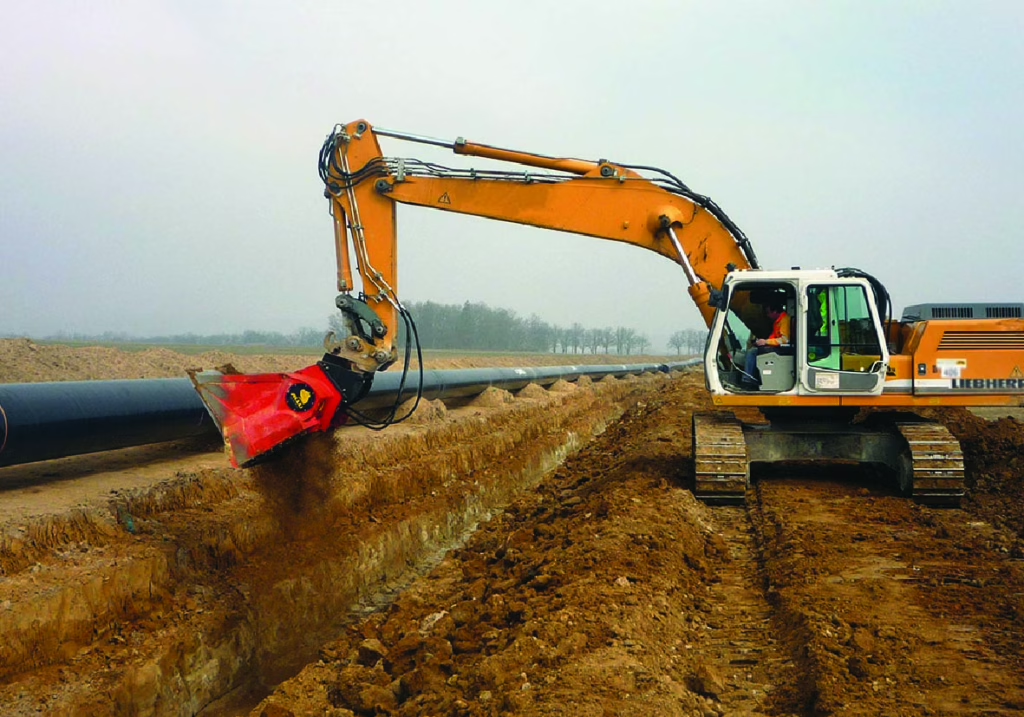
One pipeline team achieved an 80 % reduction in padding cost by processing trench spoil directly with an ALLU screening bucket. The reduction in hauling reshaped the project budget and improved workflow consistency.
Another example from Arizona demonstrates the system’s precision. A utility contractor used an ALLU DN 3-12 with TS08 blades to generate 3/8” minus bedding material. The screened output met specifications on the first pass and was placed directly into the trench, eliminating dependence on external suppliers and keeping the crew on schedule.
These outcomes reflect a broader industry trend: teams value solutions that give them more control over material quality, cost, and production speed.
Strategic Value for Contractors and Owners
On-site screening provides strategic advantages beyond daily production. Companies gain predictable padding costs, reducing exposure to fluctuating aggregate prices and transportation constraints. This stability improves bid accuracy and project planning.
Owners benefit from enhanced quality assurance. Consistent, fine padding protects pipe coatings more reliably, reducing long-term maintenance risks. Sustainability targets are easier to meet when emissions and disturbances decline. The approach aligns well with industry-wide goals for responsible, resource-efficient construction.
Keys to Successful Implementation
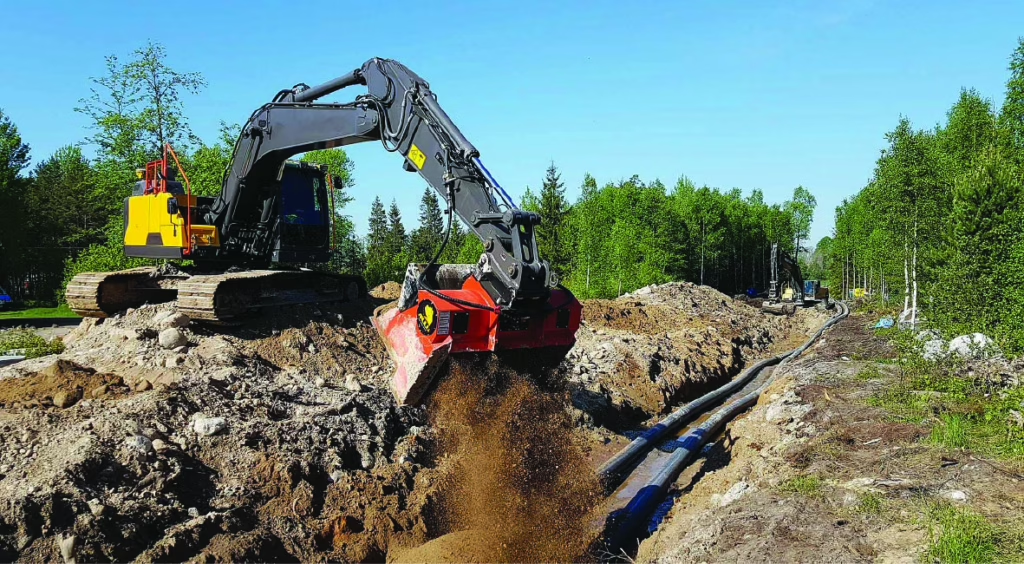
Successful adoption of ALLU technology begins with understanding soil characteristics such as moisture, clay content, and particle distribution. These factors help determine the appropriate screening or crushing configuration.
Matching the bucket to the correct carrier machine ensures optimal throughput and efficiency. Proper site layout enhances workflow, and operator training ensures consistent, high-quality output. ALLU’s dealers and support teams assist with setup, training, and operational best practices to maximize value.
A New Padding Paradigm for Modern Pipeline Construction
The industry is steadily shifting away from the traditional “import and place” method. On-site screening aligns with modern expectations for efficiency, environmental responsibility, and cost control. Producing engineered padding at the trench simplifies logistics, reduces emissions, and minimizes equipment footprints. With demonstrated success across varied projects, this approach is poised to become a new standard.
Conclusion
Pipeline padding and backfilling influence construction speed, cost, and long-term integrity. Traditional material sourcing introduces risks and inefficiencies that no longer match the industry’s priorities. ALLU’s one-step on-site screening solution offers teams a way to produce consistent, high-quality padding while reducing environmental impact and improving economic performance.
By transforming excavated soil into engineered padding, companies gain control, predictability, and efficiency. As the industry moves toward sustainable and resource-efficient practices, ALLU technology is helping reshape pipeline construction, one trench at a time.
Originally published in World Pipelines, March 2026 issue.
Discover how to protect your critical infrastructure with ALLU Screening Buckets. Read more about how to save on utility and pipeline protection.