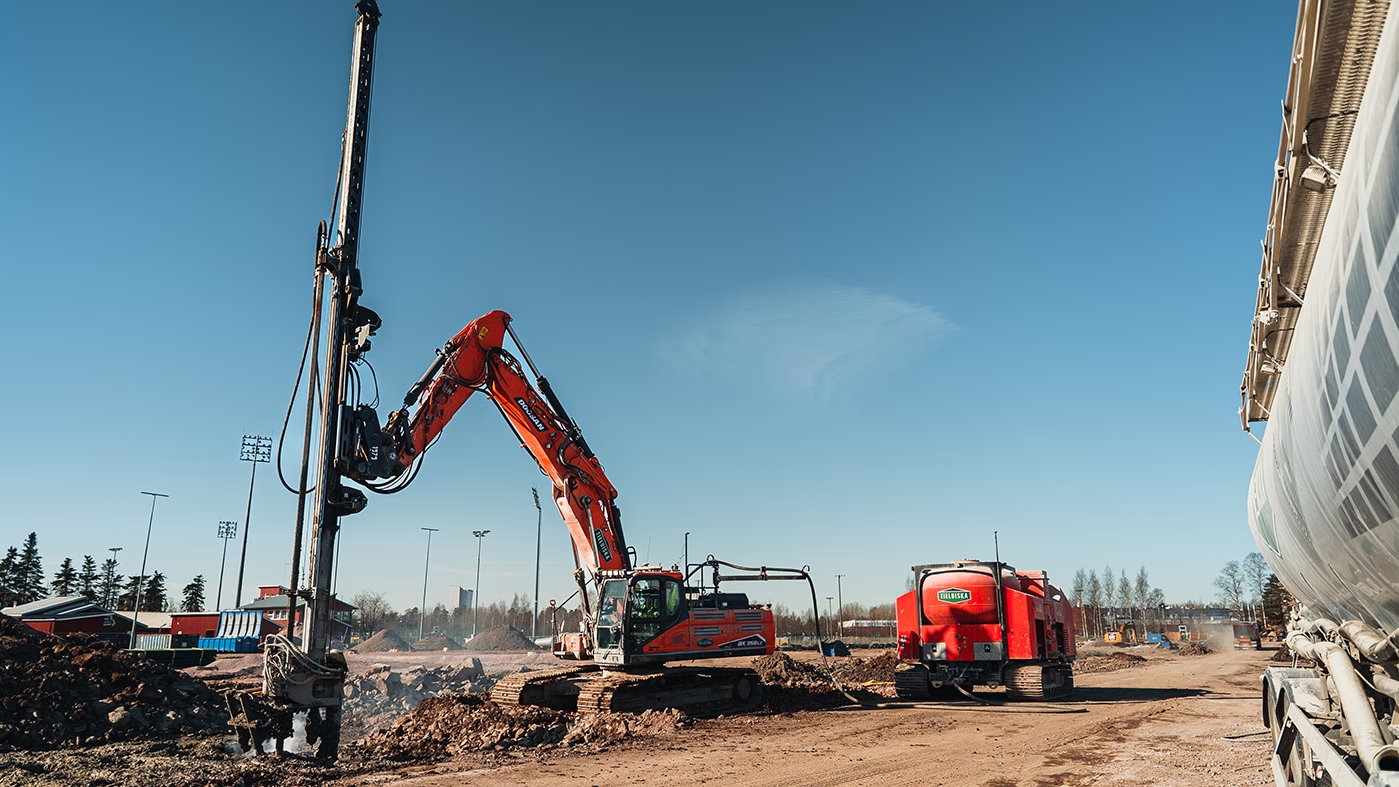
In Finland’s second-largest city, Tieluiska Oy is delivering one of the most ambitious recent public-space infrastructure projects: the northern section of the Tapiola Sports Park renovation. The work combines sports facilities, streets, water infrastructure, parking and green areas into a modern, accessible recreation hub for Espoo.
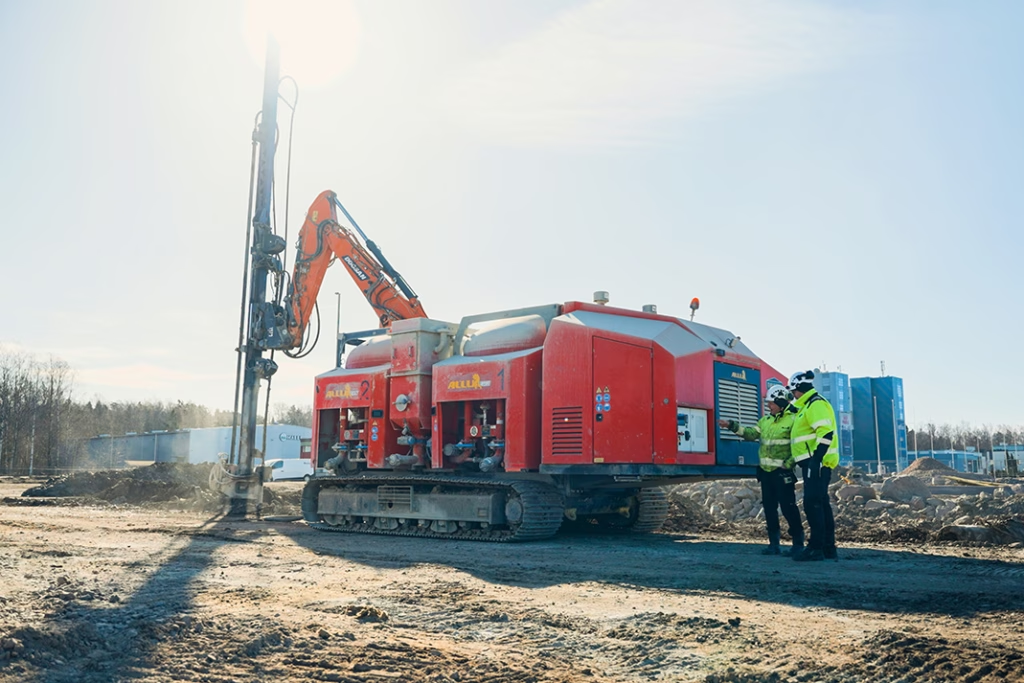
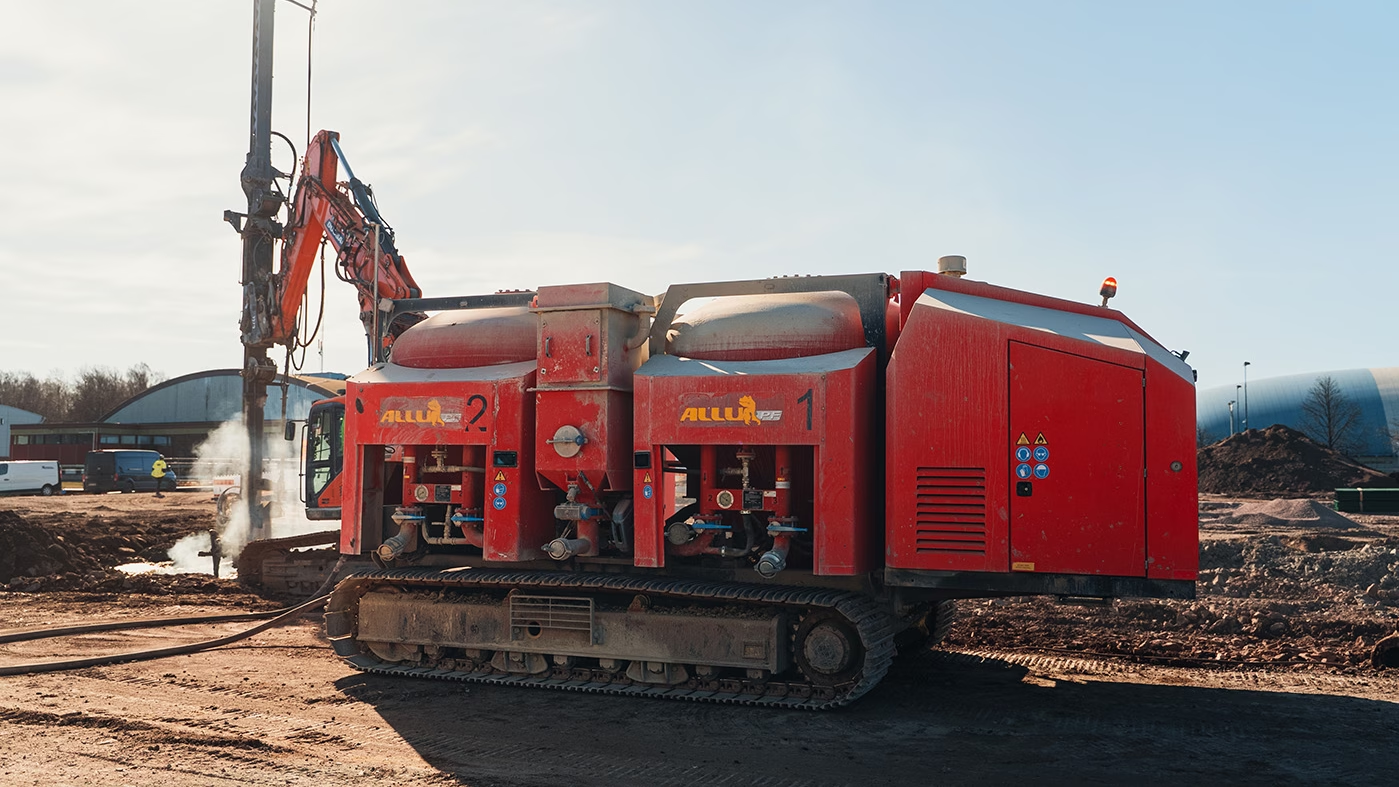
For the critical foundation works, Tieluiska is using a system it knows well: the ALLU Soil Improvement System with the PF 7+7 Pressure Feeder, paired with column rigs for deep dry mixing. The partnership between Tieluiska and ALLU Finland Oy – both Finnish – has developed over decades of site experience, direct feedback and practical support.
Tieluiska: half a century of Finnish infrastructure
Tieluiska Tikkanen & Yliniemi was founded in 1974, after the Tikkanen and Yliniemi brothers – both from Finnish railway-builder families – bought a Gradall slope-shaping machine advertised in Helsingin Sanomat. More than fifty years later, Tieluiska is a privately owned Finnish infrastructure builder with approximately 140 employees across earthworks, environmental construction, Torpanpiha® growing media production, and machinery and spare parts sales.
Roughly one third of the workforce has been with the company for more than ten years, giving Tieluiska deep institutional knowledge in streets, foundations, leisure areas, water infrastructure, parks, mass stabilisation and hydroseeding. That combination of infrastructure and landscaping experience is exactly what Tapiola Sports Park requires.
ALLU: 40 years of Finnish environmental engineering
ALLU was founded in 1985 in Pennala, Finland, as one of the country’s early environmental technology companies. It remains family-owned, with manufacturing, R&D and product development in Finland. From that base, ALLU operates internationally through subsidiaries in Sweden, Germany, the USA and China, plus a dealer network covering more than 30 countries; over 95% of turnover comes from exports.
ALLU’s range includes screening and crushing buckets for excavators and wheel loaders, and a complete soil improvement system for deep dry mixing: the ALLU Processor power mixer and the ALLU PF Pressure Feeder. Tapiola uses the latter system.
A partnership refined by real sites
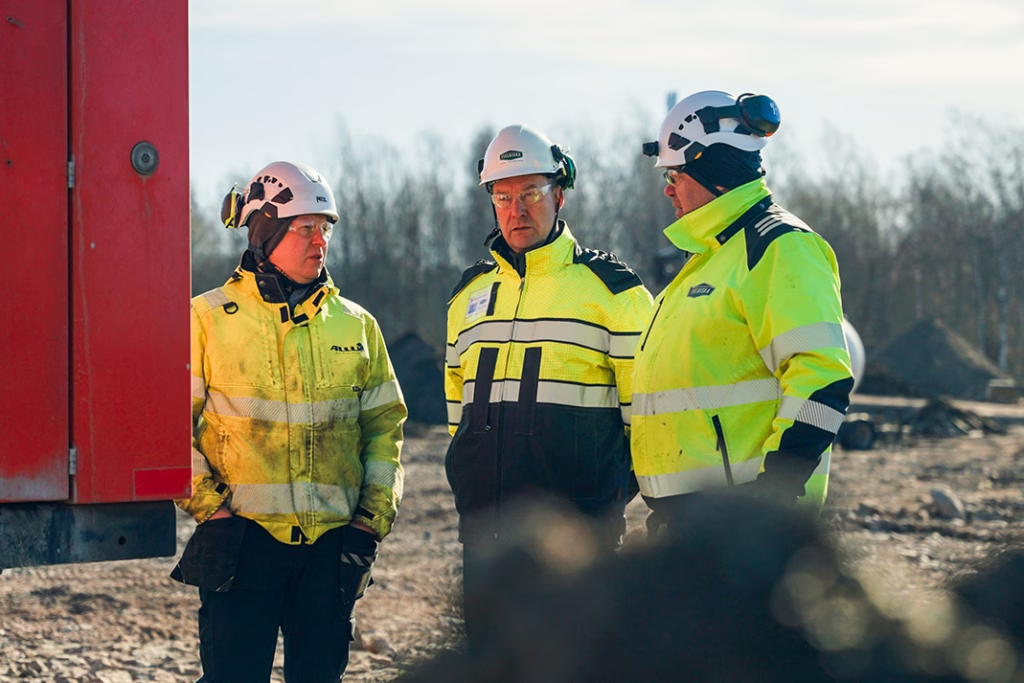
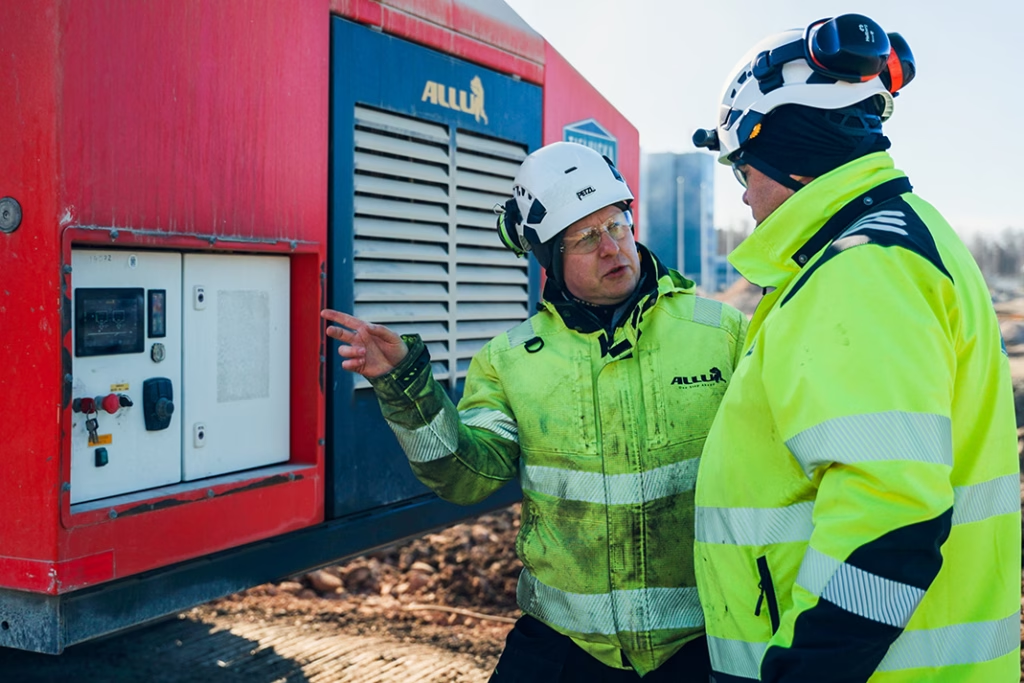
Tieluiska has used ALLU’s soil stabilisation system across multiple projects, soil conditions, schedules and binder mixes. That makes the relationship more than a supplier–contractor transaction. Over hundreds of working days, feedback becomes detailed: how an interface behaves at -20 °C, where dust gathers on a track frame, and what binder feed looks like in wet glacial till versus dry sand.
This feedback loop is the principle behind the partnership: two companies, two long product life cycles and one demanding Finnish operating environment. Real ground conditions shape the next generation of ALLU equipment, and better equipment sharpens what Tieluiska can deliver to public clients.
Support matters as much as equipment. Because ALLU keeps manufacturing, R&D and product development at its Finnish headquarters, the people who develop the system remain close to the people who operate it. For Tieluiska, that responsiveness has been consistent: when a high-stakes urban project needs attention, the support comes from people who understand the application, the system and the shared history.
The project: Tapiola Sports Park, northern section
In 2024, the City of Espoo’s technical committee approved the renovation plans for the northern part of Tapiola Sports Park. Tieluiska was selected as main contractor for the €16.4 million package, running from October 2025 to October 2027. The scope includes:
- New sports facilities: football pitches, a multi-purpose ground, neighbourhood exercise and play areas, a running straight, plus beach volleyball and basketball courts.
- Streets and water infrastructure: renovation of Koivu-Mankkaantie; construction of Yhteispelintie, Yhteispelinkuja and Syöttäjänkuja; and two new roundabouts.
- Parking and green areas: public parking integrated with parks and green spaces, connecting the site into one walkable, accessible whole.
The northern section also sits within the wider transformation of Tapiola Sports Park, which will later include a separate 6,000-seat UEFA Category 3 football stadium by Jatke Toimitilat. Tieluiska’s section is the foundational piece – literally the ground on which the rest of the area will be activated.
Why soil stabilisation was required
Like much of Espoo and the broader southern Finnish coastal zone, Tapiola sits on soft, often clay-rich post-glacial soils. Sports fields, traffic streets, parking areas and water infrastructure all need predictable ground so surfaces do not settle, pipes do not deflect, and the area performs for decades with minimal maintenance.
The conventional approach would be to excavate soft soil, haul it away and import suitable replacement material. On a €16.4 million urban project beside live sports halls, residential streets and existing infrastructure, that creates clear drawbacks: heavy truck traffic, disposal costs and environmental tracking, schedule dependence on truck cycles and aggregate availability, and extra carbon from haulage and imported materials.
Tieluiska chose a lower-impact route: stabilise the existing soil in place using the ALLU PF 7+7 Pressure Feeder with deep dry mixing column rigs.
How the ALLU PF 7+7 works
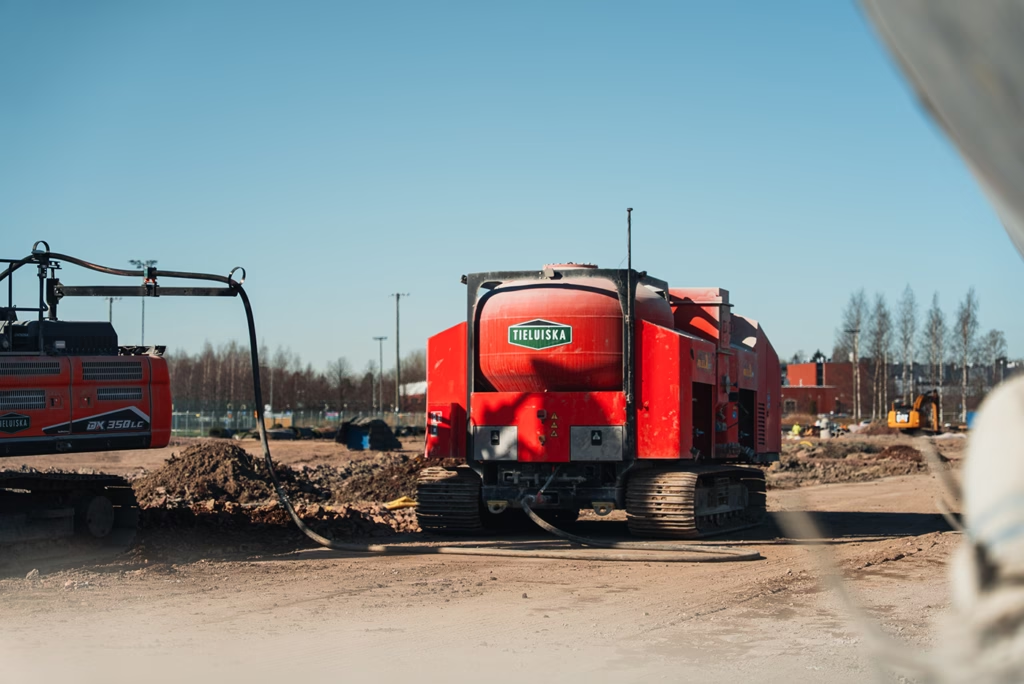
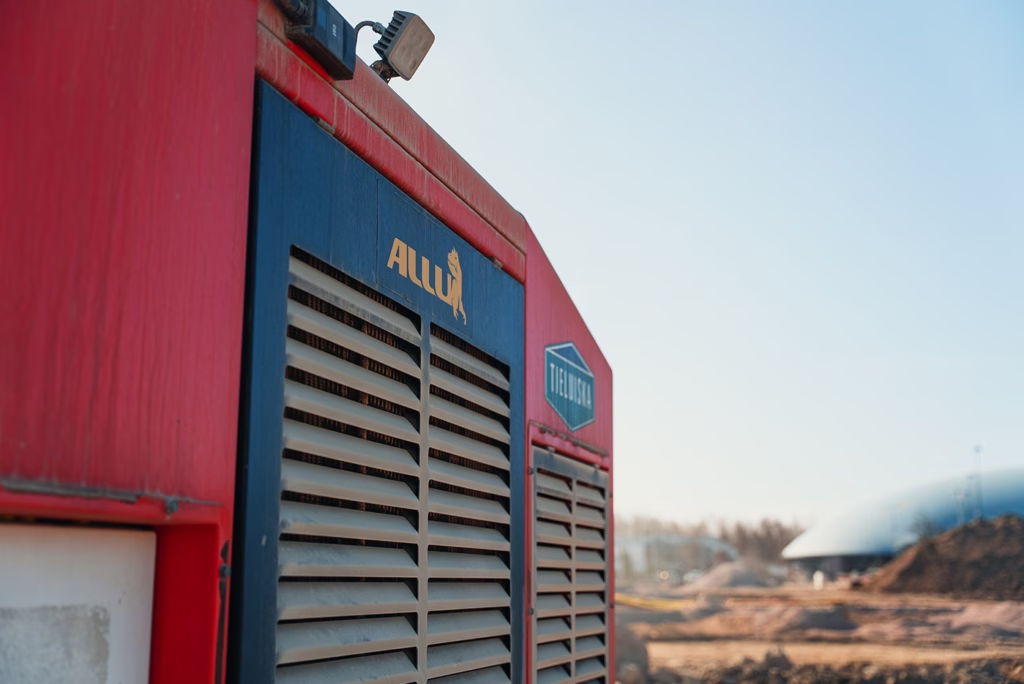
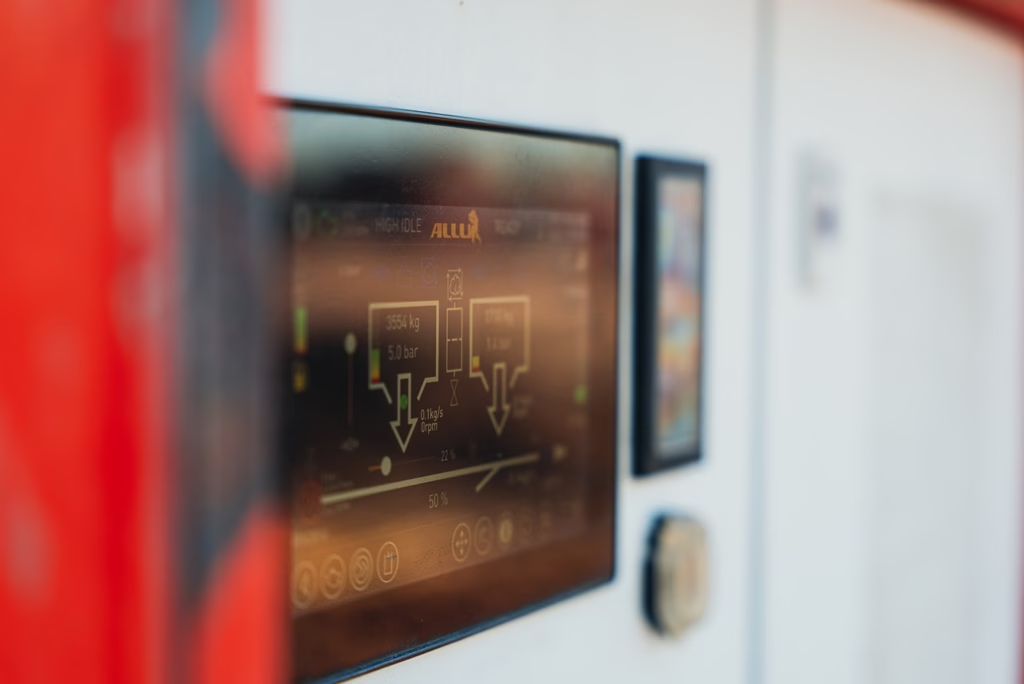
The ALLU PF 7+7 NextGen is a self-contained, track-driven, twin-tank pneumatic dry-binder delivery system. Its 2 × 7 m³ tanks allow continuous operation: while binder feeds from one tank, the other can be refilled. It operates at up to 10 bar (145 psi), with an adjustable feed rate of 3–15 kg per second, delivering binder up to 200 m horizontally and 30 m deep. The system is computer-controlled by ALLU DAC 2.1 and records numerical or graphical job-site data.
In Tapiola, column rigs drive a mixing tool into soft ground while dry binder – typically lime, cement or a cement-based blend – is pneumatically delivered through the rig and mixed into the soil column at depth. The result is a network of stabilised columns that act as load-bearing foundation elements without mass excavation.
Why in-situ dry mixing fits Tapiola
The benefits of stabilising soil in place using ALLU’s dry mixing system, rather than digging it out and replacing it, are particularly pronounced in tight, public, urban sites – and Tapiola is exactly that kind of site.
- No mass haulage of soft soil: The existing ground stays where it is. There is no fleet of dump trucks running through the surrounding residential streets, no replacement aggregate being shipped in. On a sports-park renovation flanked by active facilities, the operational impact and the public-amenity impact both drop dramatically.
- Reduction in binder consumption: The binding agent (cement, lime, or blends) is typically the most expensive single line item in any soil stabilisation or remediation project. With Dry mixing, the work uses less binder vs. wet slurry method or bucket mixing. Compared to bucket mixing, data from real project sites show that ALLU’s dry mixing system delivers a minimum 30% binder saving and up to 70% under optimal conditions. For a mid-sized project, that single difference can translate into hundreds of thousands of euros.
- Dry binder vs wet slurry – precision over excess: Wet-slurry methods deliver binder mixed with water. To guarantee that every column reaches the required strength, the slurry method tends to over-dose: more binder is added because the wet delivery is harder to control with precision. Dry binder delivery via the PF 7+7’s computer-controlled, sealed, pneumatic system places exactly the dosage the design calls for at exactly the depth specified. Less binder used means lower material cost, lower CO₂ from cement production, and a more uniform stabilised column.
- Same job in a fraction of the time: Dry mixing with ALLU Soil Stabilization System can complete the same stabilization work in up to one-eighth of the time required by traditional methods, and one ALLU machine can replace approximately five conventional excavators on a comparable mass-stabilisation task – with corresponding labour savings of around 75%. On a fixed-schedule public project, schedule certainty has direct commercial value.
- Lower dust, fewer machines, safer site: Dry mixing through the PF 7+7’s enclosed pneumatic system produces less dust than open bucket-mixing approaches. Fewer machines on site means fewer people working around active equipment, lower fuel consumption, and a smaller traffic footprint inside the working area – important when the project is bordered by sports halls and public routes.
- Verifiable quality, on the record: The DAC 2.1 control system records binder feed rate, depth, and column data continuously. For a city client (Espoo), that is auditable evidence that every stabilised column was constructed to specification – supporting acceptance, hand-over, and long-term maintenance documentation.
The big picture
Soil stabilisation is often won or lost on binder cost. Reducing binder use by 30–70% while delivering the same or better engineered ground performance is the largest economic lever in this type of work. Dry mixing with precise, computer-controlled feed is how that lever is pulled.
The Tapiola Sports Park project shows a practical Finnish way of building public infrastructure in dense urban environments: keep the existing ground in place where possible, stabilise it where needed, minimise truck movements through residential areas, document the work, and hand over a site that can perform for decades.
It also shows the value of long-term industrial relationships. Tieluiska, founded in 1974, and ALLU, founded in 1985, have worked together long enough that today’s equipment is partly shaped by operator feedback from earlier Finnish job sites. That feedback is visible in machine design, support responsiveness and the confidence with which Tieluiska can choose in-situ dry mixing for a high-visibility public project.
Long-term partnerships build better tools. Better tools build better cities.
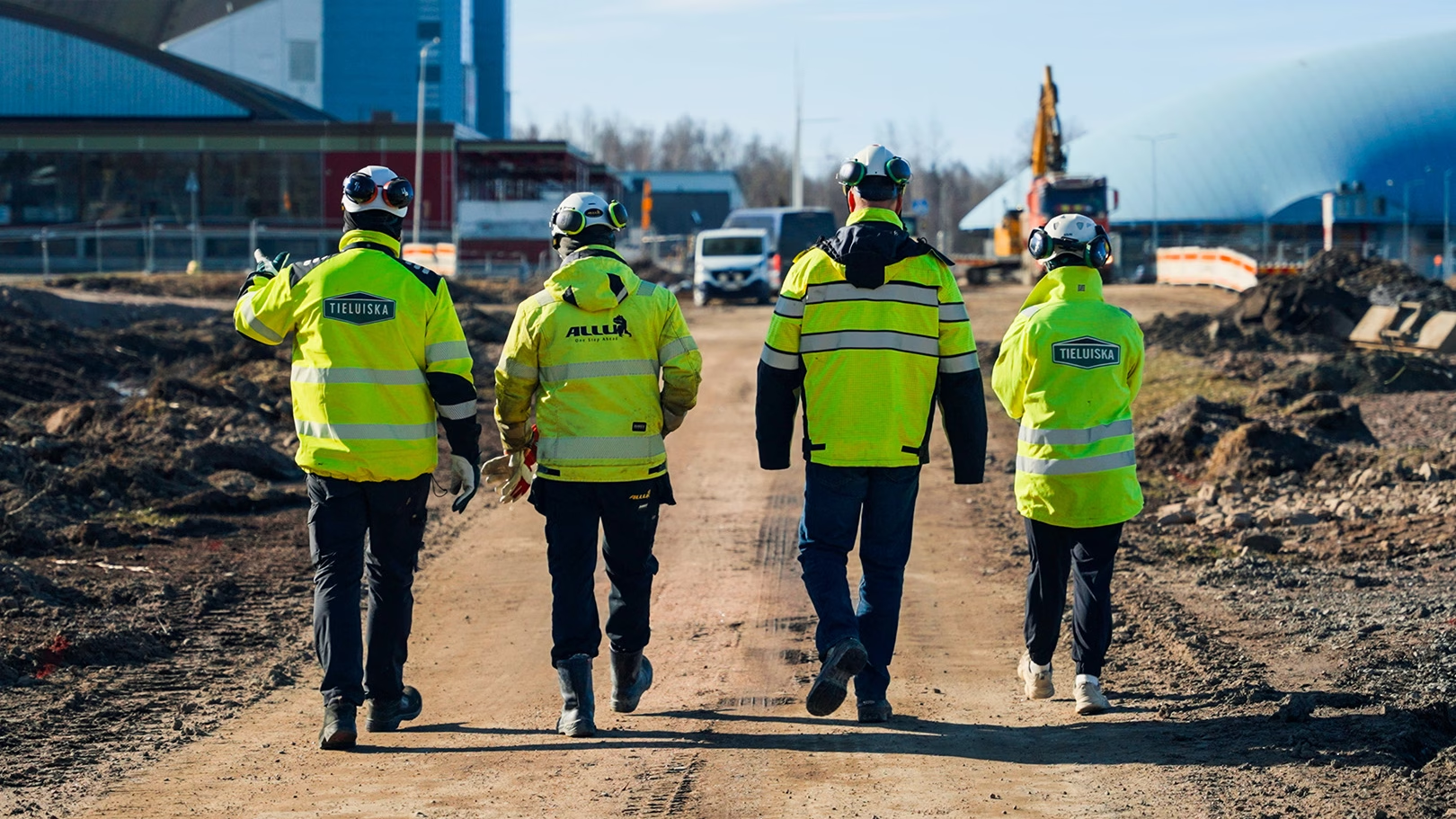
See how this collaboration is turning soil improvement challenges into practical solutions from the video below.
Related products
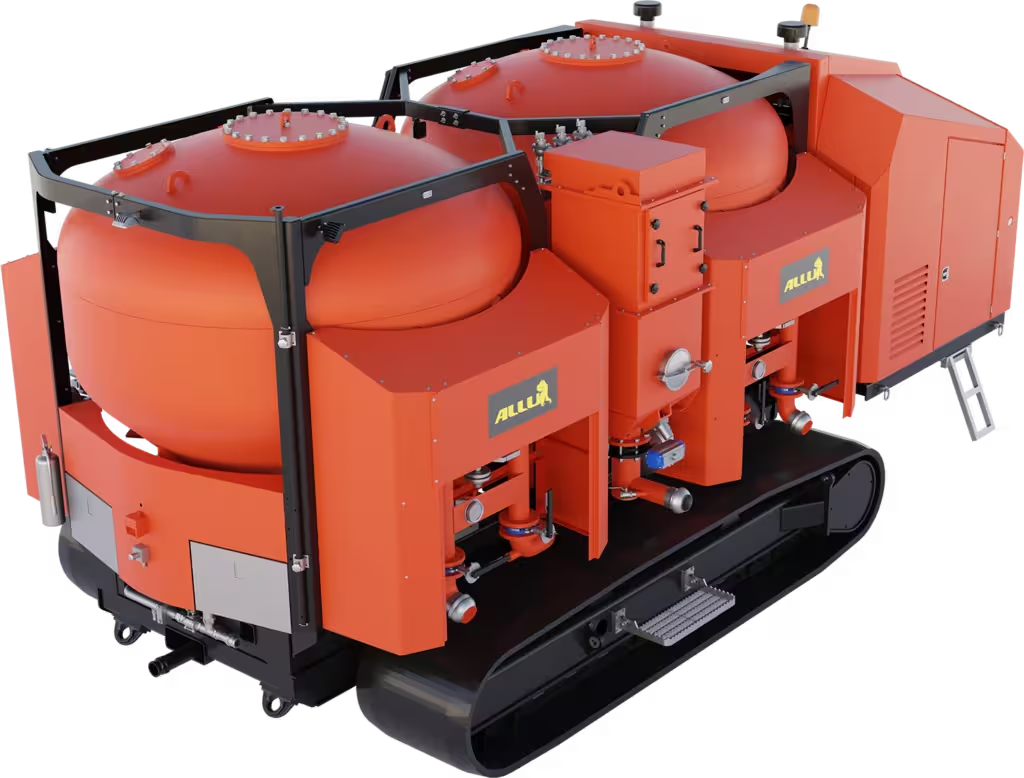

PF 7+7 Pressure Feeder
Other case studies
From Soft Ground to Solid Foundation: ALLU PMX at the Xiangjiang Riverside Sports Park
At the Xiangjiang Riverside Sports Park, soft soil conditions threatened to slow construction progress. Facing reliability challenges and limited production capacity, the contractor adopted the ALLU PMX for in-situ mass…
Explore customer story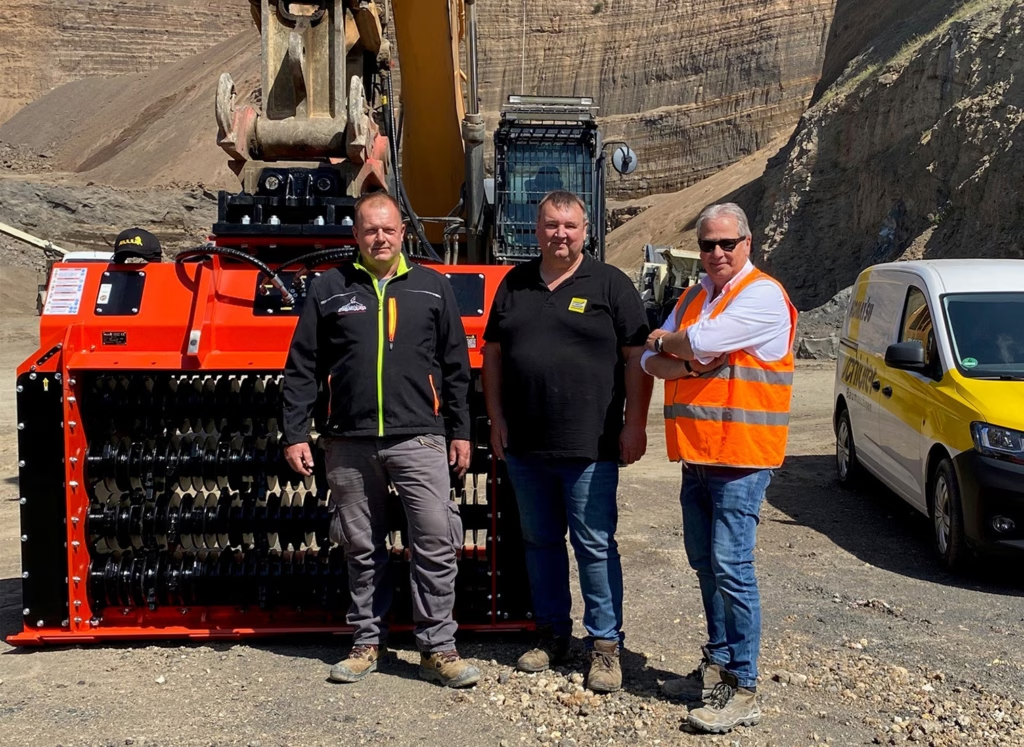
Efficient and Sustainable Lava Processing
Schaumlava Grube Herchenberg GmbH enhances its efficiency and sustainability in lava rocks processing by integrating the ALLU DH 4-17 Screening Bucket directly into quarry operations. By crushing material on-site, the…
Explore customer story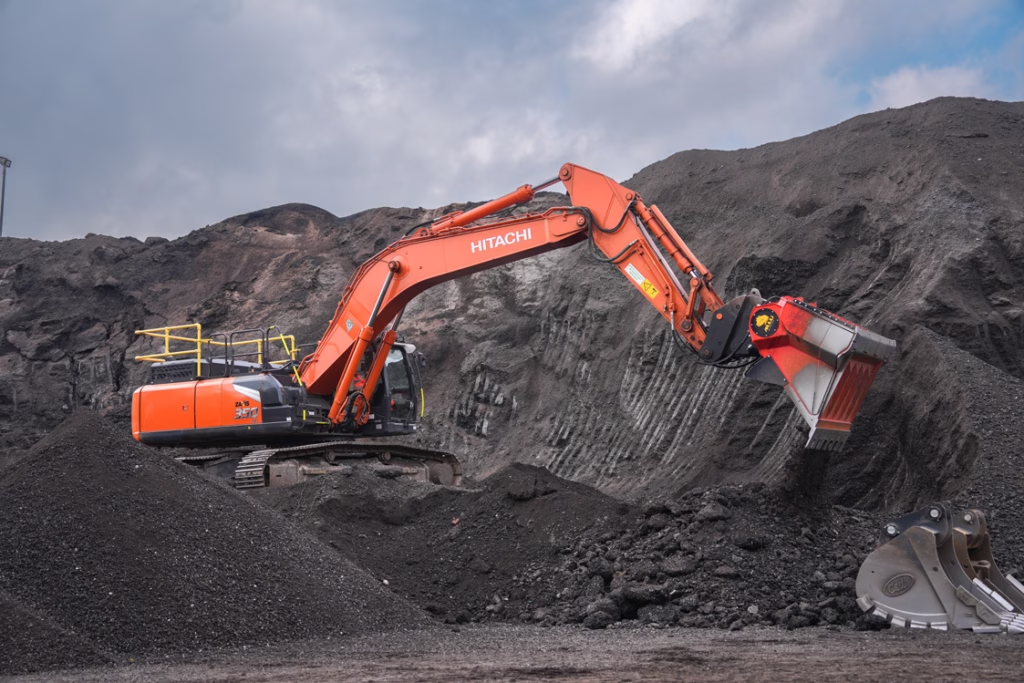
Recycling of Asphalt, PFA, and More: ALLU & MRD Plant
Discover how MRD Plant in Leicestershire uses ALLU screening buckets, including the DH 4-17 and DS 3-23 models, to revolutionize waste material handling. From recycling asphalt road planings to processing…
Explore customer storyInterested?
Contact our team and we’ll help you find the perfect solution for your business.